Snorkeling Honolua Bay Maui: When It’s Amazing—and When It’s Not Worth It
Quick Overview
Activity: Snorkeling
Location: Northwest Maui, Hawaii
Highlights: spotted eagle rays, wide variety of fish
Honolua Bay is often listed as one of the best snorkeling spots on Maui, yet during our most recent trip we almost skipped it. Day after day, the snorkel reports (I check Boss Frogs and The Snorkel Store) rated it poorly—always between 1–3 (out of 10)—so we kept pushing it off, hoping the next day would bring better conditions. Finally, on the last possible morning, we visited anyway.
Even on a less-than-perfect-visibility day, Honolua Bay turned out to be one of my favorite snorkeling spots on Maui.
Quick Facts: Honolua Bay Snorkeling
- Location: Northwest Maui, near Kapalua
- Best time to snorkel: Early morning (calmer water/better visibility)
- Season: Most reliable snorkeling from May–September; winter can be rough due to poor visibility conditions
- Skill level: Intermediate (rocky entry, no sandy beach)
- Parking: Limited roadside pull-offs with short trails to the bay
- Facilities: None (no restrooms or lifeguards, though there were several porta-potties in the small parking area above the bay)
- Marine Life: Huge variety of fish–so much to see!
- Protection: Part of a Marine Life Conservation District—snorkeling is allowed, but fishing, collecting, or touching coral and marine life is not!
Planning your Visit – Are There Better Months to Snorkel at Honolua Bay?
Due to its exposed location on the northwest side of Maui, Honolua Bay is one of the most condition-dependent snorkel spots on the island, and the time of year makes a big difference.
Snorkeling at Honolua is most reliable from late spring through early fall (roughly May through September). During these months, north and northwest swells are usually minimal, which means calmer water and better visibility.
Winter is the least reliable season to snorkel at Honolua. From November through March, north and northwest swells frequently reach the bay. That doesn’t mean Honolua is never good in winter (we had a successful visit in November!), but great winter days are more rare than common.
Checking Conditions without Relying on the Snorkel Report
Every day prior to the one we visited, the snorkel report had shown poor conditions at Honolua Bay (not a huge surprise, since we were there in November). The snorkel reports, however, aren’t published until 8AM or so, and we often head out for our snorkel adventures before then. There are a few other ways to figure out how good snorkeling will be at Honolua Bay:
Surf Reports
Check the surf or swell forecast for north or northwest swells. Ideally, look for 0–2 feet from those directions and a swell period under 10 seconds—anything bigger or longer-period can stir up sediment and reduce visibility.
Check the Bay from Above
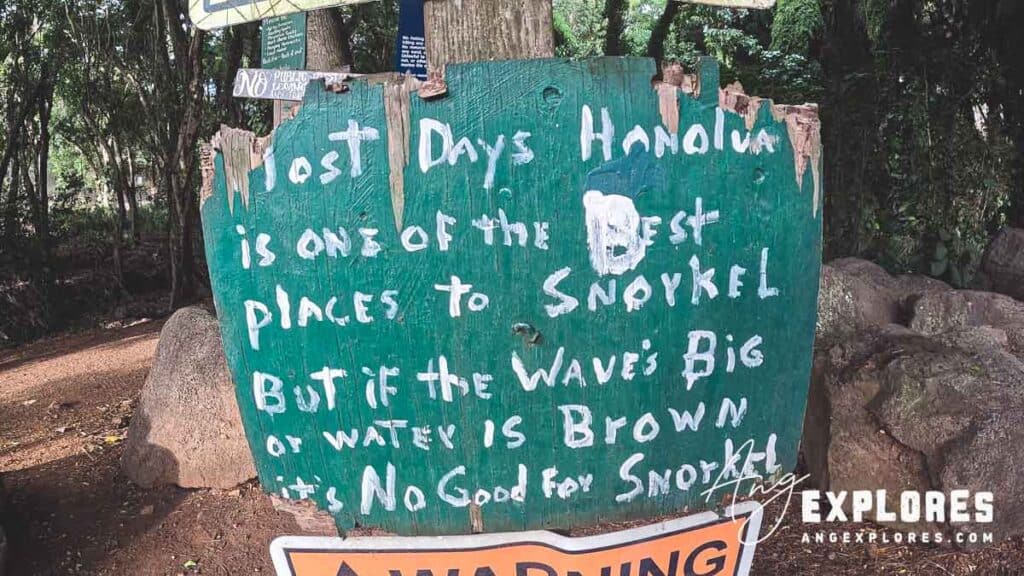
We parked at one of the lookouts above the bay to get a view of the water. I had heard a common rule of thumb:
- BAD SNORKELING = the water in the bay is brown / milky / dull / grayish-green or waves are breaking inside the bay
- GOOD SNORKELING = the water in the bay is blue/green / clear. Rocks or reef near the shore are visible from above
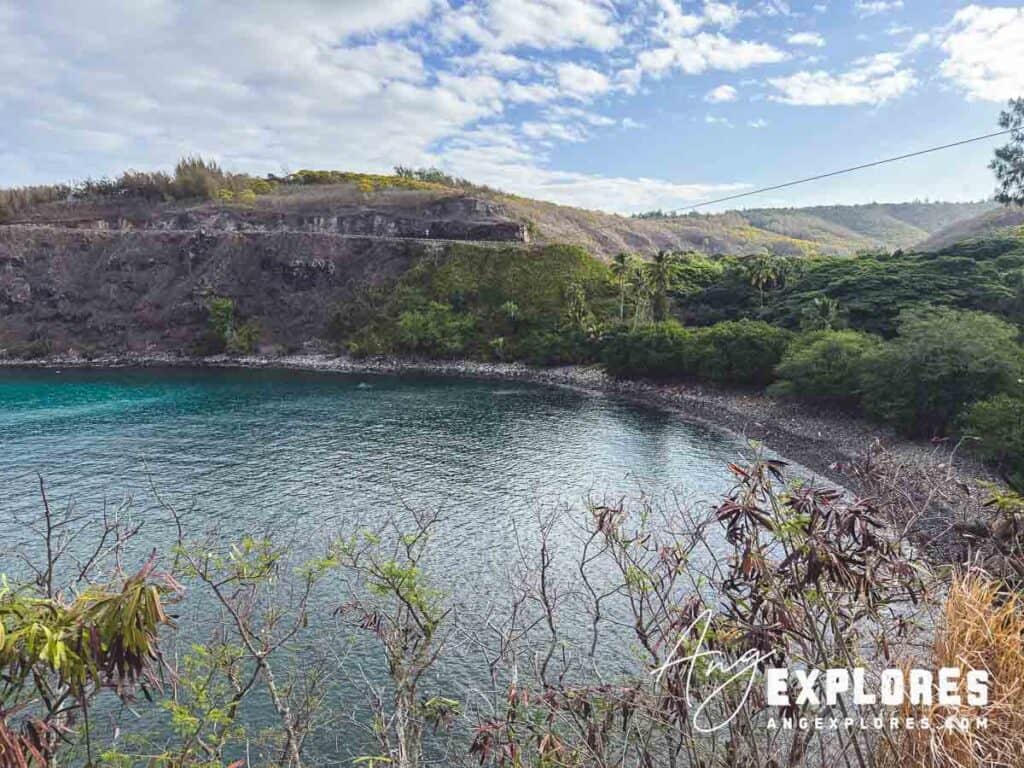
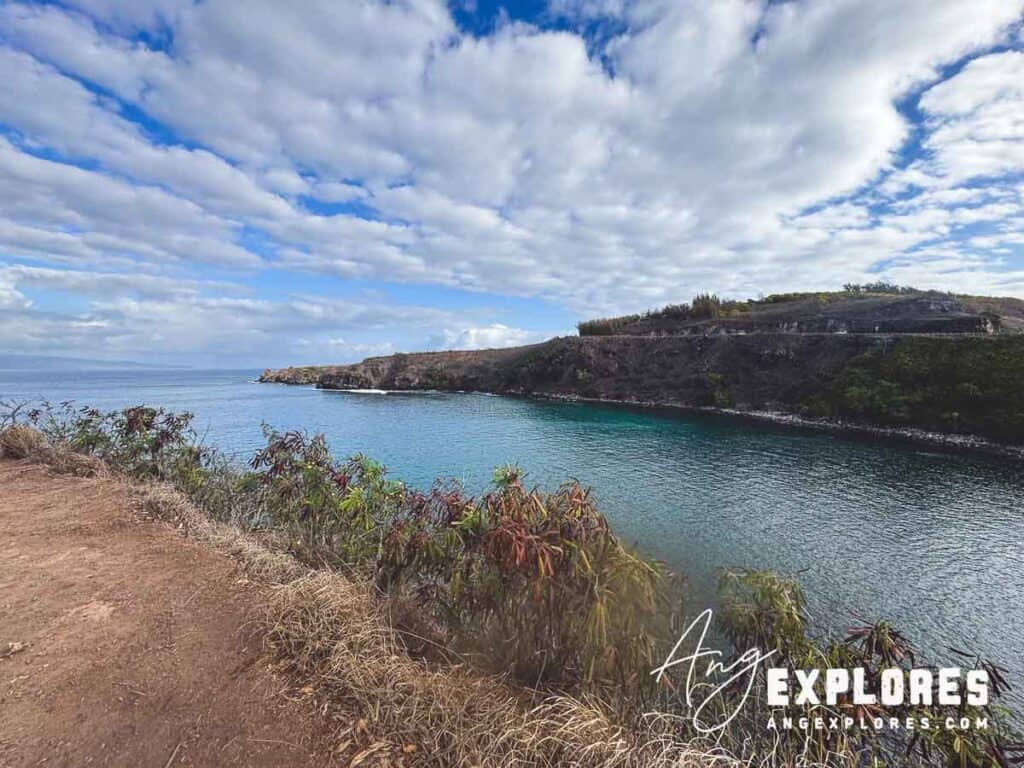
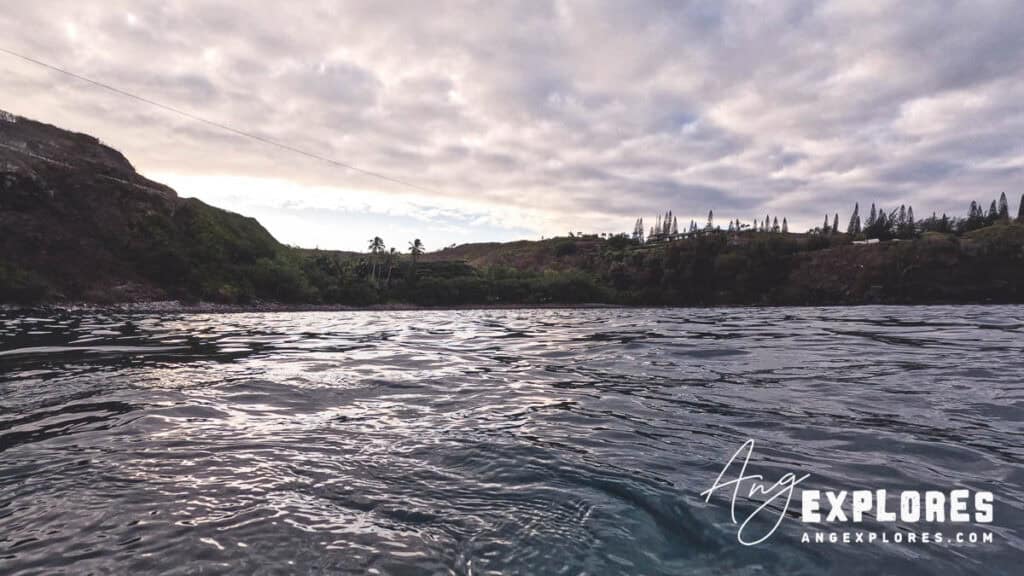
From above, the color looked semi-promising—blue-ish-green rather than brown, and there were spots were I could see rocks and reef below the surface. However, we could also see waves breaking at the far end of the bay, which can sometimes mean stirred-up sediment and reduced visibility. So I wasn’t quite sure what to expect, but we decided to take a chance and hope for the best.
Snorkel Reports
If you can wait for the daily snorkel report to be updated you can always check and see what it says. The day we went was moderate–a bit murky, but far from bad. After we left, I checked the snorkel reports and noticed Honolua Bay had been rated 3 out of 10 that day.
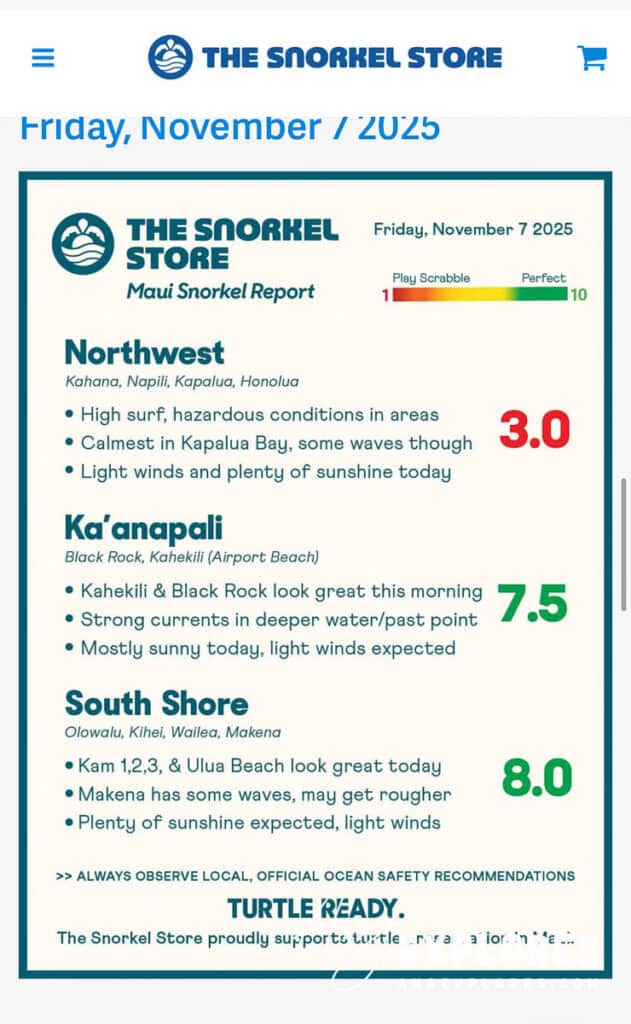
So take the snorkel reports with a grain of salt, I suppose?
Honolua Bay – Getting There
Use the map below to get directions from your location to Honolua Bay:
Parking & the Walk In
There are several small parking areas along the road, two of them with a short trail leading down to the bay. None of them have many spaces, but we didn’t have trouble finding a spot (we arrived around 8AM in early November).
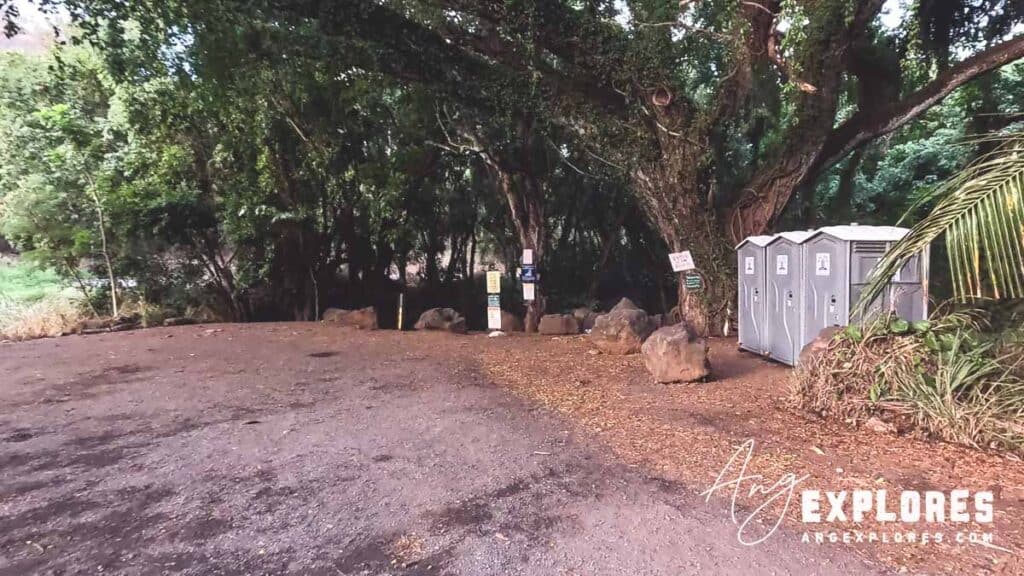
There are a few porta potties at one of the roadside parking areas. There are no other restrooms at Honolua Bay.
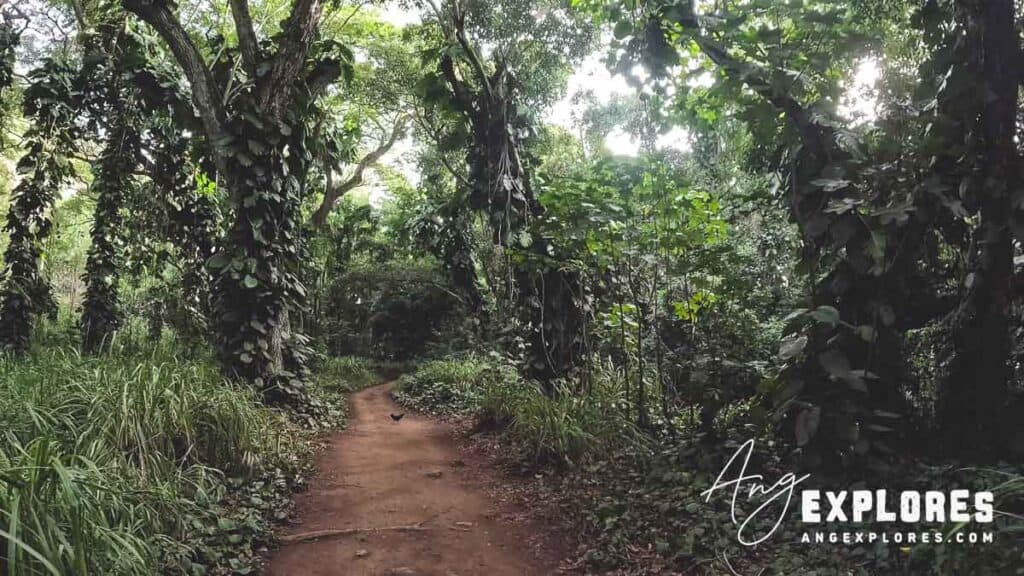
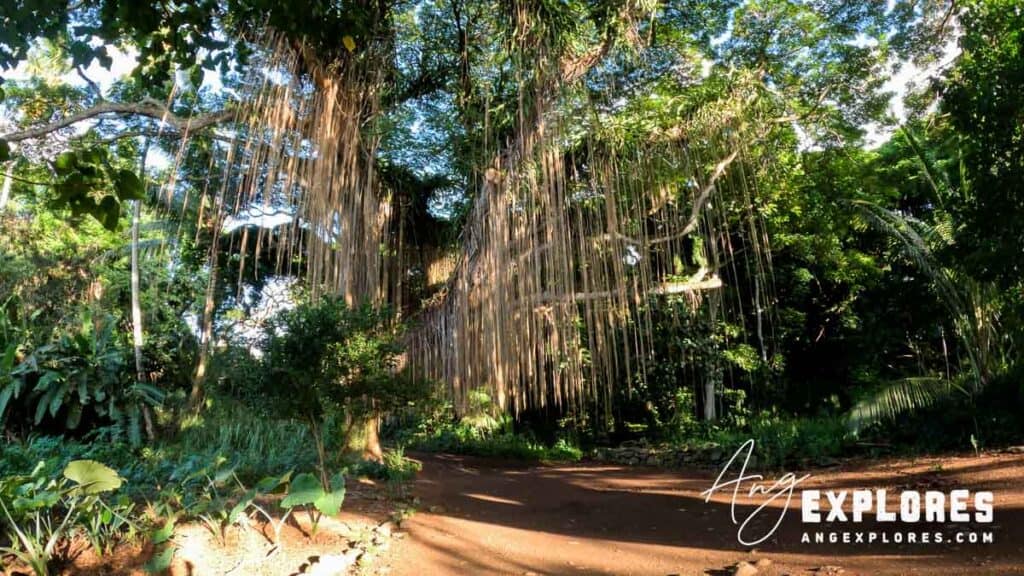
The walk down is quite peaceful. Shaded by trees and dotted with wandering chickens, it has more of a “jungle” feel than what you find in most of West Maui.
Entering the Water
Honolua Bay does not have a sandy beach entry.
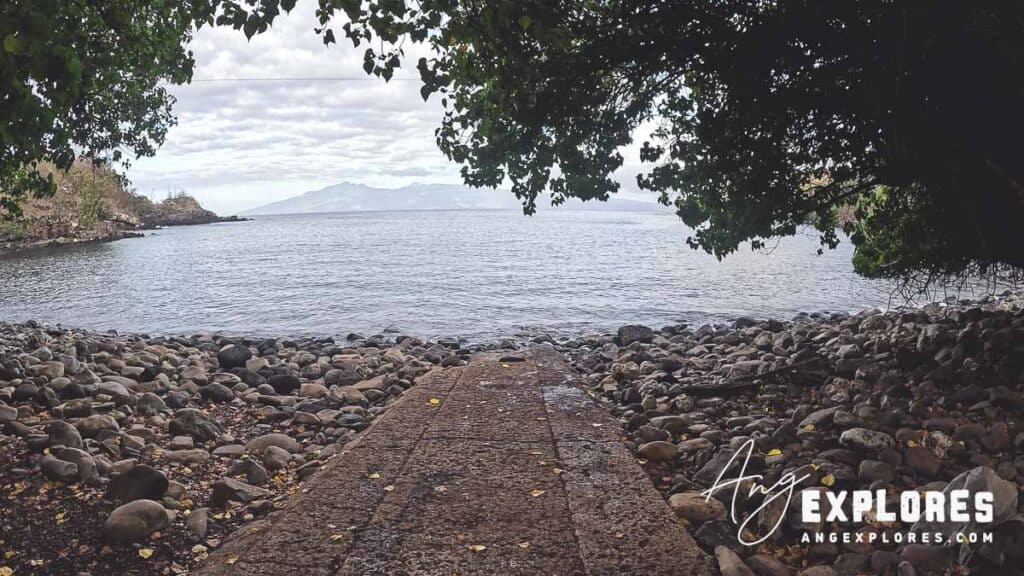
There’s a cement boat ramp that some people use to enter from, but we chose to walk out over the rocks on the right side and enter a bit farther out. The entry was rocky and slightly tricky to maintain balance, but doable and worth the payoff.
The Snorkeling Experience
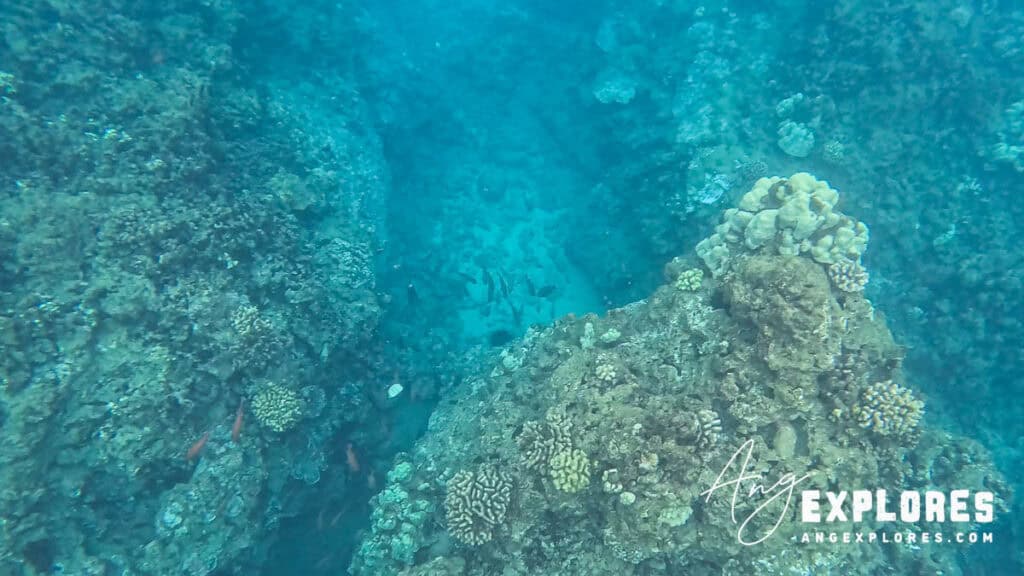
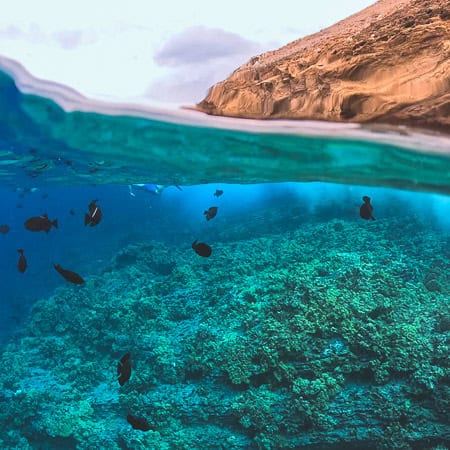
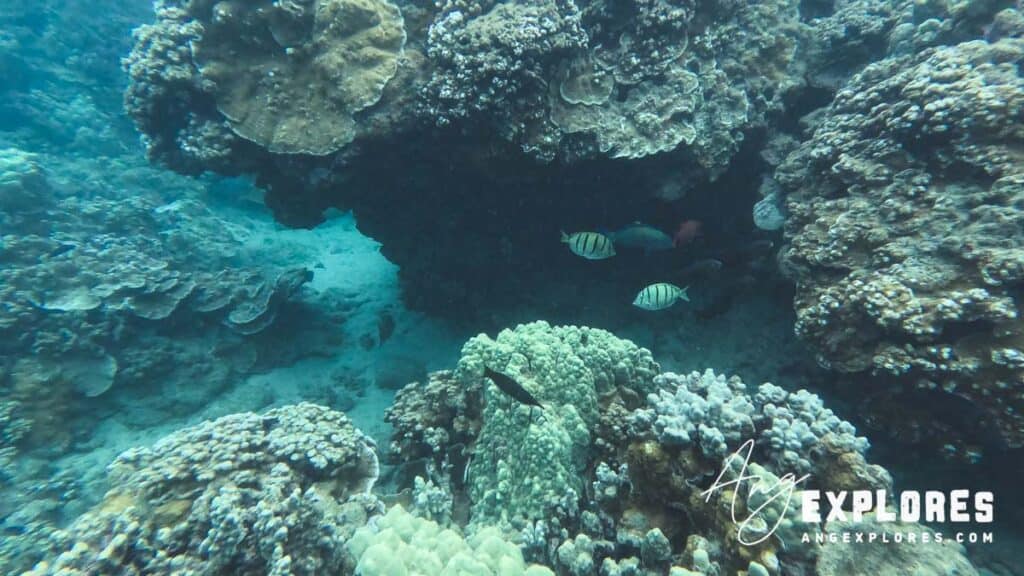
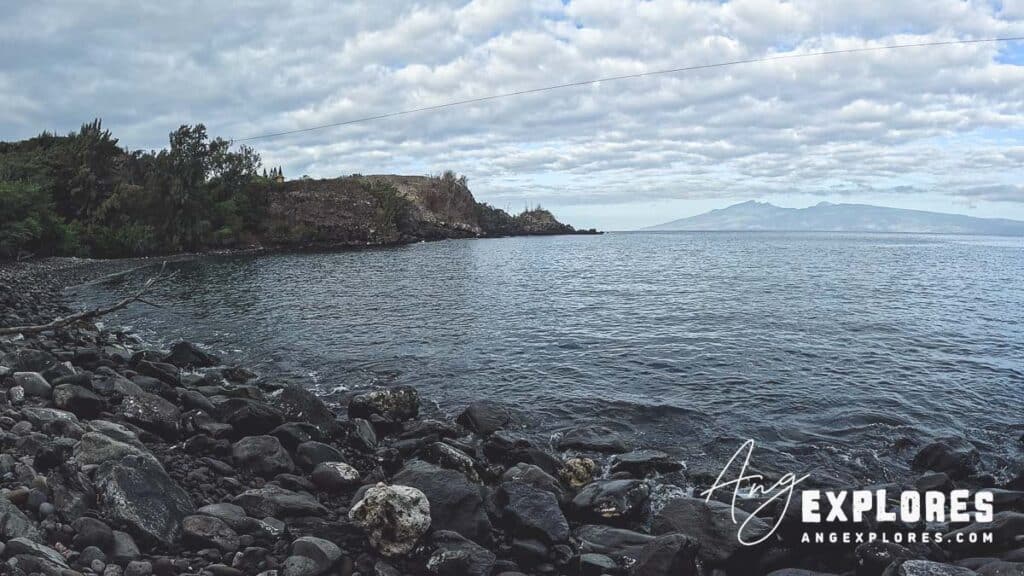
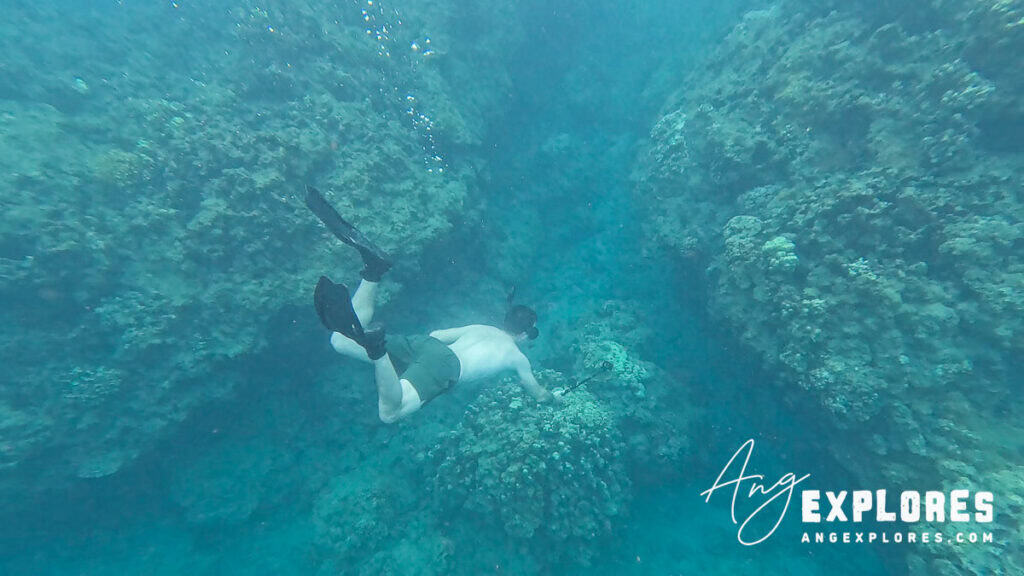
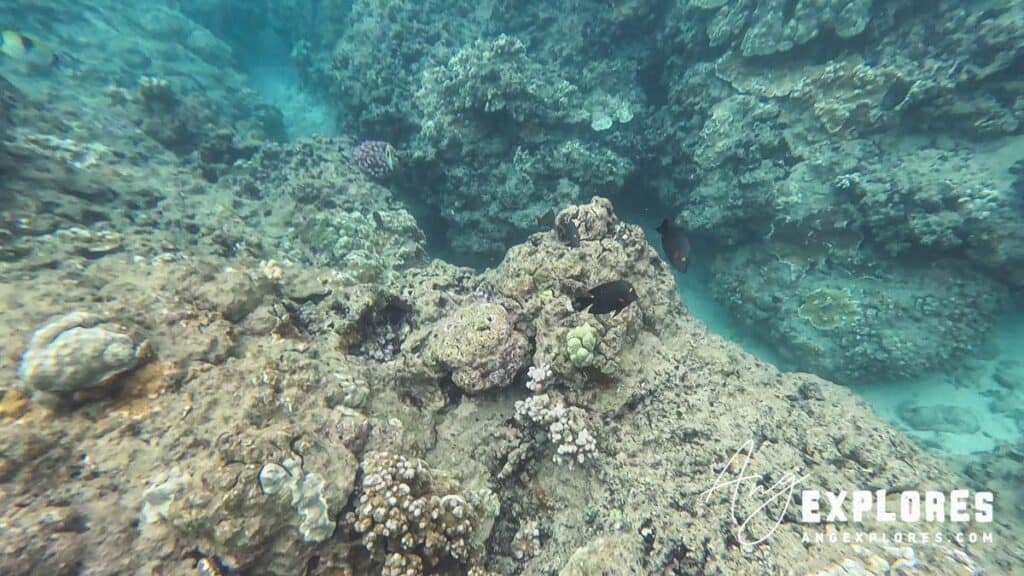
Often, the best snorkeling in Maui is tight along the sides of a bay. At Honolua, the reef extends far out, creating a broad snorkeling area with large coral formations.
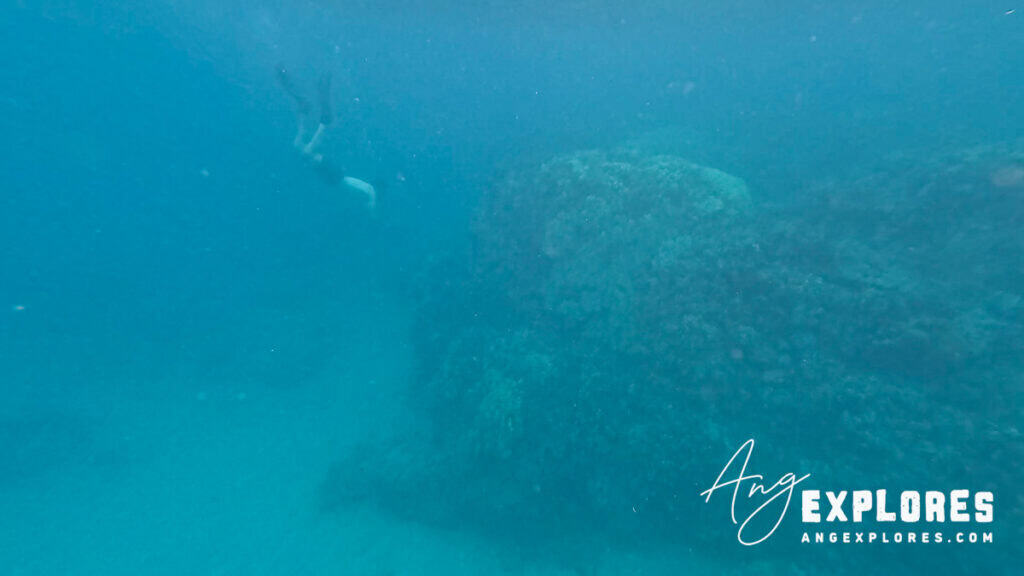
Even with slightly murky water, our snorkel experience at Honolua Bay was one of my favorites of the trip.
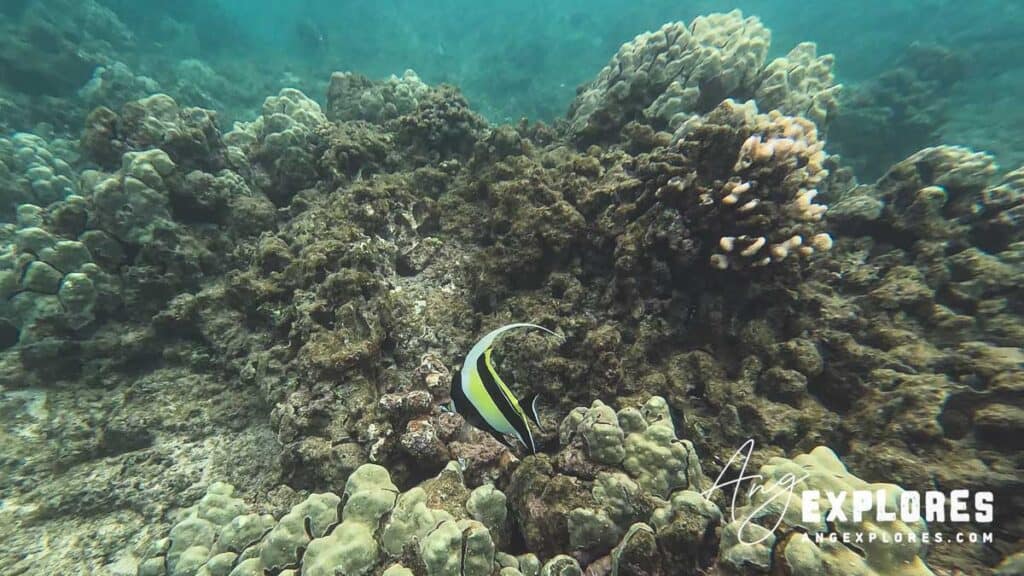
Fish & Marine Life We Saw
- Bluefin Jack / Bluefin Crevalle (several large ones—easily 3 feet long)
- Green sea turtle
- Porcupine fish
- Humuhumunukunukuāpuaʻa (AKA Picasso triggerfish)
- Triggerfish (multiple species)
- Bird wrasse (with the distinctive “beak”)
- Parrotfish
- Butterflyfish
- Moorish idol
- Sergeant majors
- Pearl wrasse
- Schools of yellowstripe goatfish
- Needlefish
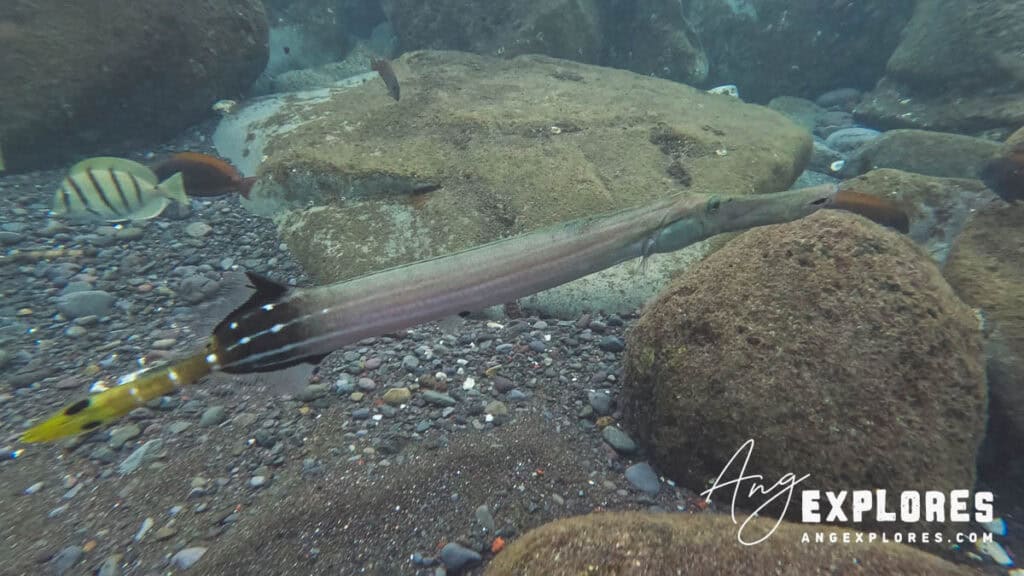
- Trumpetfish
- Squirrelfish
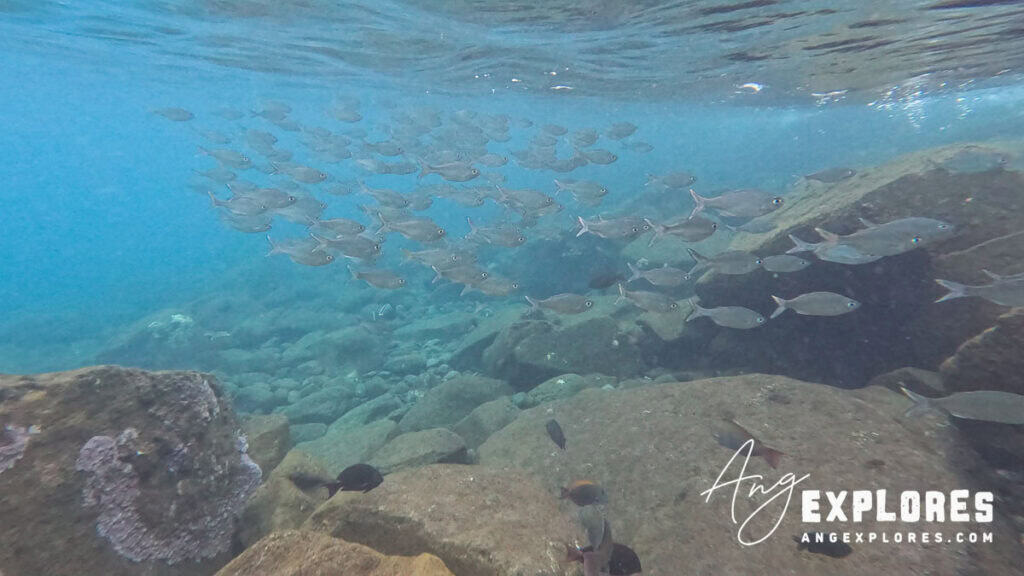
- A large school of Hawaiian flagtail
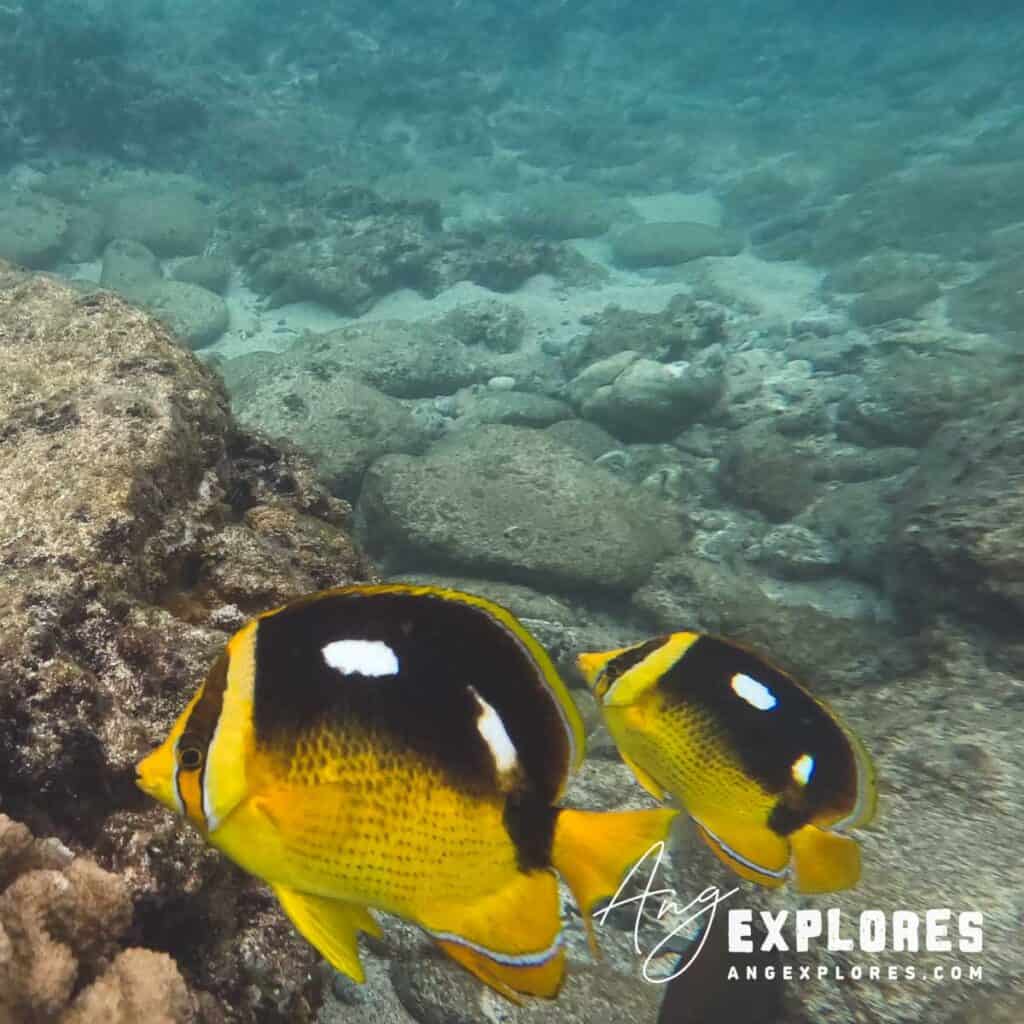
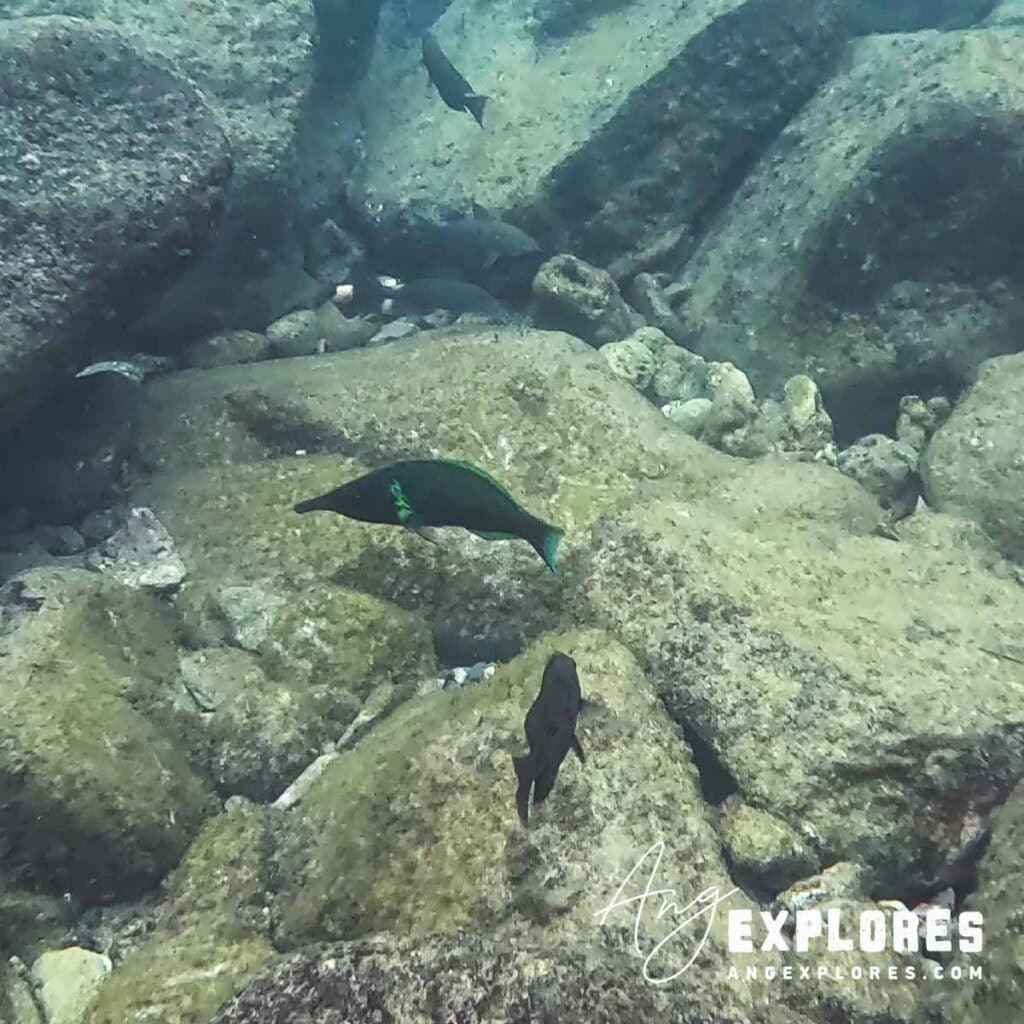
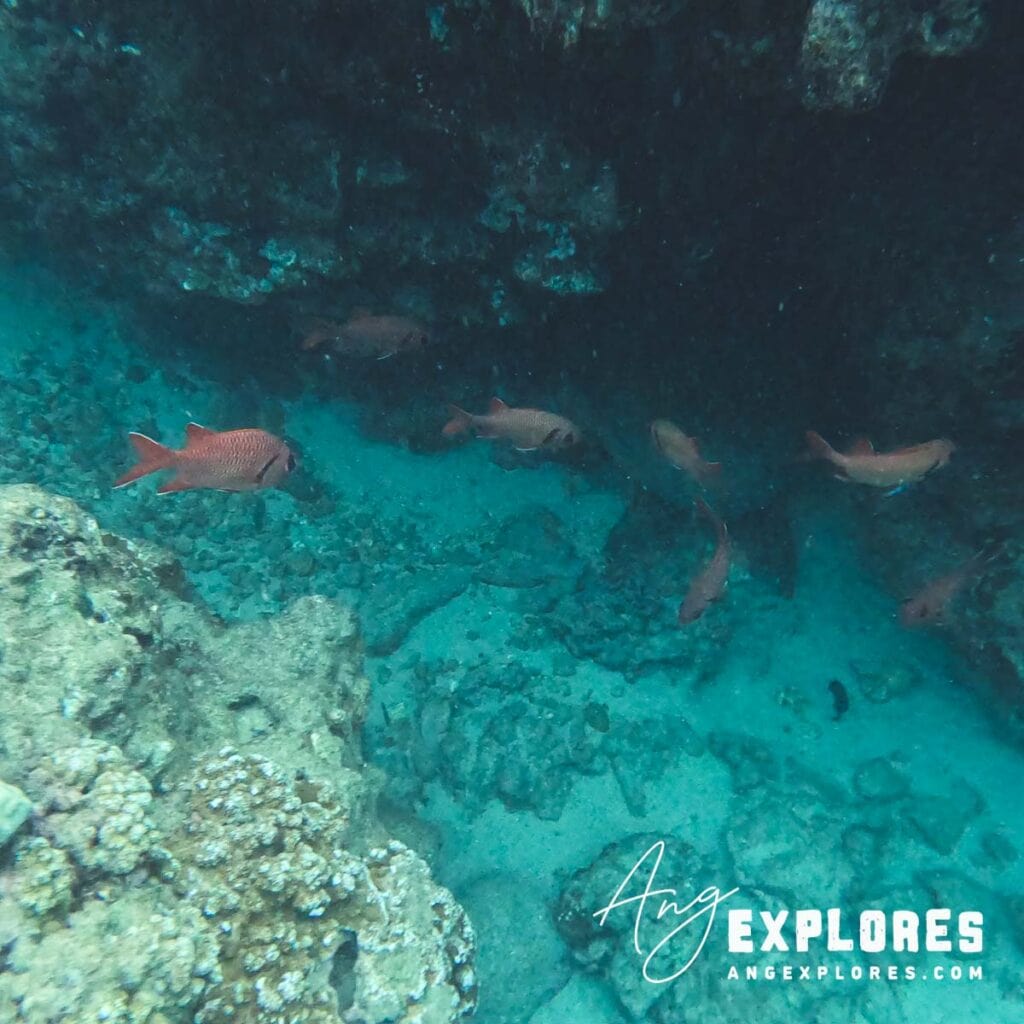
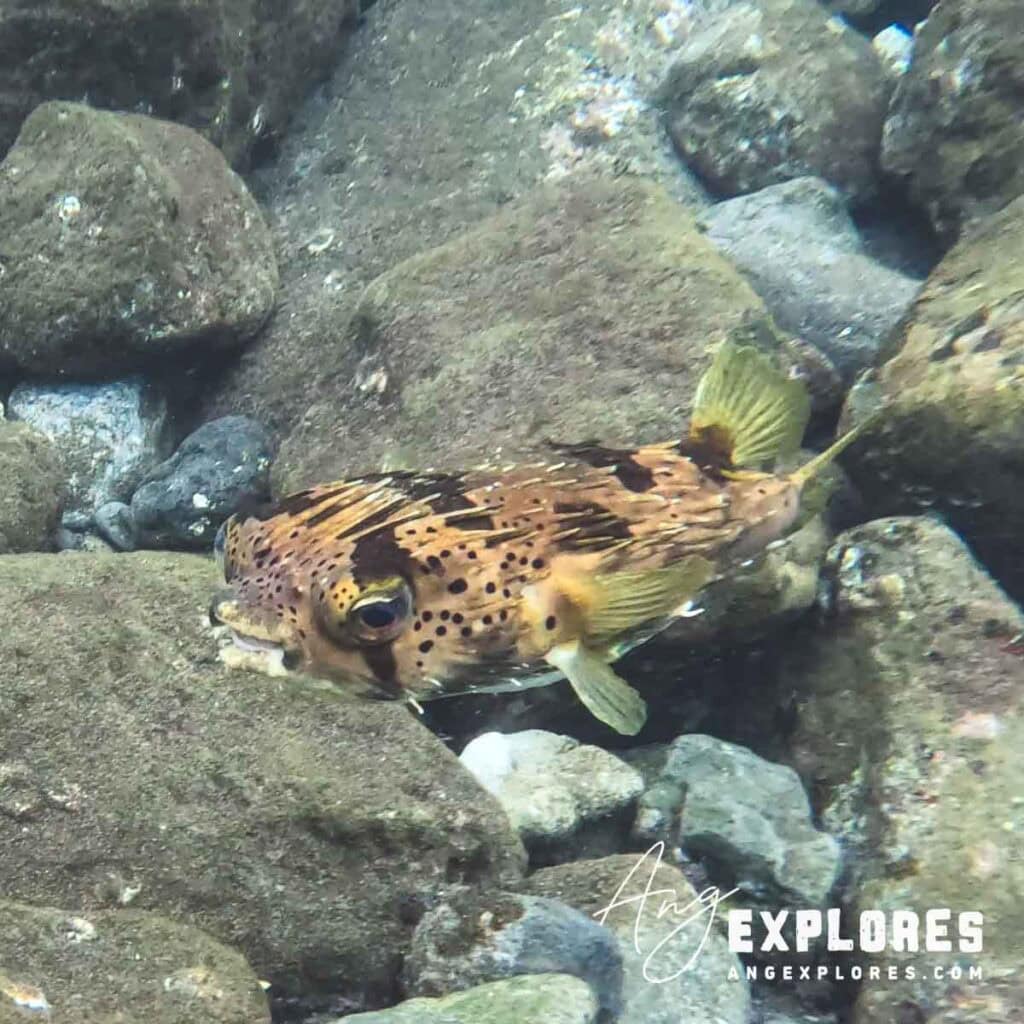
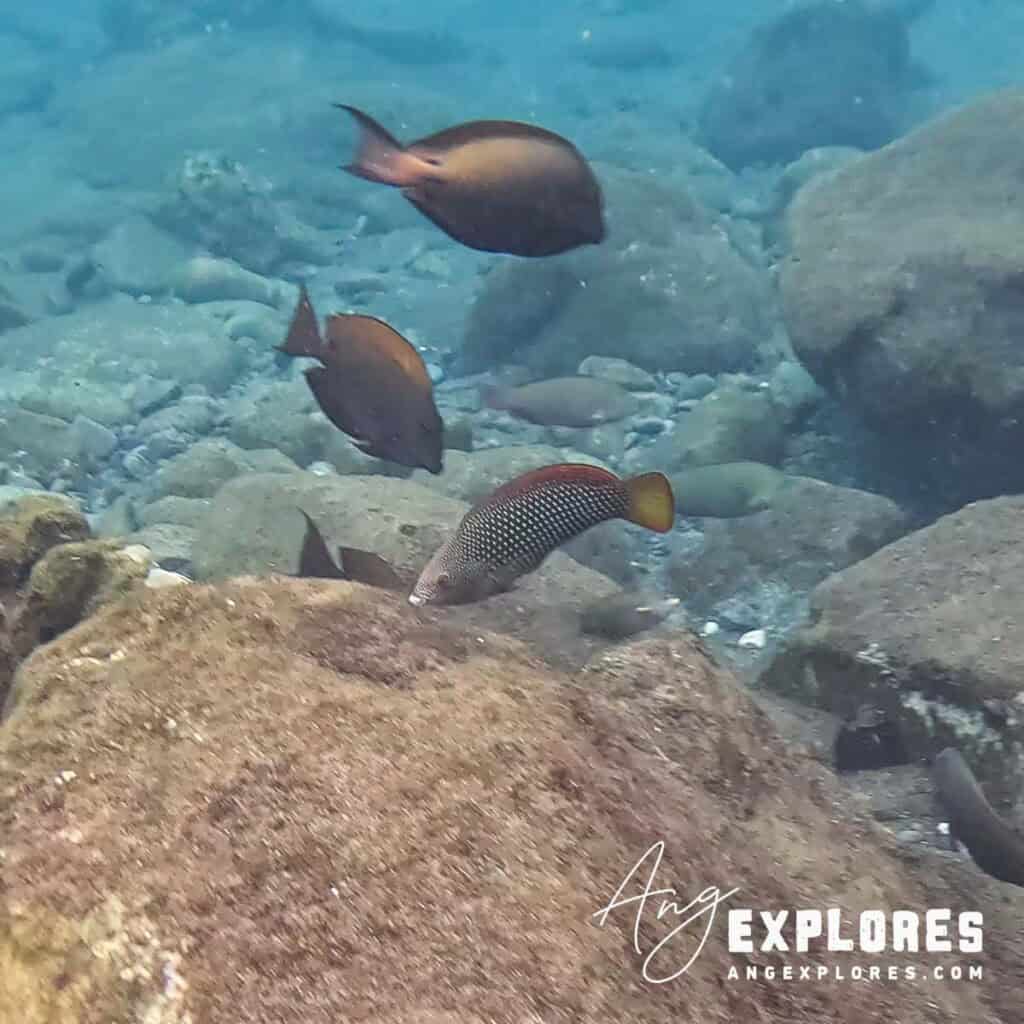
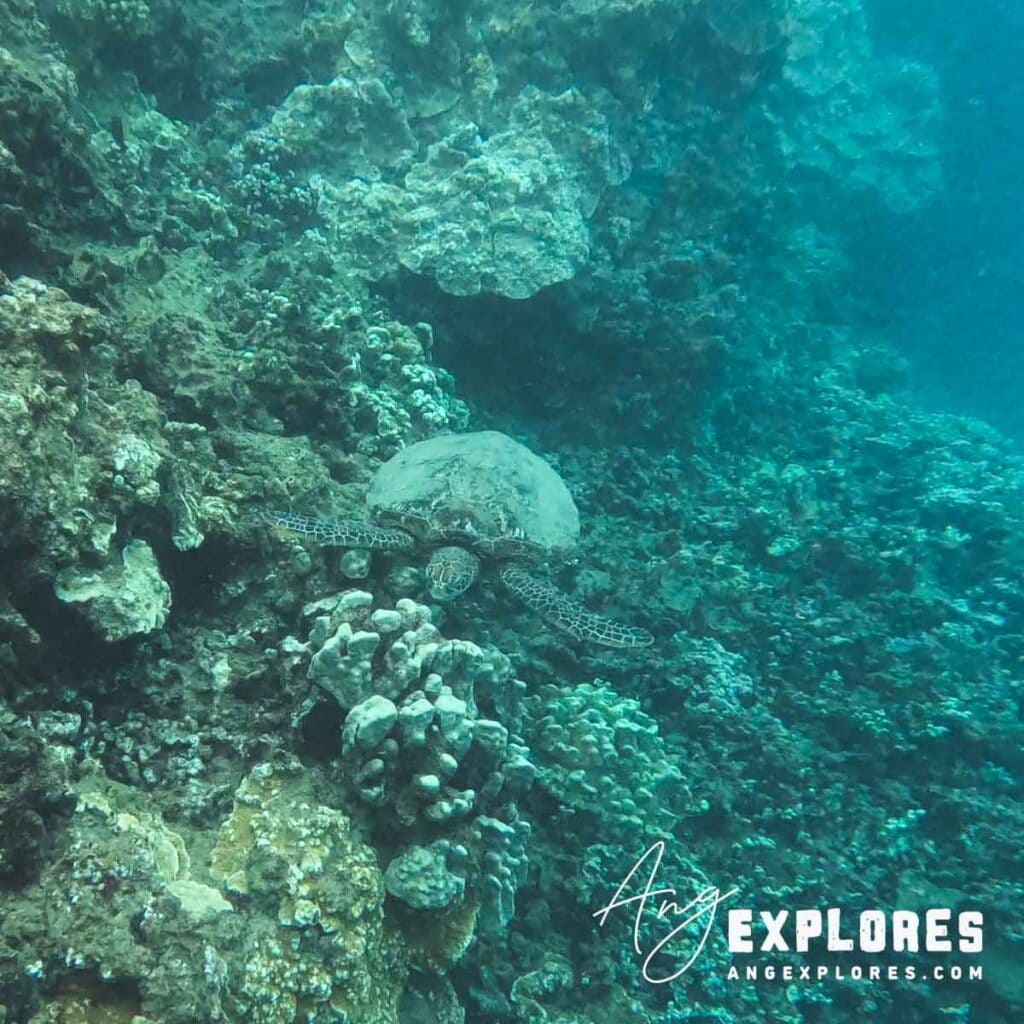
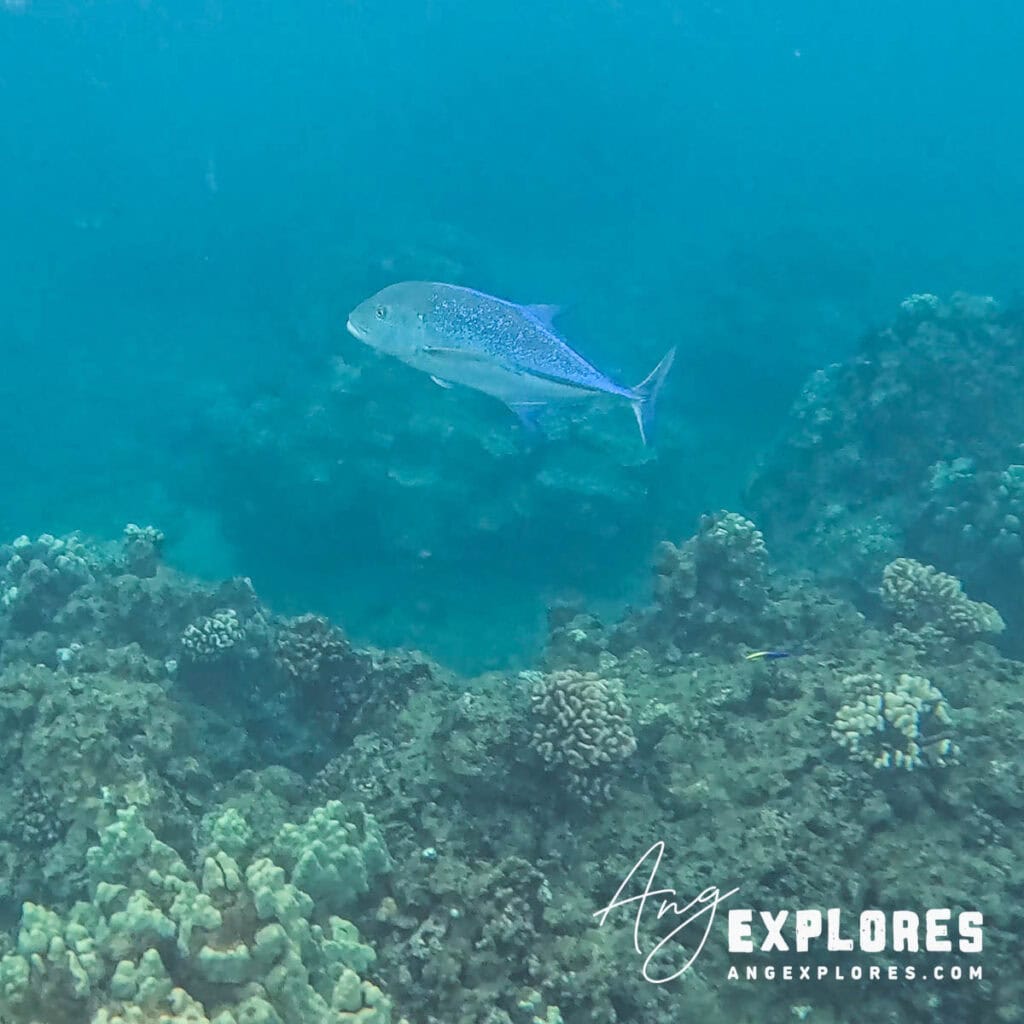
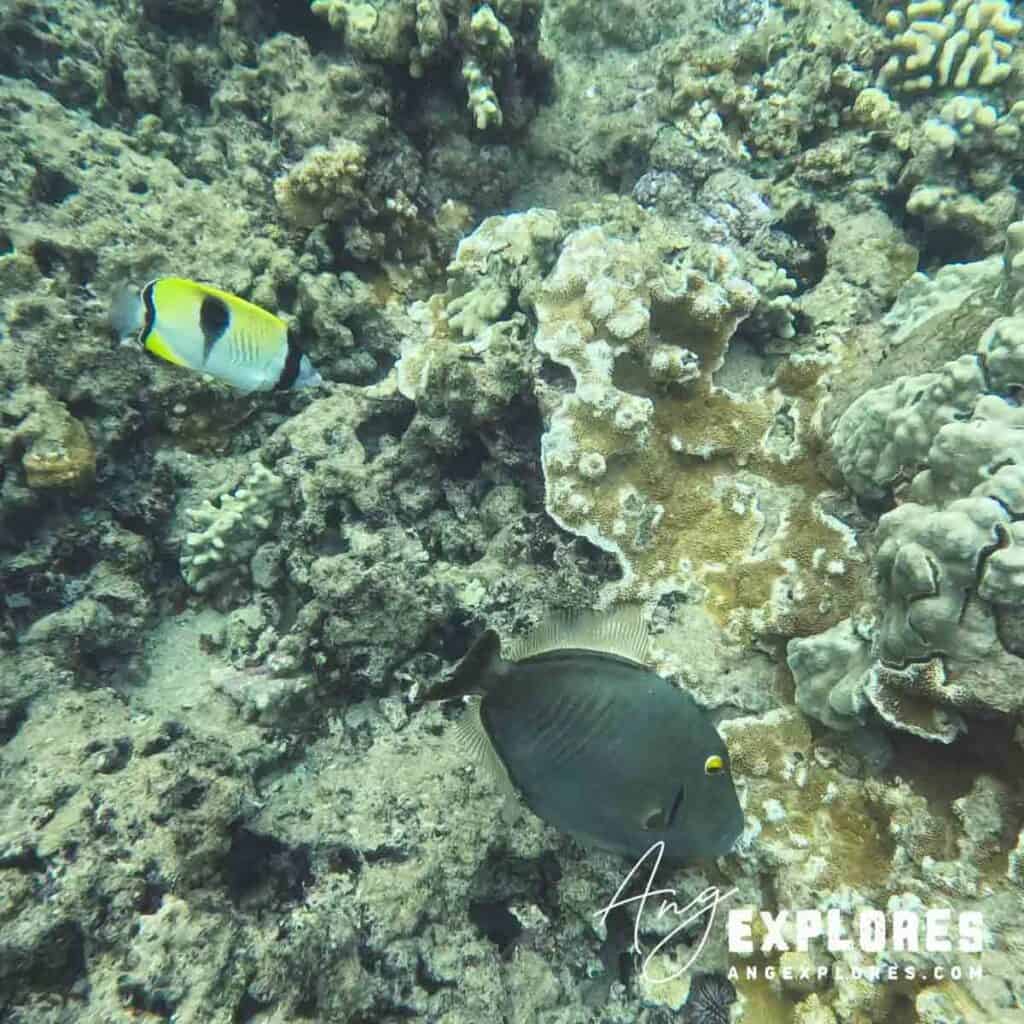
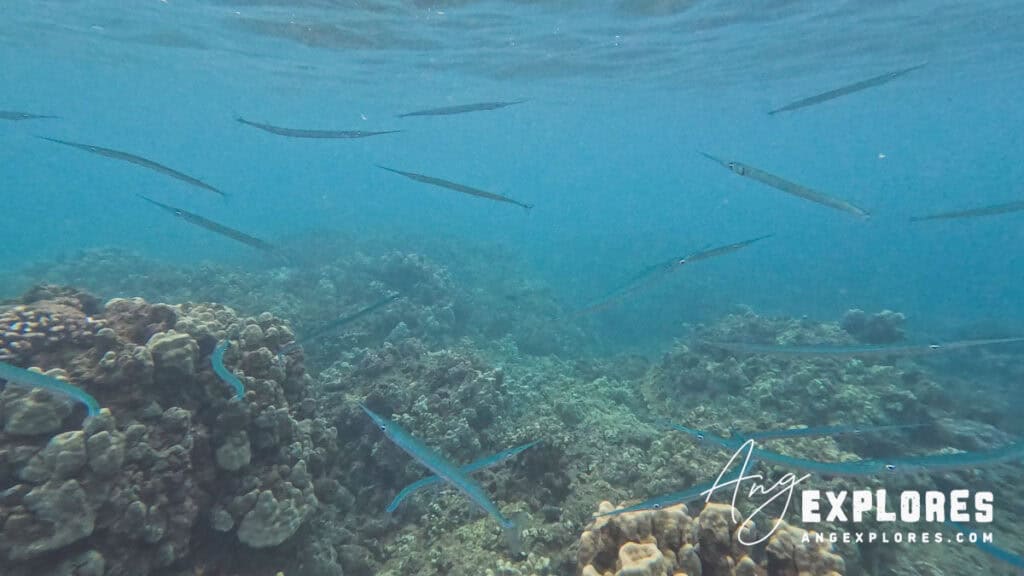
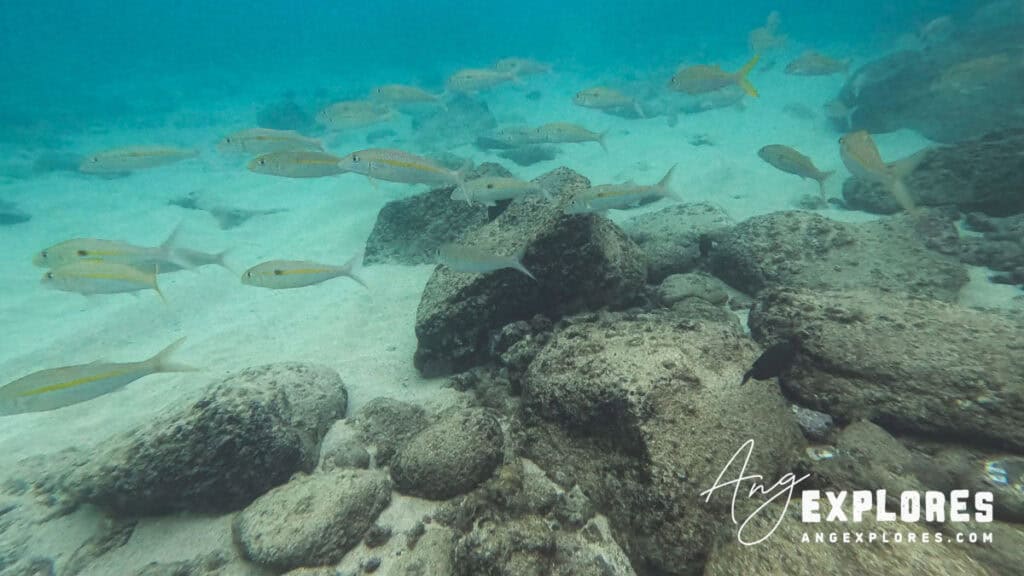
The coral was large and healthy, with depth changes that made the snorkeling feel exciting.
Spotted Eagle Rays at Honolua Bay – The Highlight of the Experience
As we were putting on our fins and masks and getting ready to enter the water, I noticed something in the water. It came and went, and I wasn’t sure what it was. At first I thought it was trash bobbing in the waves, and as it got a little closer I thought it might be a shark. Here you can see a fin poking out of the water near the center of the photo:
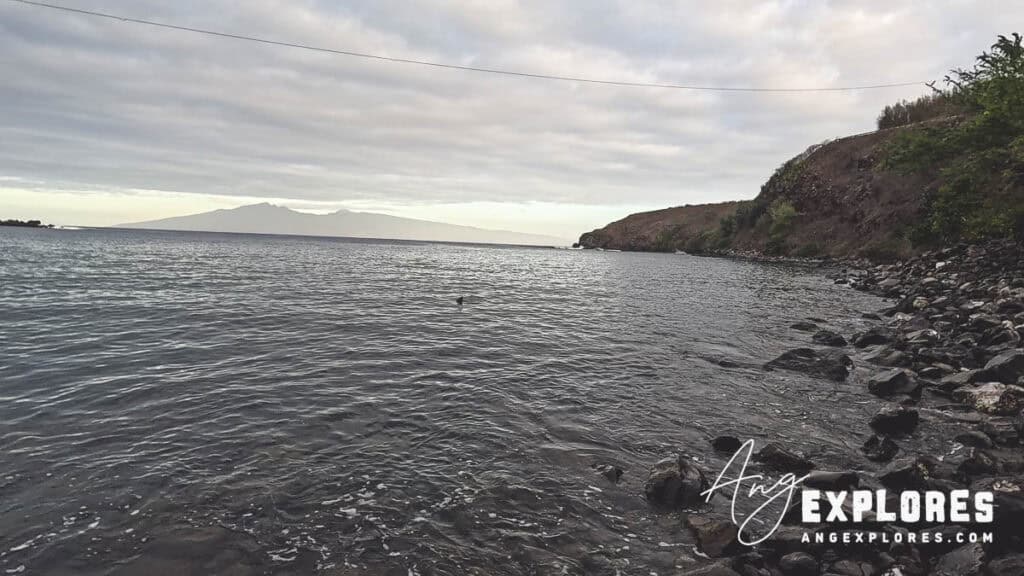
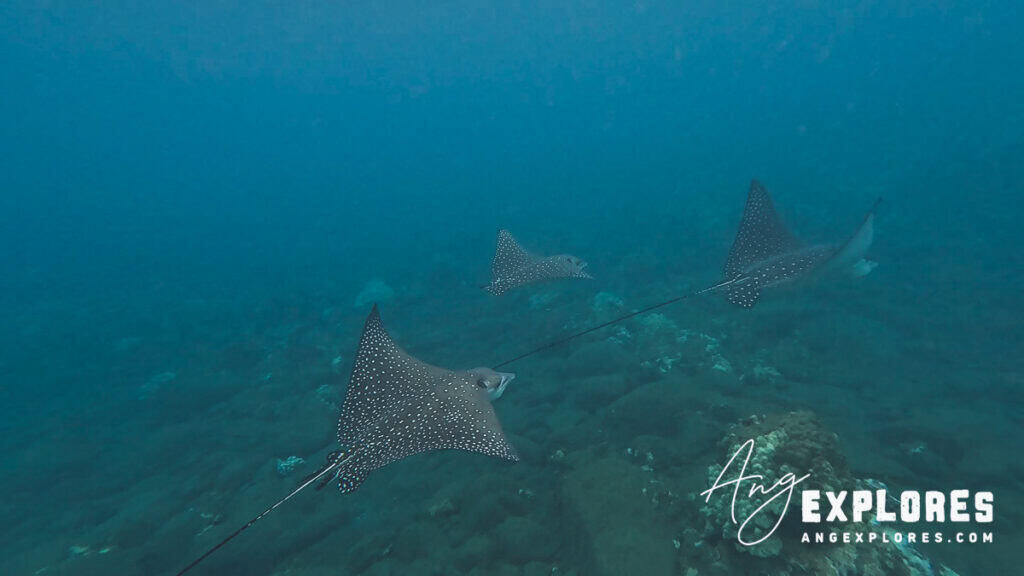
I kept my eye on it and when multiple appeared at a time, all quite close together, I realized it was probably the “wings” (pectoral fins) of several rays. I rushed to get my gear on, got in the water, and swam towards the middle of the bay where three spotted eagle rays were swimming.
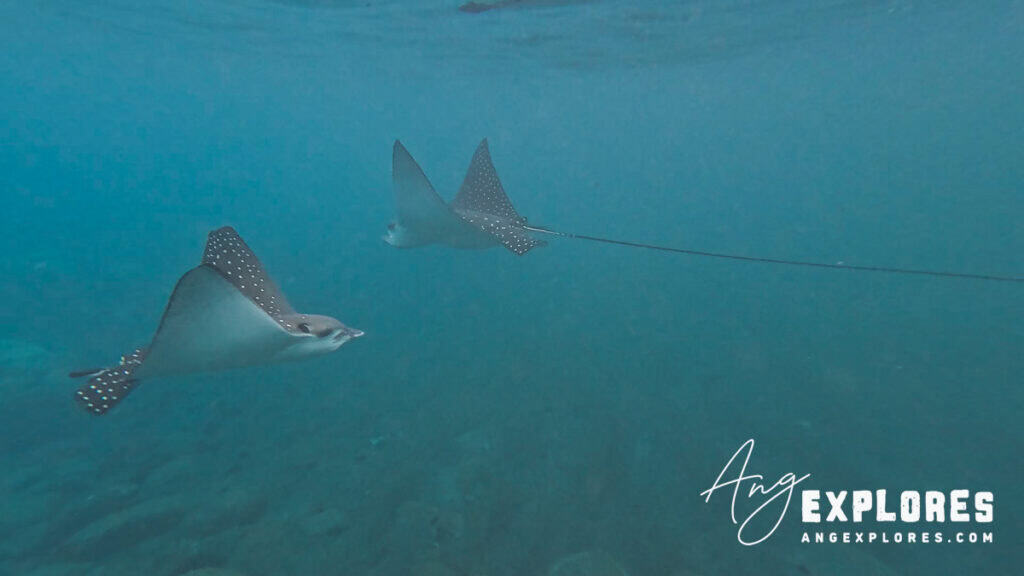
They weren’t too shy and didn’t appear to mind my presence. The smallest one seemed curious and swam right by me, which was hands down the best moment of my Honolua Bay snorkeling experience.
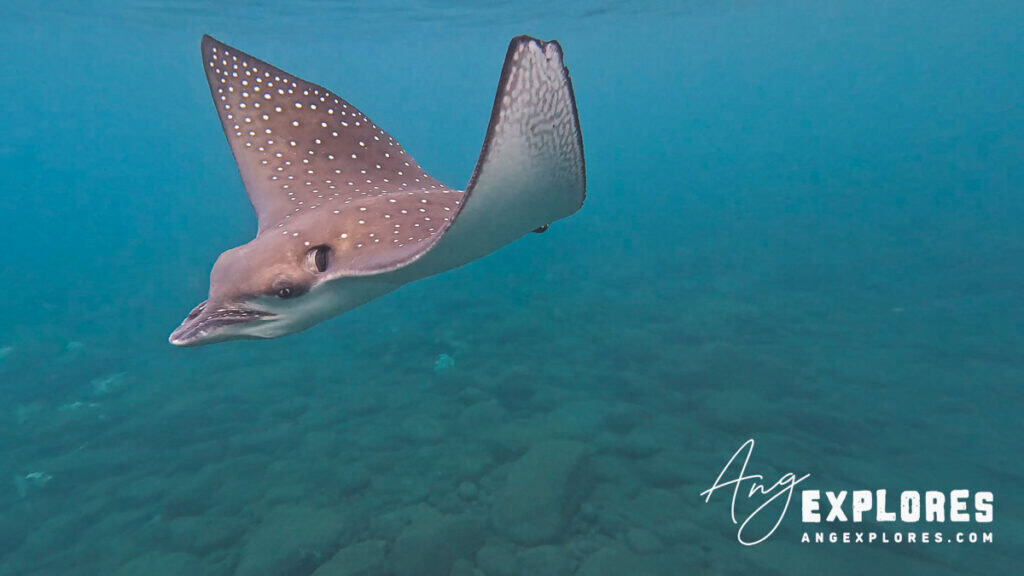
I’ve seen spotted eagle rays a few times, including one last year when we went diving at Makena Landing in south Maui. But this was the closest I’ve ever been to an eagle ray – so exciting!
What I liked about Honolua Bay
Fish Behavior
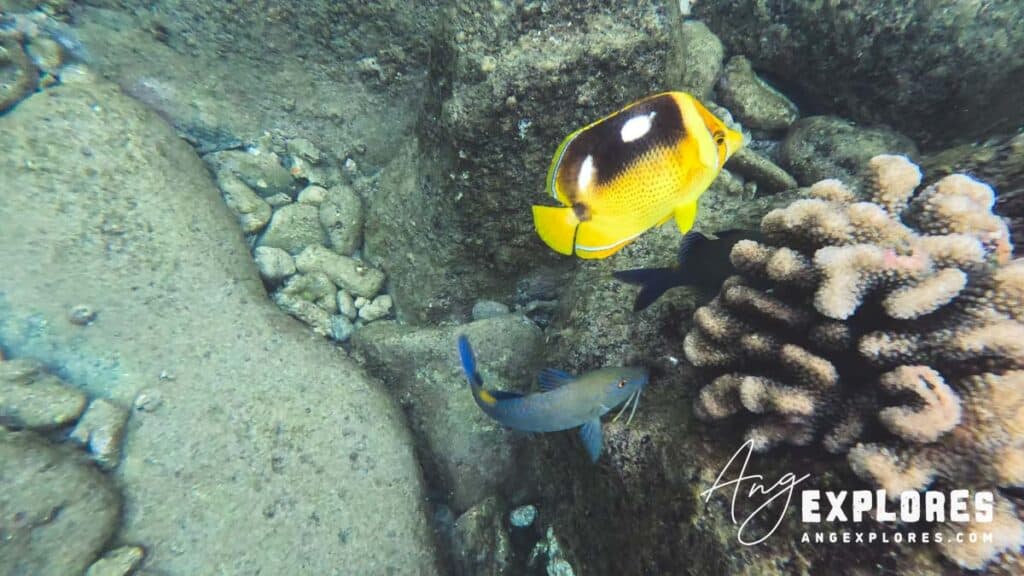
One unique thing about Honolua Bay was that the fish didn’t seem to be too afraid of snorkelers. Similar to our experience snorkeling at Molokini Crater (also a protected marine area), we could get much closer to marine life without fish immediately darting away.
Fish Variety
As you can see from my list above, there was a wide variety of fish at Honolua Bay.
Crowds (or Lack Thereof)
We arrived early and were the first people in the water. Two snorkelers arrived later, and a few more were arriving as we exited. It was the least crowded spot we visited on this trip to Maui.
Is Honolua Bay Worth Snorkeling?
Yes . . .no . . . and . . . it depends! Even on an imperfect day with moderate visibility, Honolua Bay stood out to me as one of the best snorkeling spots in Maui due to:
- Great marine life variety
- Large, healthy coral formations
- Fish that didn’t swim off when we were close
- A quiet, more natural setting
On a clear, calm day, I can easily see Honolua Bay being one of Maui’s best snorkel spots.
When Honolua Bay Is a Good (or Bad) Choice for Snorkeling
Honolua Bay snorkeling can be amazing—but it is highly condition-dependent.
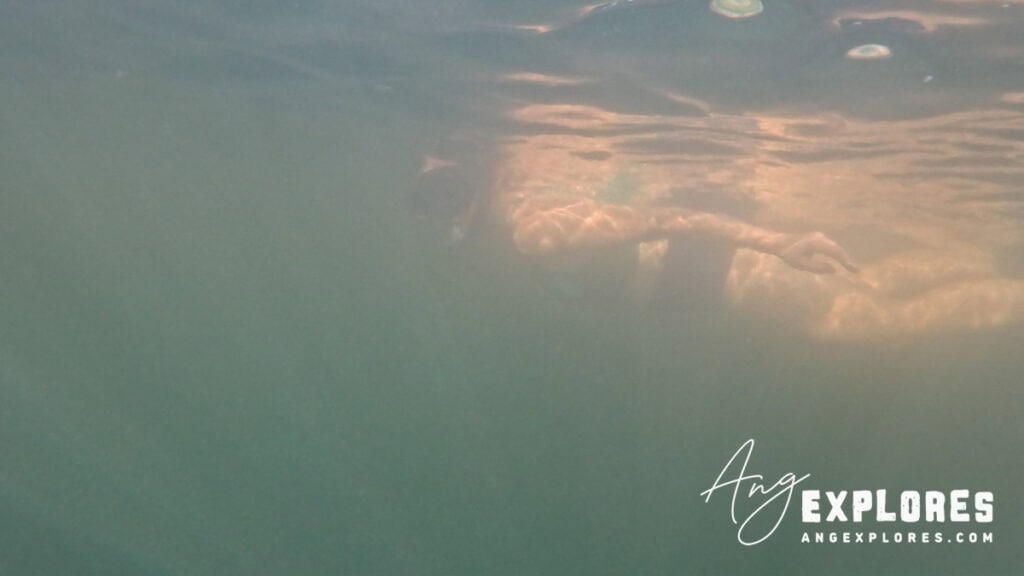
Last year we visited later in the day (not ideal), because it was the only time that we could fit it in. The visibility was so bad we could barely see two feet in front of ourselves. We exited the water minutes (probably seconds!) after we entered. Here’s a photo from last year–you can see the visibility was absolutely terrible:
Best Conditions for Snorkeling Honolua Bay
Honolua Bay is most likely to be good when:
- Early morning (ideally before 9am)
- Low or no north / northwest swell (swells are common during the winter months)
- Light or no winds
- Several calm days in a row (allows sediment to settle)
When Honolua Bay Is a Bad Choice
Honolua Bay is not worth snorkeling when:
- There is active north or northwest swell (check the surf reports)
- You see waves breaking inside the bay
- The water looks brown or milky from above
- There has been recent heavy rain (runoff leads to poor visibility)
What to Do Instead If Conditions Are Poor
If Honolua Bay looks murky or rough, some snorkeling alternatives include:
- Kapalua Bay (nearby, but more sheltered)
- Kahekili Beach
- Black Rock
- Molokini Crater (though you must book a boat tour for this)
- South Maui spots (Maluaka Beach, Ahihi Kinau, Makena Landing, etc.) if north swells are active
Honolua Bay vs Other Maui Snorkel Spots (Quick Comparison)
If you’re choosing between Maui’s top snorkel spots, here’s how I think Honolua Bay compares:
Honolua Bay vs Kapalua Bay
Kapalua Bay has an easy sandy entry and a small reef along the edges of the bay. Honolua Bay has a rocky entry, yet offers a larger reef, fewer people, and more diverse marine life.
Honolua Bay vs Black Rock (Kaʻanapali)
Black Rock is popular, but the reef area is fairly small and heavily trafficked. Honolua Bay feels far more natural, with a much larger reef and more variety of fish. We saw more sea turtles at Black Rock than we did at Honolua.
Honolua Bay vs Molokini Crater
Molokini usually wins on water clarity and consistency but requires a boat tour, and is often quite crowded. Honolua Bay is free, and accessible from shore. Honolua Bay seemed to have more fish, but the fish at both locations allowed snorkelers to get quite close.
Honolua Bay vs Ahihi-Kinau Reserve
Both offer a rugged, undeveloped feel, both have a rocky entry and neither one has a sandy beach. On an average day, Ahihi-Kinau will more predictably have clear water, especially during the winter. The reef at Ahihi-Kinau is deeper in many spots than it is at Honolua Bay, and because of that, you are a bit further away from the fish than you are at Honolua Bay. Both have an incredible variety of fish–these two snorkel spots are among my top favorites in Maui.
Final Tips for Snorkeling Honolua Bay
- Go early—this matters more here than almost anywhere else
- Don’t rely solely on snorkel reports–check the surf reports and view the water from above
- Be prepared for the rocky entry, and take your time getting in (unless you see a fever of rays…haha!)
- Snorkel the edges, but don’t ignore the middle of the bay. Unlike many Maui snorkel spots, Honolua has a reef that extends far into the bay with plenty to see away from the shoreline