Kayaking & Snorkeling at Captain Cook Monument: Our Experience at Kealakekua Bay
Quick Overview
Activity: Kayak/Snorkel
Location: South Kona, Big Island, Hawaiʻi
Highlights: Clear water, jumping fish, HUGE schools of yellow tang
Quick Facts: Captain Cook Monument Snorkeling & Kayaking
Location: Kealakekua Bay, South Kona, Big Island, Hawaii
Best Access: Kayak from Kahauloa Bay (~1.5 miles roundtrip) OR guided boat tour OR hike the Kaʻawaloa Trail (~3.7 miles roundtrip)
Best Snorkeling Time: Early morning for calmest water + best visibility
Difficulty: Easy–moderate (beginner-friendly snorkeling, but kayak route is moderately challenging at ~1.5 miles round-trip)
Water Clarity: Excellent (70+ ft visibility)
Marine Life: Yellow tangs, parrotfish, malolo (flying fish), eels, trumpetfish, black triggerfish and more
Highlights: Excellent visibility, huge schools of fish
Regulations: No beaching kayaks on shores of Kealakekua Bay unless permitted; no touching coral or marine animals; reef-safe sunscreen only
Facilities: None
Best Snorkeling on the Big Island
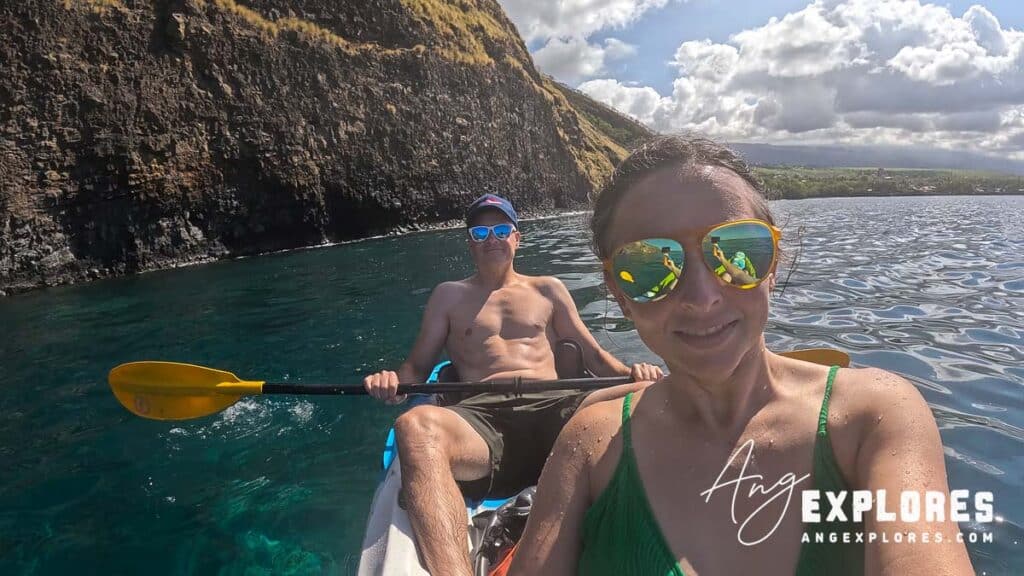
Jim and I only had a few days on the Big Island of Hawaii, so with limited time to explore, I wanted to make sure we found the best snorkeling spot. Most reviews pointed to Kealakekua Bay (Captain Cook Monument) as the top snorkeling destination on the island — and it did not disappoint. The combination of calm, crystal-clear water and massive schools of vibrant fish made it one of my most memorable snorkeling experiences in Hawaii.
Here’s what our morning at Captain Cook looked like — from kayaking in to the underwater highlights.
How to Access Kealakekua Bay for Snorkeling
Unlike some spots in Hawaii where you can walk right in from the shore, access to Kealakekua Bay snorkeling is a little more challenging. Your options for snorkeling here are:
- Hike in from the Captain Cook Monument Trail. This is almost a four mile hike roundtrip, with the second half (following snorkeling) being uphill. I like hiking, but an uphill climb with wet hair + hands full of snorkel gear just didn’t sound super appealing to me (and with limited time, this really wasn’t a good option).
- Take a boat tour. There are many companies that will take you by boat to snorkel at Kealkakekua Bay.
- Kayak in (guided or self-guided).
Our time on the Big Island was limited; booking the self-guided kayak tour was the most flexible and time efficient option for us.
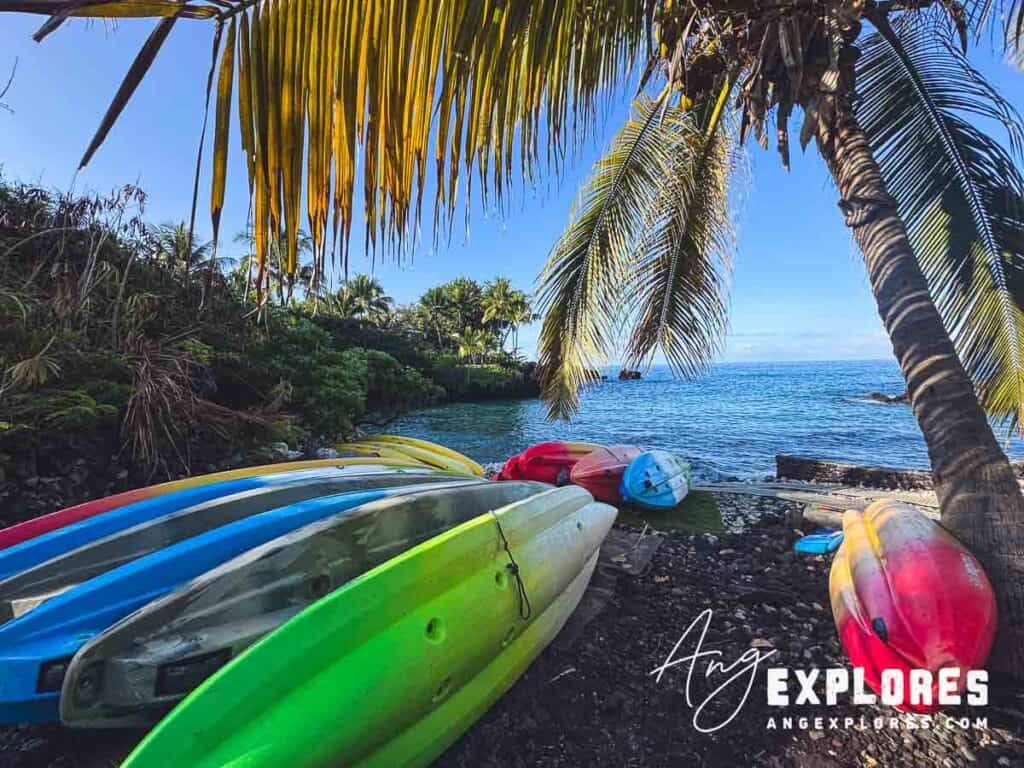
Renting a Kayak from Ehu and Kai Adventures
We rented a double kayak from Ehu and Kai Adventures, located right on Kahauloa Bay — a small sheltered cove just south of the main expanse of Kealakekua Bay. With the kayak rental they also included:
- A dry bag, perfect for keeping car keys and other valuables safe and dry.
- Two mesh bags for our snorkel gear, making it easy to store everything while paddling.
- A tow line attached to the front of the kayak, which is especially useful since landing on shore at the monument is not permitted.
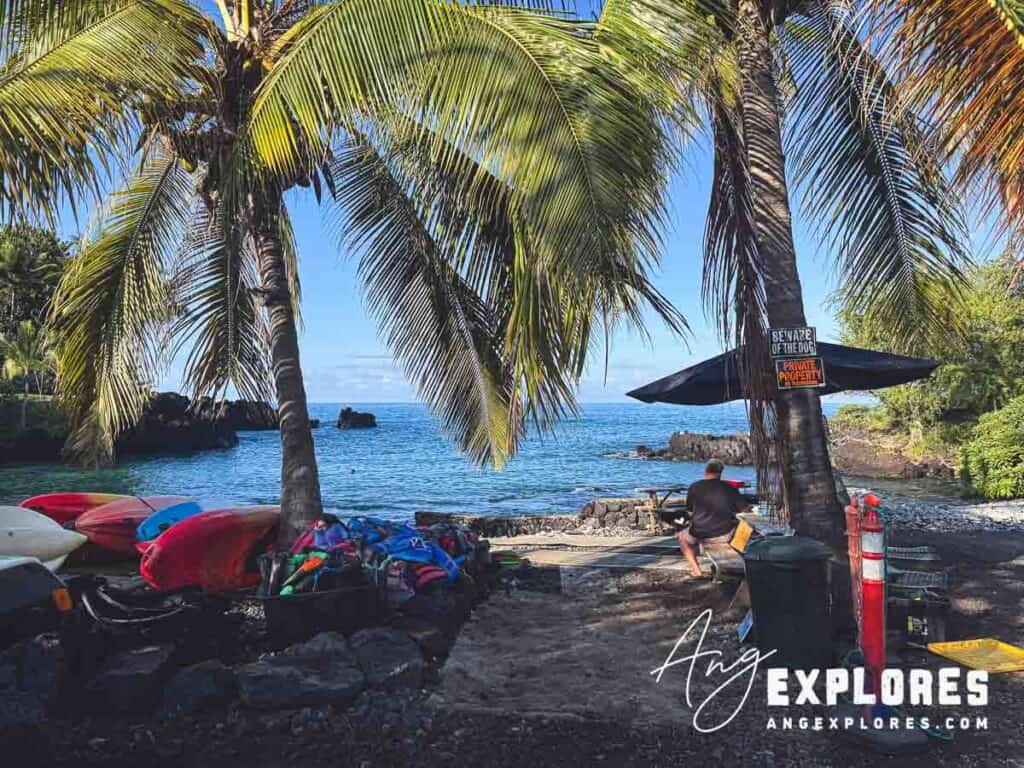
We checked in with a staff member at their picnic table, then launched from the shoreline:
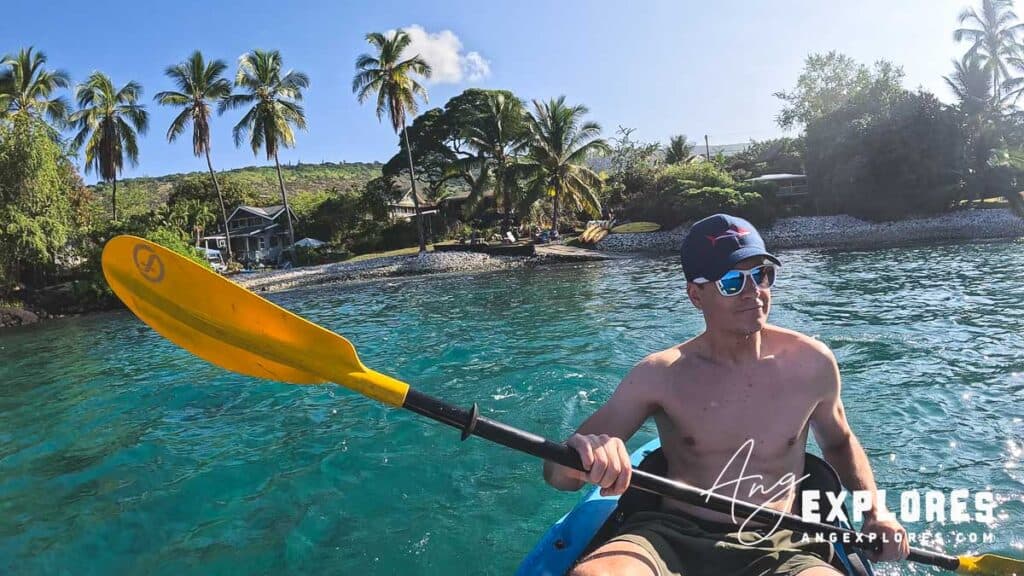
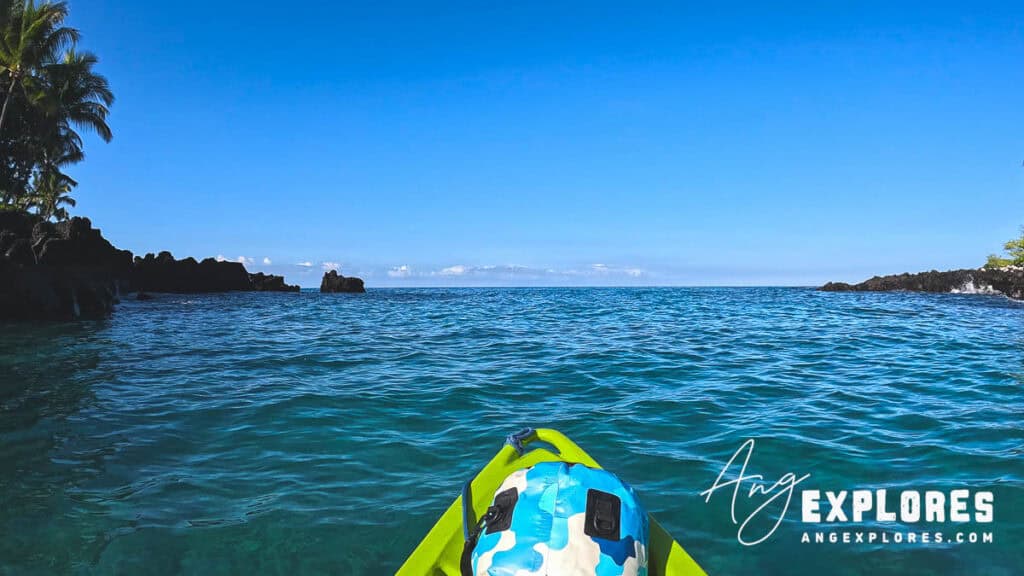
Exit the cove, then turn right to enter Kealakekua Bay:
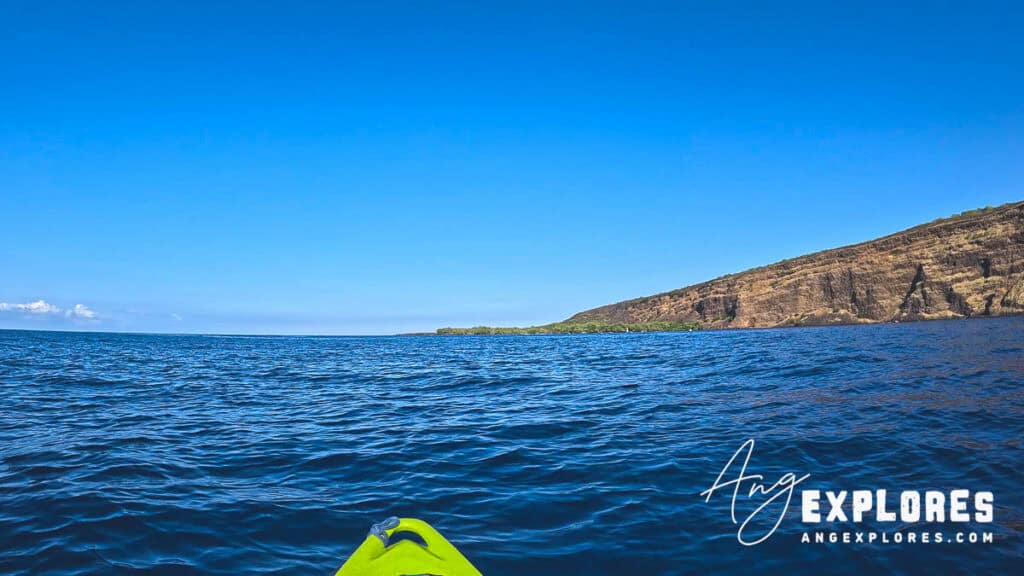
As you paddle keep your sights on the Captain Cook Monument, the tall white obelisk that’s visible even from the other side of the bay and serves as an easy navigational target (in this photo it’s the tiny white dot in the trees).
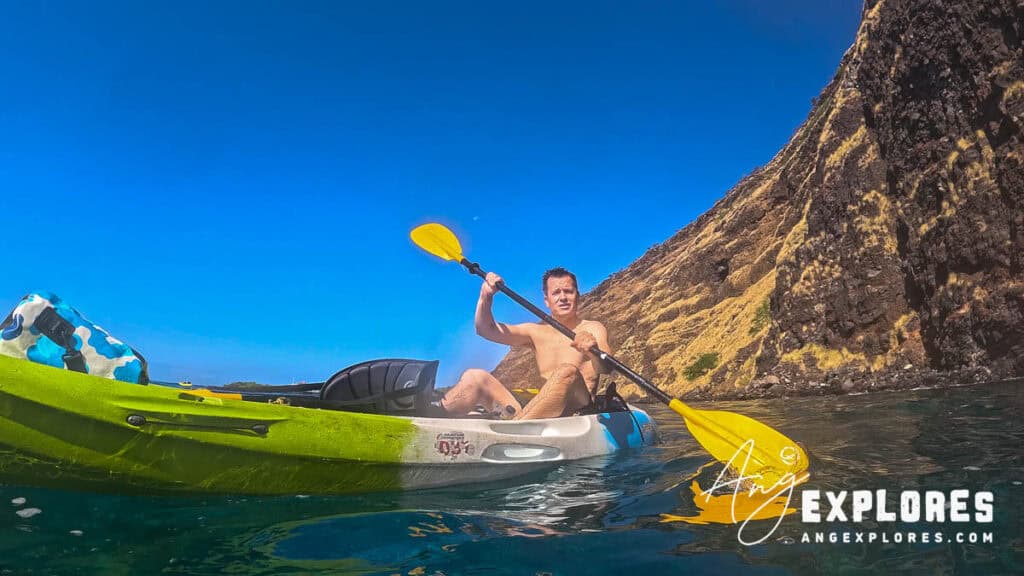
Kealakekua Bay is wider than it looks on a map, so I was thankful to be in a double kayak with Jim sharing the work. As a beginner kayaker, I’d call the paddle across the bay moderately challenging. It took us about 20 minutes to arrive at the snorkeling area near the Captain Cook monument (which you can partially see near the center of this photo):
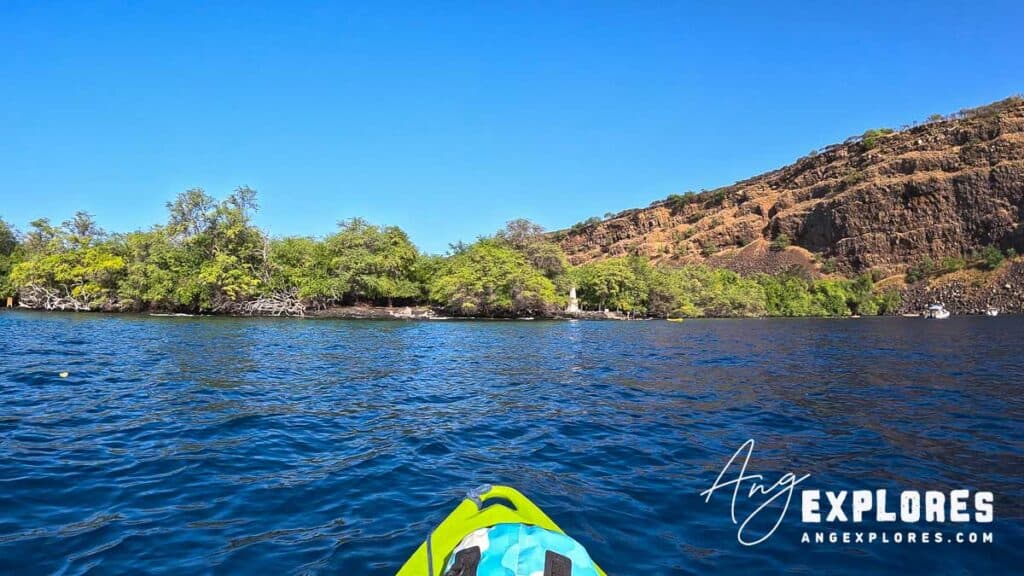
TIP: Don’t forget water! Even at 8AM it was pretty hot sitting in direct sunlight. I’m glad we brought plenty of water so we could take a quick break midway through the paddle and rehydrate.
Flying Fish on the Paddle In
On the way out, we got an unexpected show — flying fish (malolo) skimming and gliding over the surface. They reminded me of a skipping stone–bouncing across the water a few times before diving back under. I looked it up afterwards, and learned that Hawaii has several species of flying fish–Kealakekua Bay is a hotspot for them. A few other things I learned about these Hawaiian flying fish:
- They have oversized pectoral fins that act like wings, allowing them to glide long distances above the surface
- They can glide far and fast — up to 100 yards across the surface, at speeds of up to 40 MPH
- Flying fish jump primarily to escape predators (tuna, trevally, dolphins)
Snorkeling Route & Water Conditions
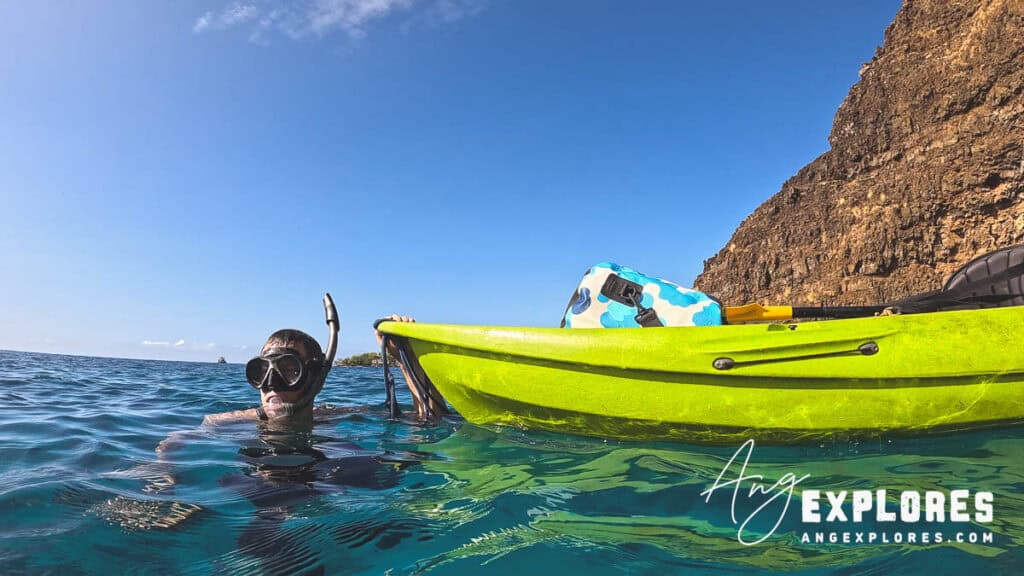
Once we made it to the north end of the bay near the monument, we hopped out of the kayak into the water.
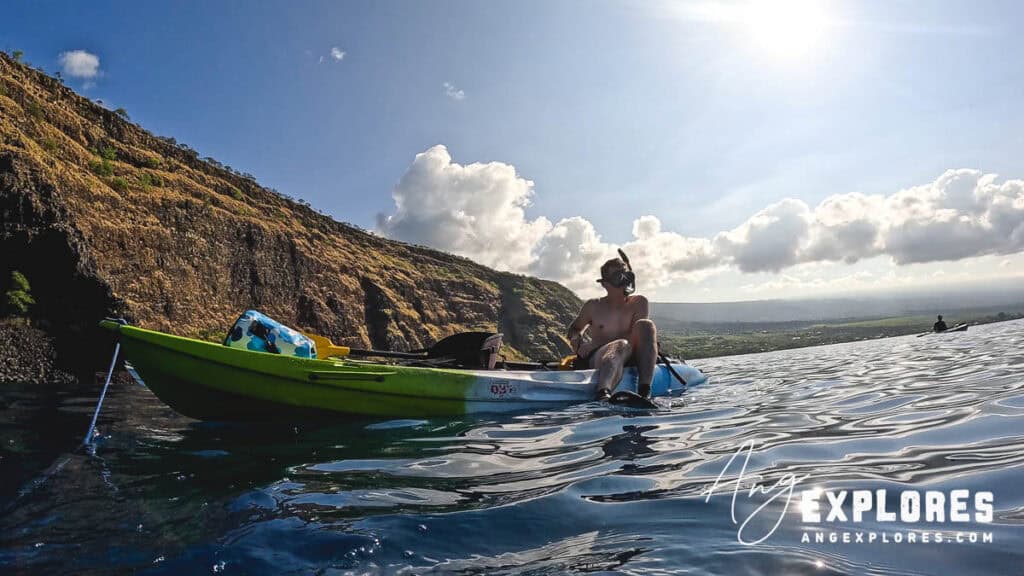
We started snorkeling near the monument and worked our way:
- north along the shoreline first, and then
- southeast, staying fairly close to the coast.
The map below shows a rough idea of the kayak route we took in red and our snorkel path in yellow (I also added an orange marker to indicate parking as well as the location of Ehu and Kai Adventures):
Freshwater Mixing (Halocline)
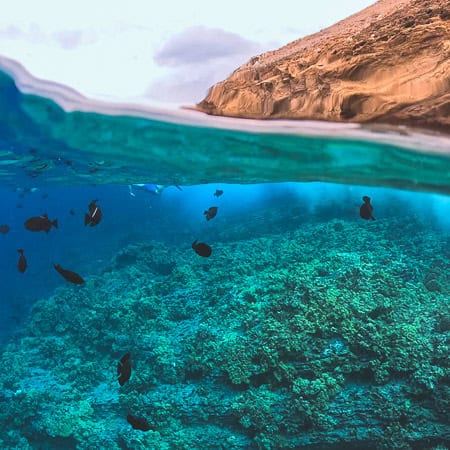
Near the Captain Cook monument we swam through a few small patches where the water looked blurry or wavy, almost like underwater heat haze.
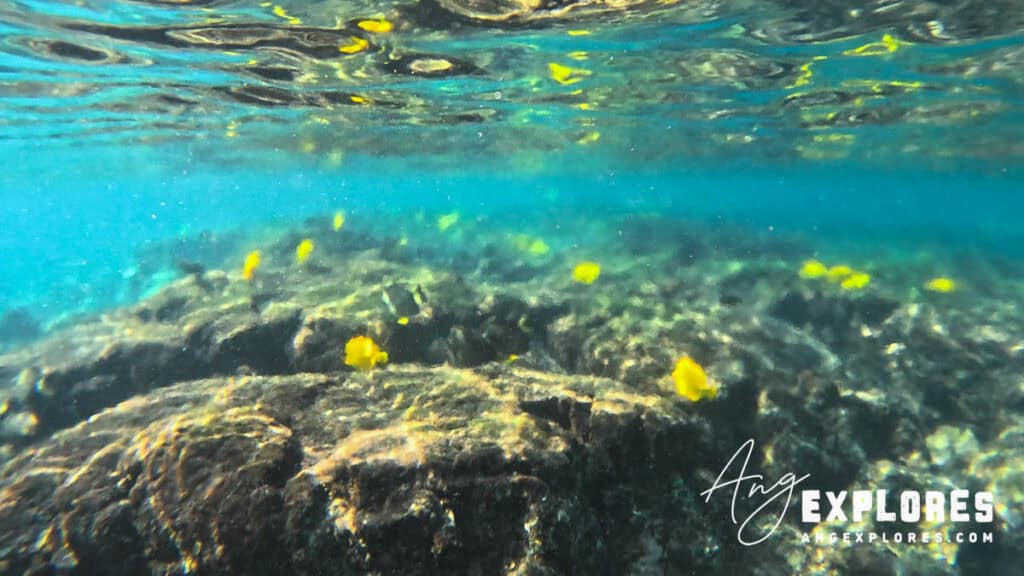
You can see it in the photo above—it’s not out of focus, it’s halocline; the effect of freshwater seeping through the lava rock and mixing with saltwater.
Visibility
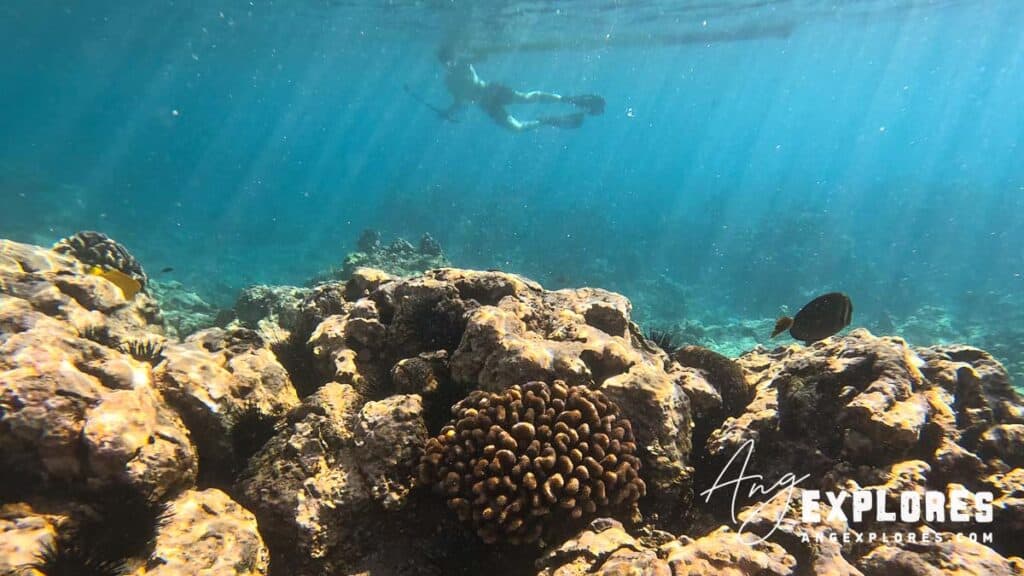
- Near the monument: the clearest water of our entire Hawaii trip — second only to the amazing visibility at Molokini Crater off the coast of Maui. We spent the most time in this general area.
- Heading southeast: the water slowly shifted—less clear and a little choppier. But the rocky areas near the shore still had plenty to see. Every time I thought, “Alright, time to hop in the kayak and start paddling back,” a huge school of fish appeared and pulled me further along. After a few rounds of this we’d made it surprisingly far past the monument.
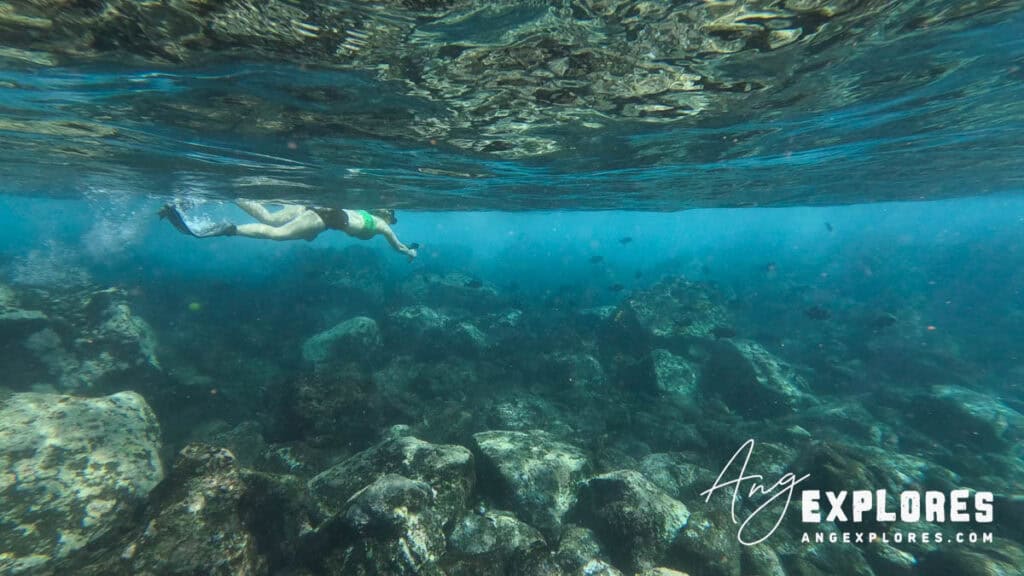
Marine Life We Saw
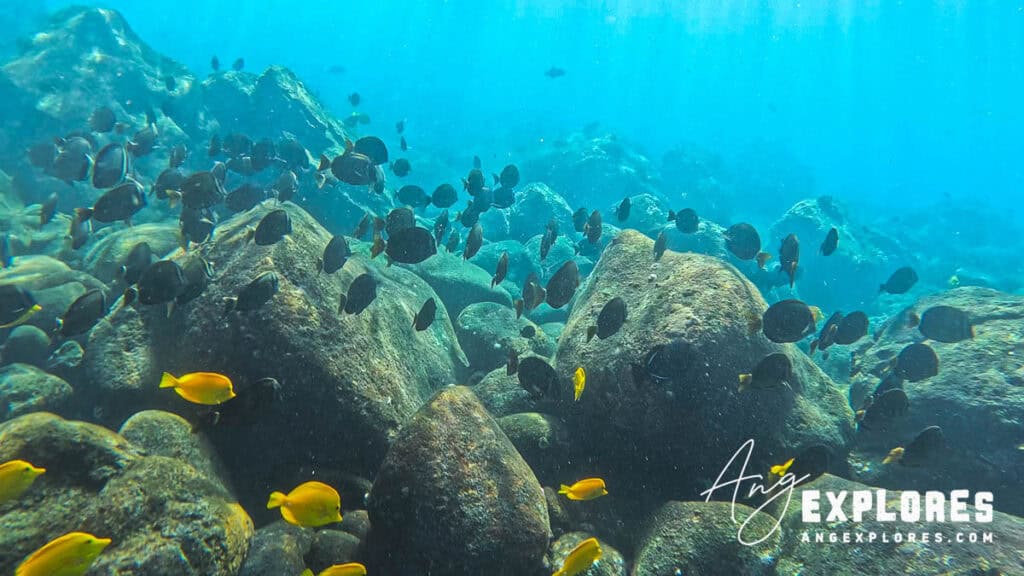
Highlights
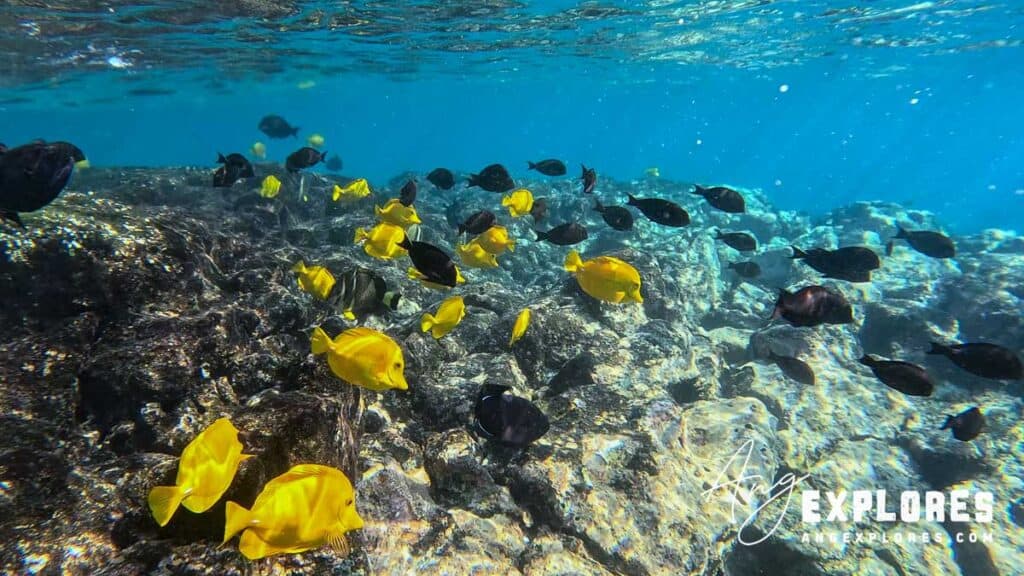
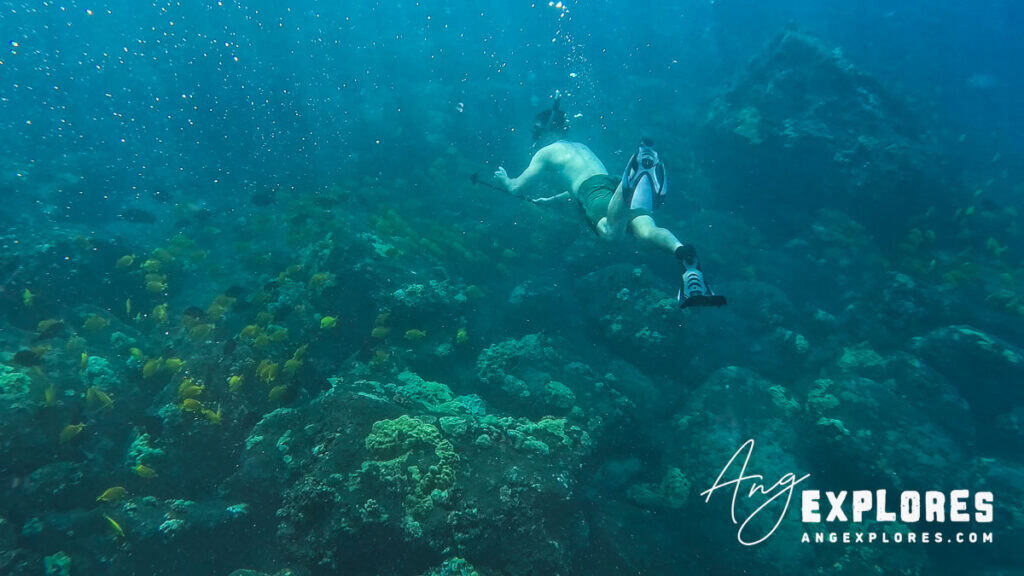
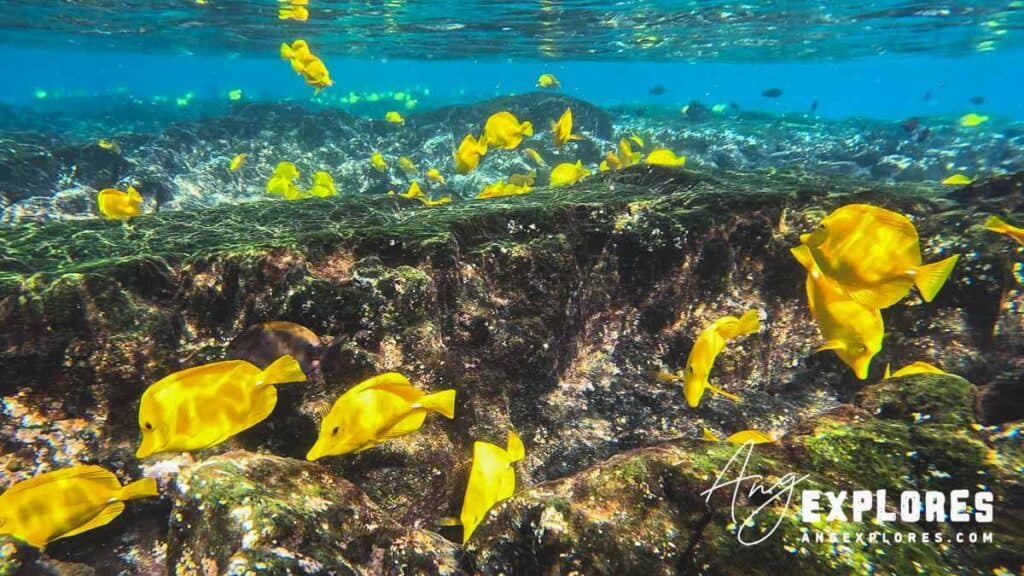
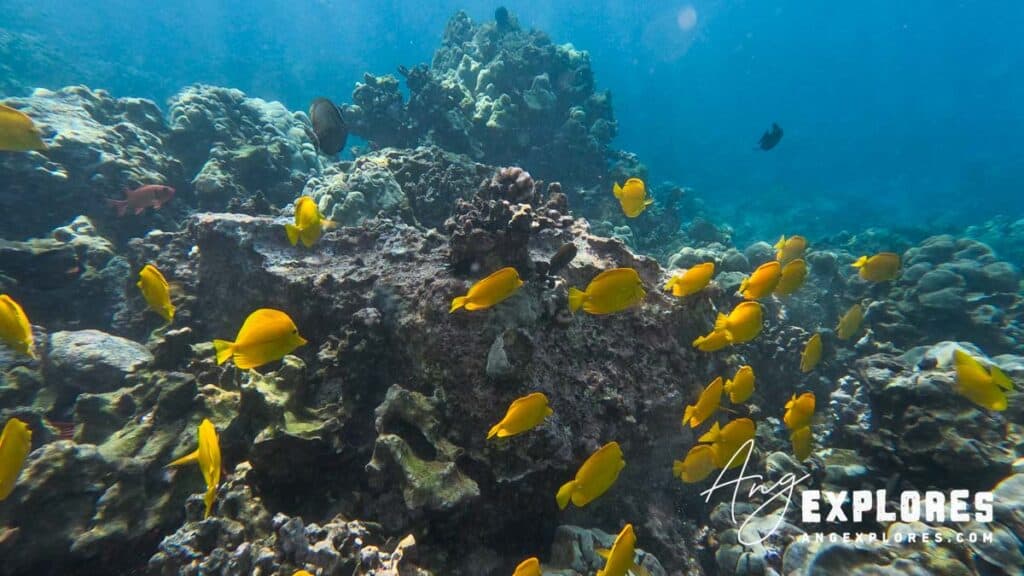
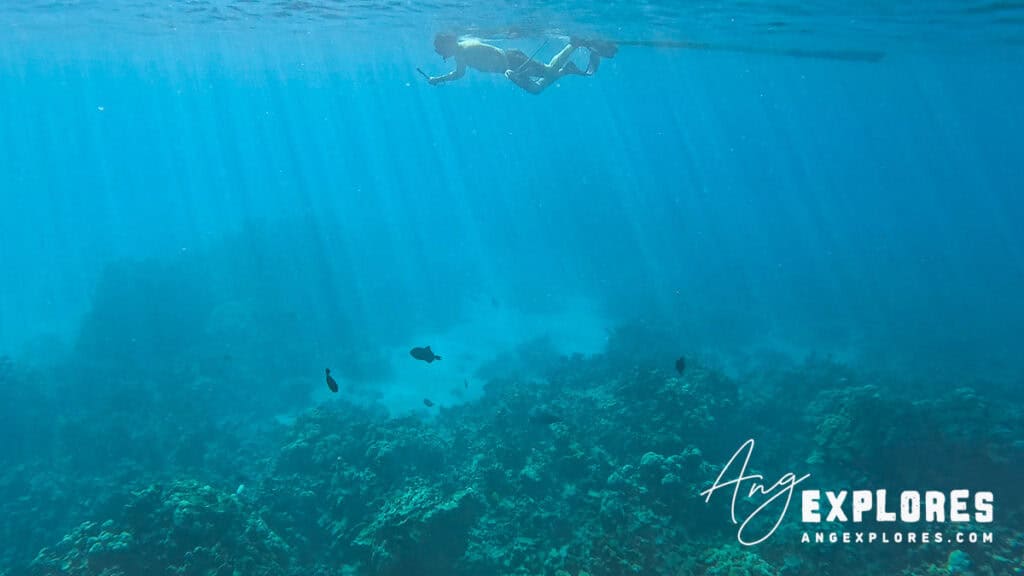
Huge schools of yellow tang — dozens at a time:
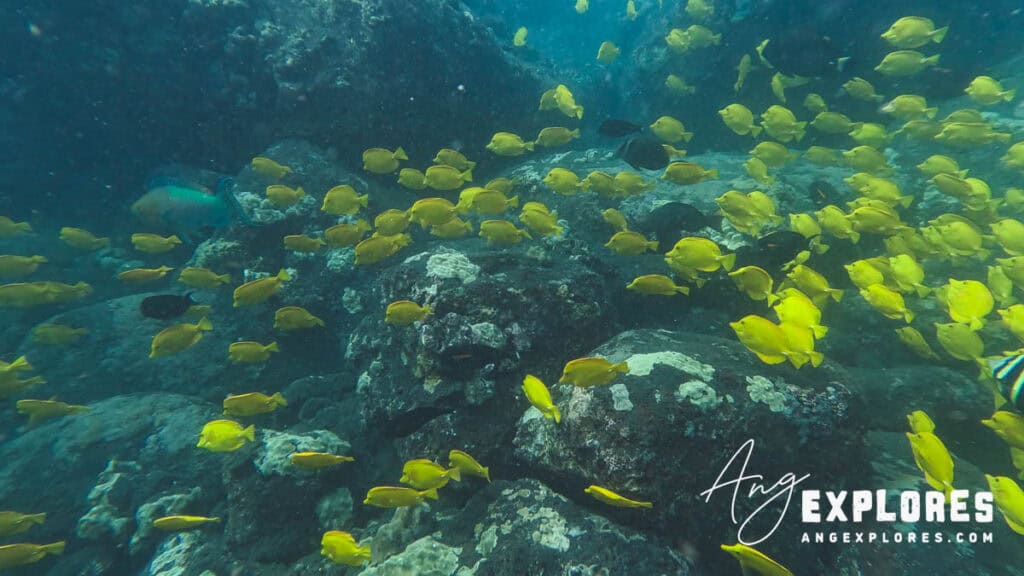
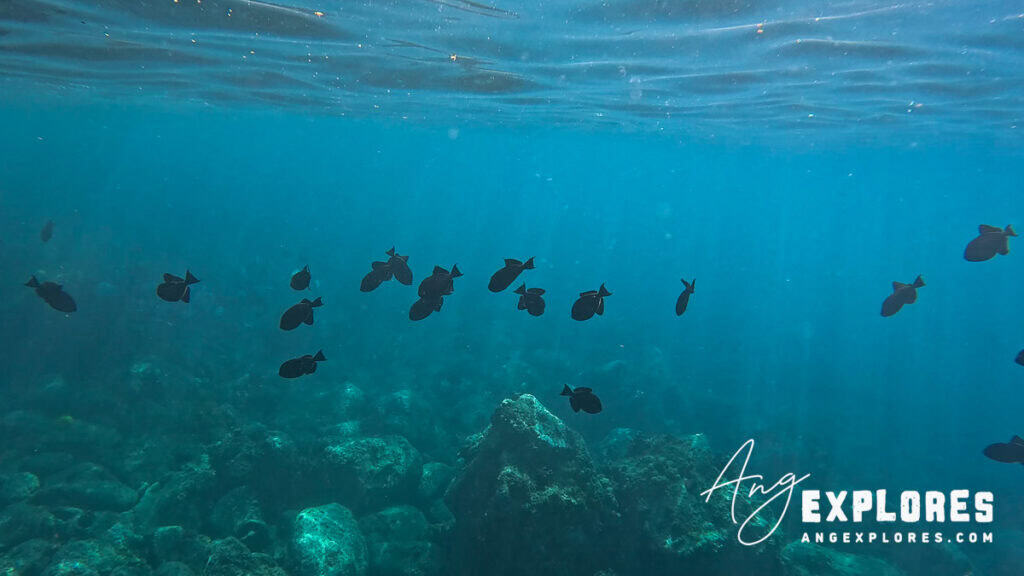
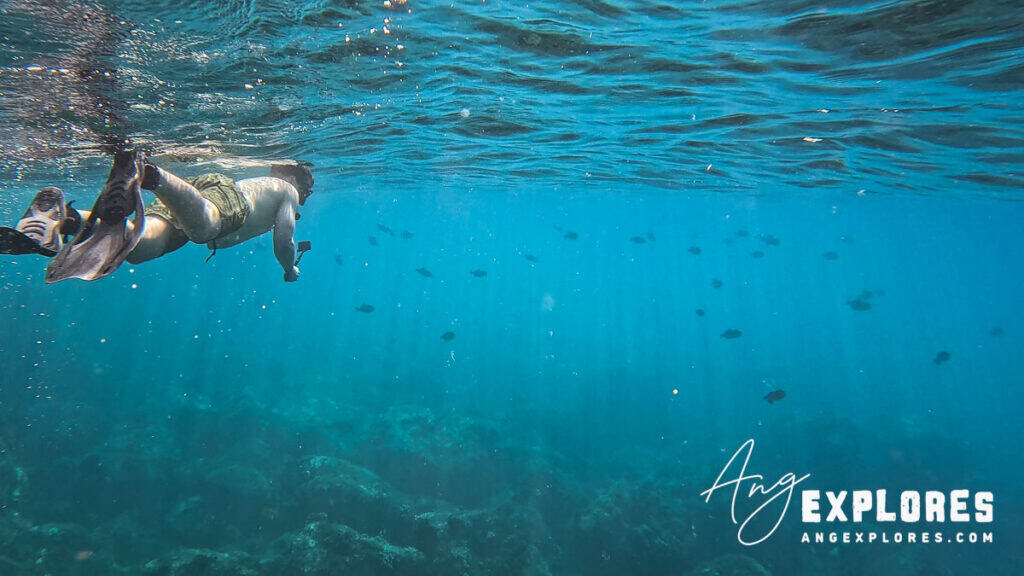
Schools of black triggerfish:
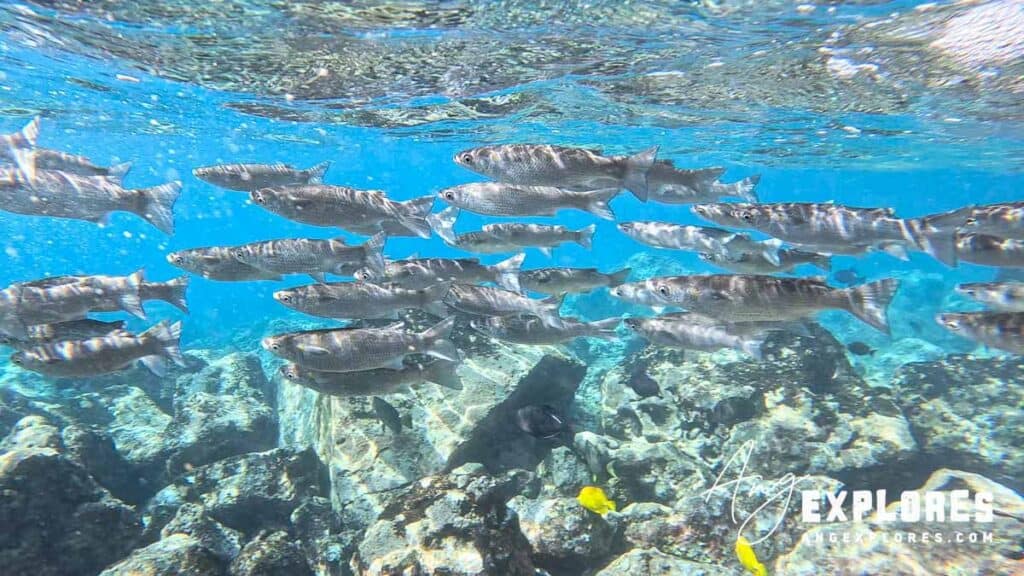
Sharpnose mullet:
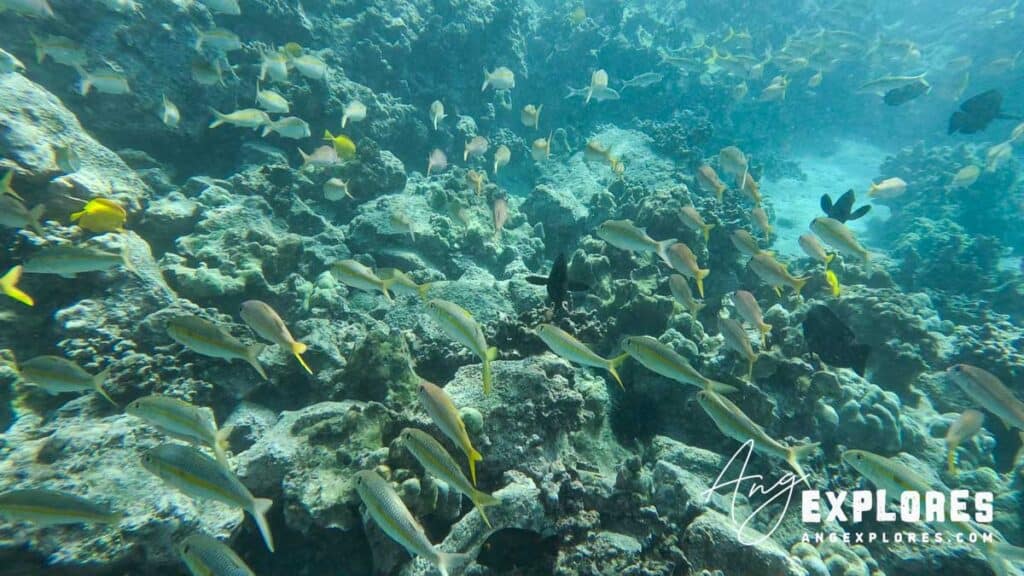
Tons of yellowstripe goatfish:
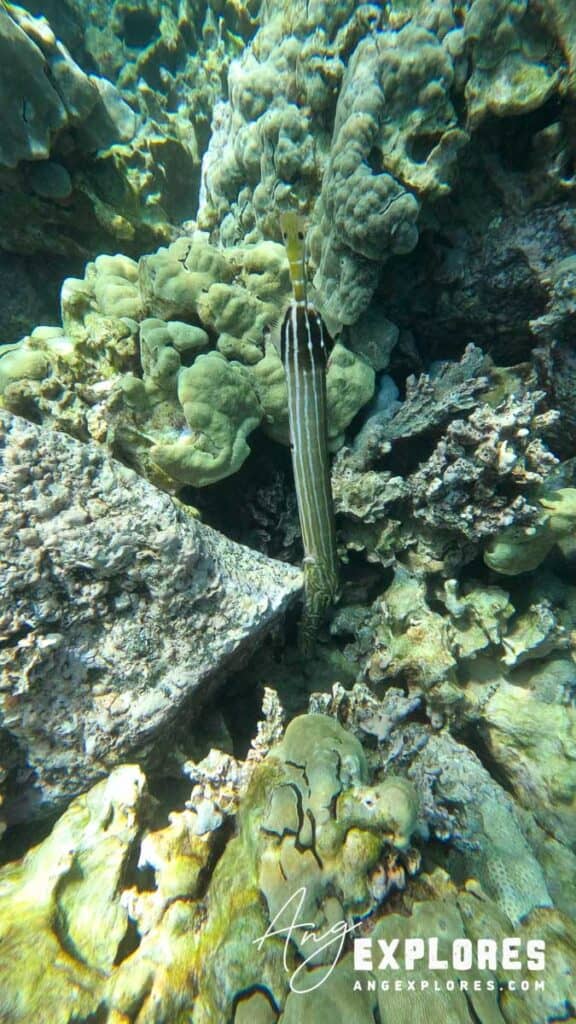
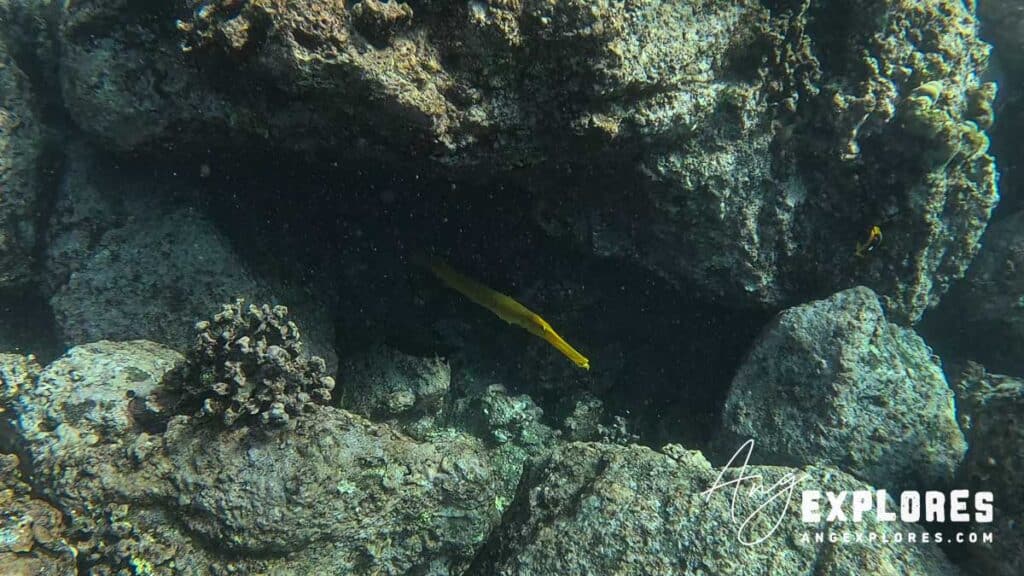
Several different kinds oftrumpetfish. Our scuba guide on our Big Island manta ray dive called these guys “masters of buoyancy,” which feels like the perfect description:
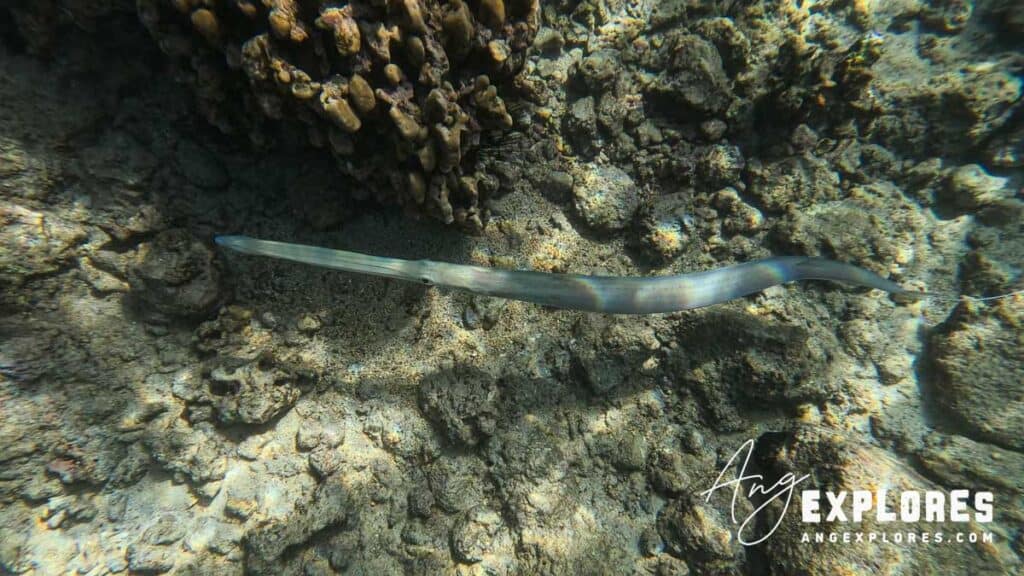
A few coronetfish:
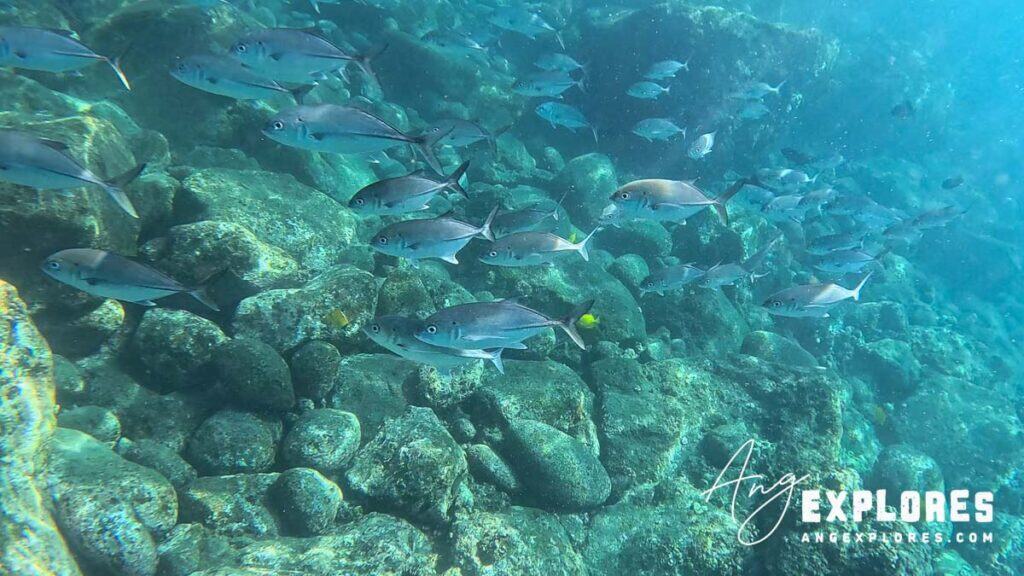
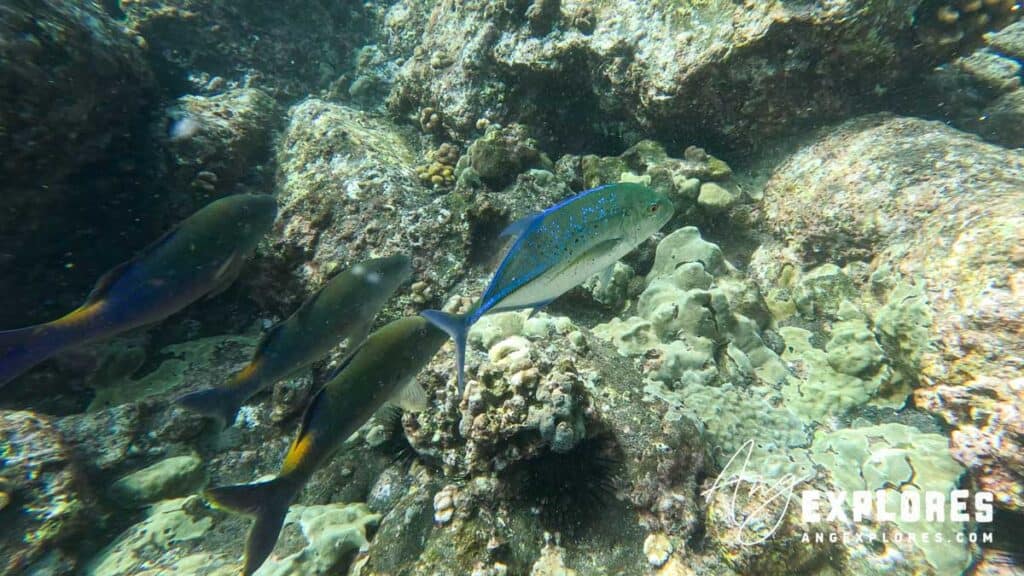
Large scools of whitetongue jack:
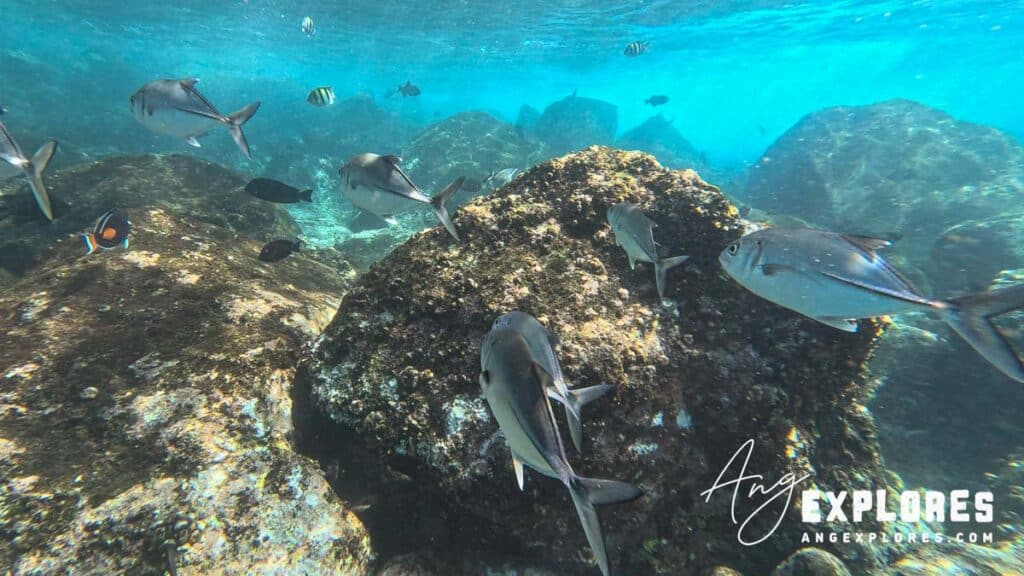
Achilles tang:
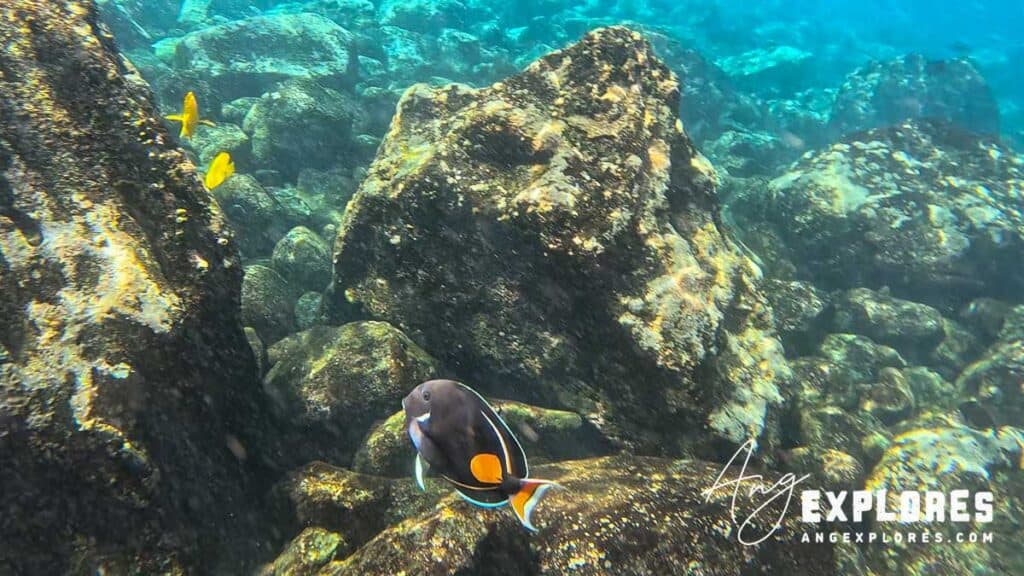
A few blue goatfish and bluefin trevally:
Plenty of Hawaiian sergeant major, including two that were “kissing.” I looked it up afterwards; the behavior is not affectionate, but rather a territorial face-off.
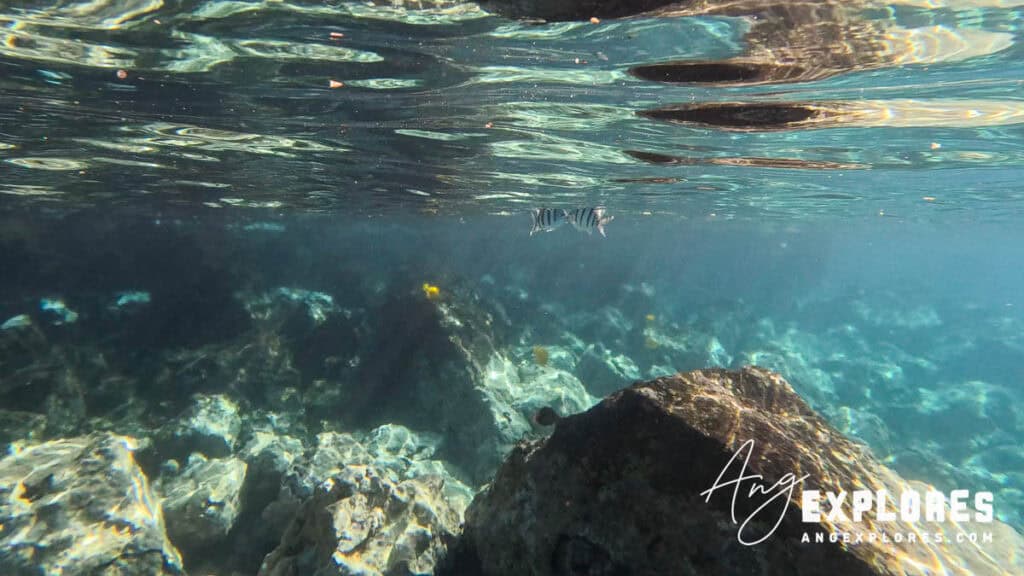
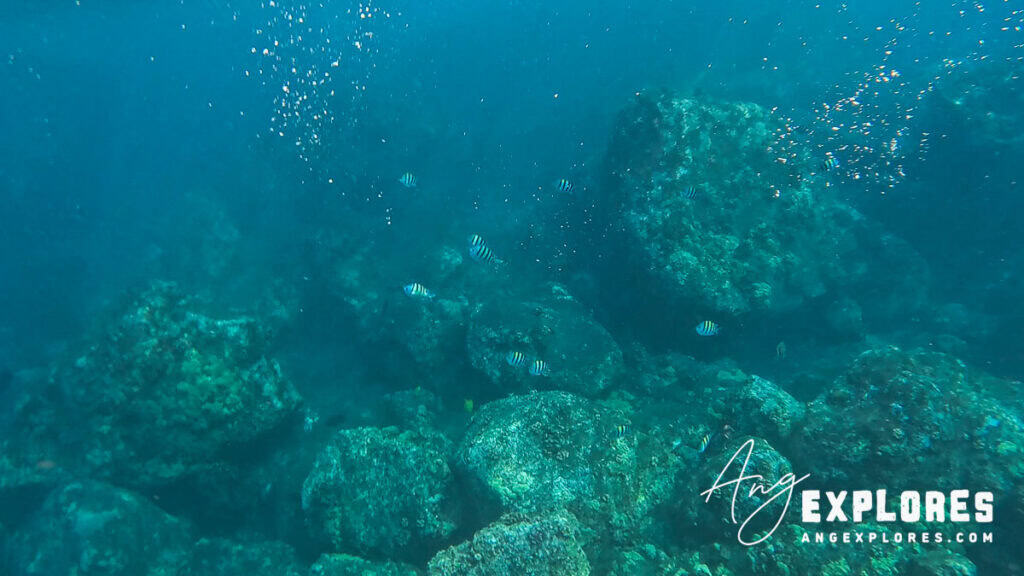
We also saw a lot of the common Hawaiian reef fish: moorish idol, various types of butterfly fish, red and blue parrotfish, including some surprisingly large ones, and probably plenty more I’m forgetting. We didn’t see any sea turtles while snorkeling, though we did see one swimming near the kayak launch on our way in.
A Small Lava-Rock Swim-Through (And an Eel!)
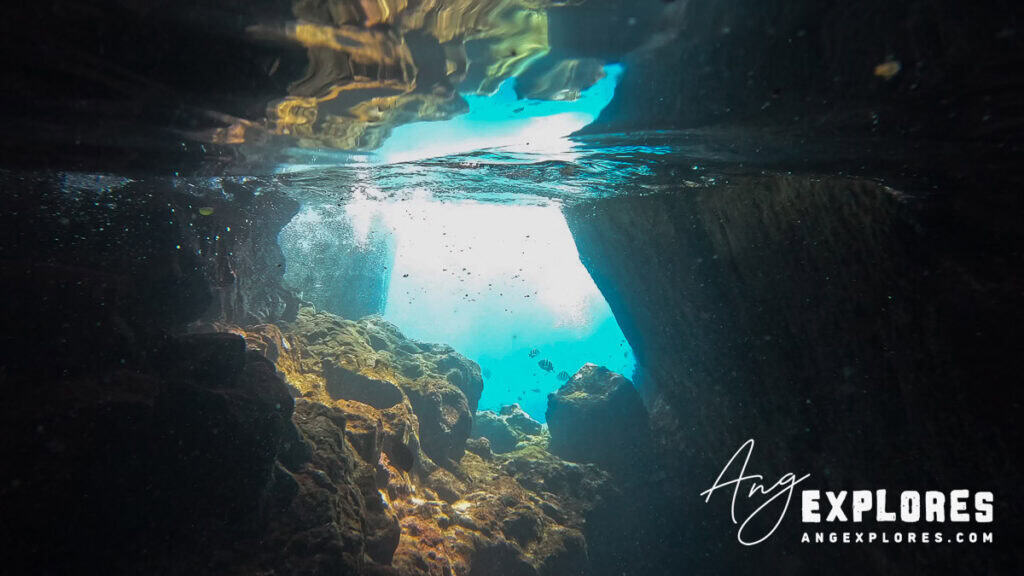
Along the shoreline east of the monument, we came across a natural opening in the lava rock — a small arch that we could snorkel through. It was a fun surprise and added some variety to the reef scenery. Jim even spotted an eel in that area.
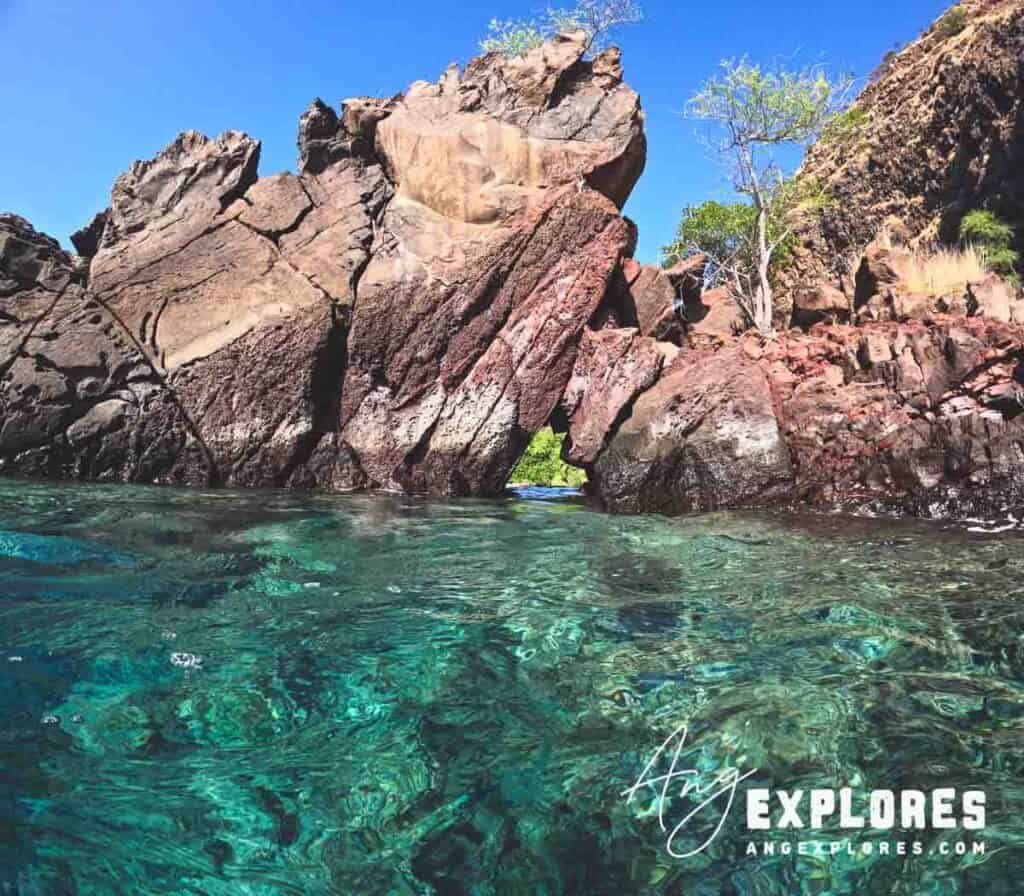
It is a bit risky depending on tide levels, surge conditions, and what might be hiding in the rocks (getting poked by a sea urchin is not pleasant!), so definitely use caution if you explore it.
Kayaking While Snorkeling (Towing the Kayak)
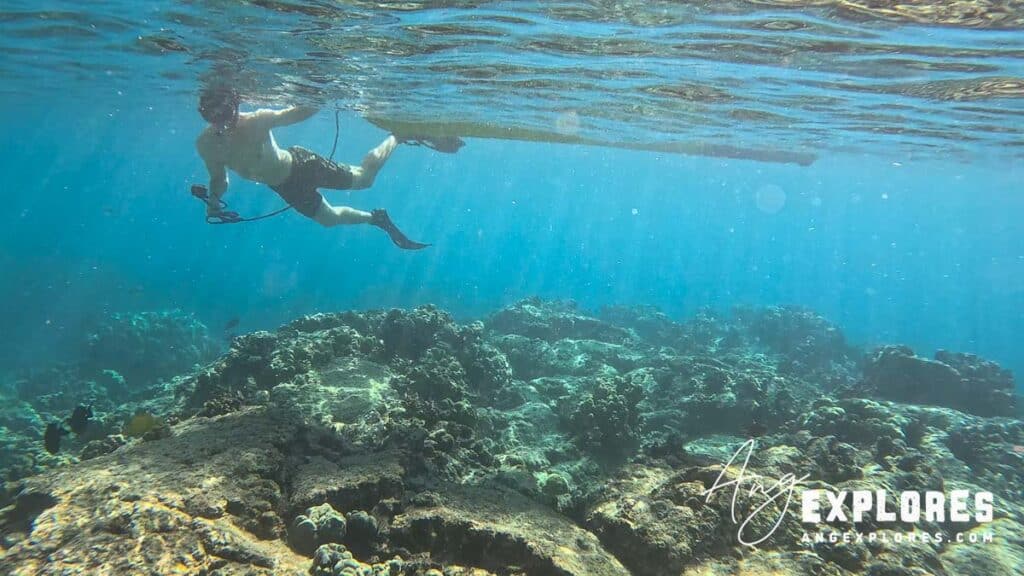
Since you’re not allowed to land on the shore at the monument, we took turns pulling the kayak behind us while snorkeling. This turned out to be easier than expected:
- The tow rope was long enough that we could dive down underwater without any issues.
- The bay was calm enough that towing wasn’t tiring. I was barely aware that I was even pulling it.
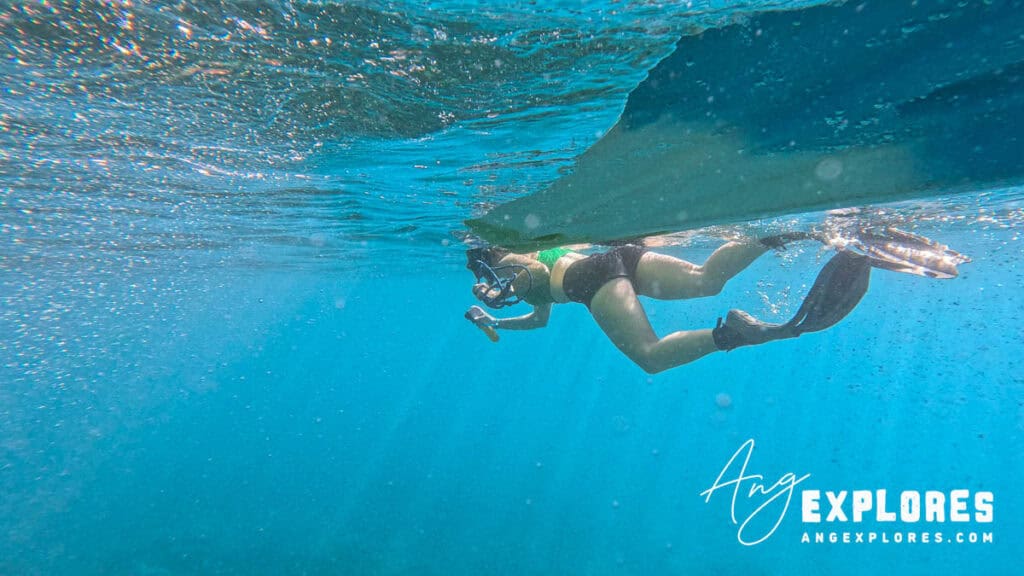
I was worried that it would be a challenge to get back into the kayak from the water, since upper body strength isn’t exactly what I’m known for (ha!). Thankfully, (and surprisingly!) it wasn’t difficult at all.
Rules & Guidelines for Kayaking & Snorkeling at Kealakekua Bay
Kealakekua Bay is a protected Marine Life Conservation District, and the area around the Captain Cook Monument has specific rules to keep the environment and cultural sites safe.
Permits & Access
- Kayaks, paddleboards, and small boats must have a valid permit to enter the bay.
- Renting from a permitted outfitter (like Ehu and Kai Adventures) automatically covers this requirement.
You can find official rules/guidelines here:
https://dlnr.hawaii.gov/dsp/parks/hawaii/kealakekua-bay-state-historical-park/
Landing & Shore Access
- No landing on the shore at the monument unless part of a permitted guided tour.
Facilities & Preparedness
- There are no restrooms, trash bins, or facilities at the monument. Pack out everything you bring.
- Bring water, reef-safe sunscreen, and sunglasses for the kayak portion of the adventure.
Final Thoughts
Kealakekua Bay deserves its reputation as one of the best snorkeling spots on the Big Island. Between the flying fish on the paddle in, crystal-clear water near the monument, and huge schools of vibrant fish, kayaking and snorkeling at Captain Cook ended up being my favorite activity on the Big Island of Hawaii.
FAQ — Snorkeling & Kayaking at Captain Cook Monument
Is it Crowded at Kealakekua Bay?
We visited a morning in early November. While we were there we saw a few tour boats with snorkelers, plus a handful of other kayakers, but the bay never felt crowded.
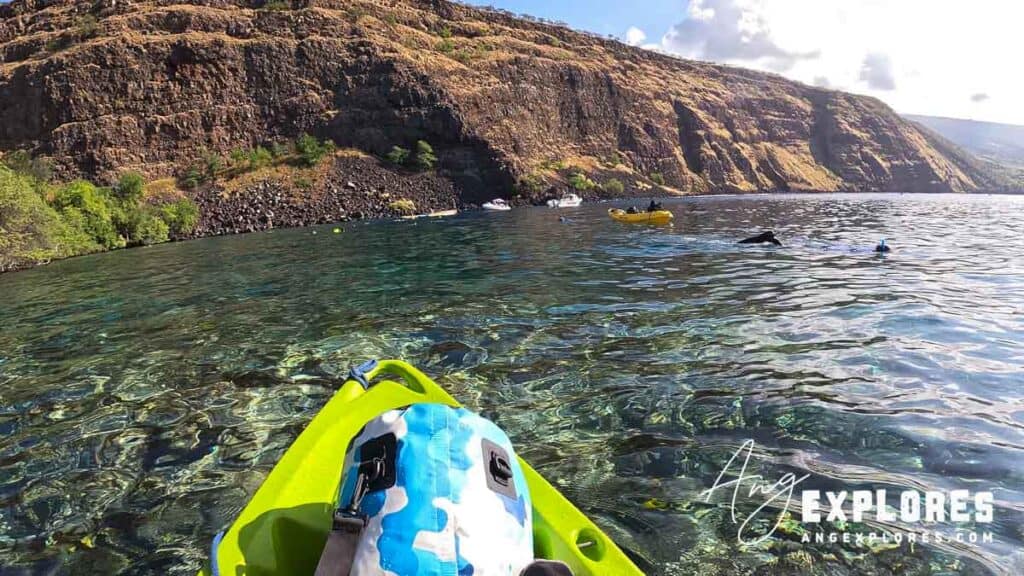
What causes “blurry water” when snorkeling?
This is usually freshwater mixing with saltwater, or shimmer thermoclines where warm and cool layers meet. The water looks wavy or blurred, kind of like heat rising from pavement.
Where do you park?
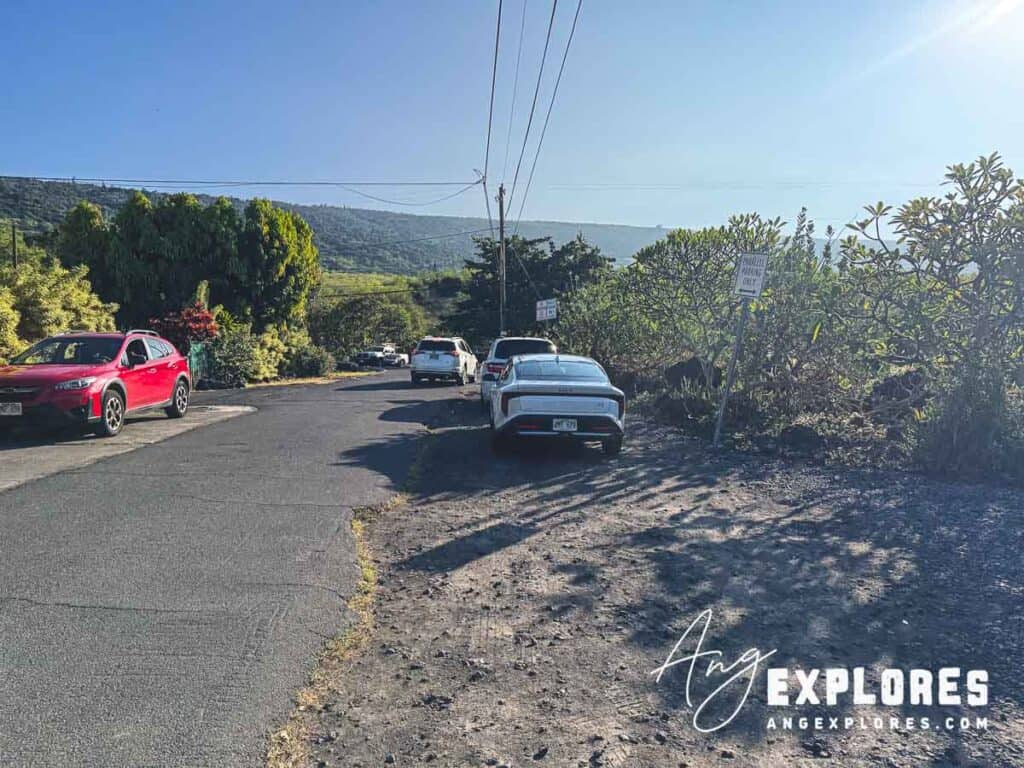
If you’re renting a kayak from Ehu and Kai Adventures, there is limited street parking on Kahauloa Road. When we arrived around 8AM there were plenty of open spots, but several hours later when we left all were taken.
Is the snorkeling right at the monument the best spot?
Yes — the northern edge of the bay (in front of the white monument) had the clearest water/best visibility and lots of vibrant fish. As we swam further from the monument the water was less clear, but we still continued to see some amazing schools of fish.
Can you see dolphins at Captain Cook?
Apparently spinner dolphins are commonly spotted mornings at Kealakekua Bay (no such luck for us though!).
Can you beach your kayak at Captain Cook Monument?
No. The Kaʻawaloa landing area is protected, and kayak landings require specific permits. Tour operators have them—private kayakers generally cannot land.
What’s the best time to snorkel?
Early morning (7–10am) offers:
- Calmest surface
- Bright sunlight for visibility
- Less wind and chop
Afternoons can bring strong winds making kayaking back tougher.
How deep is the reef?
The reef near the monument ranges from about about 5–30 ft.
Pin for Later