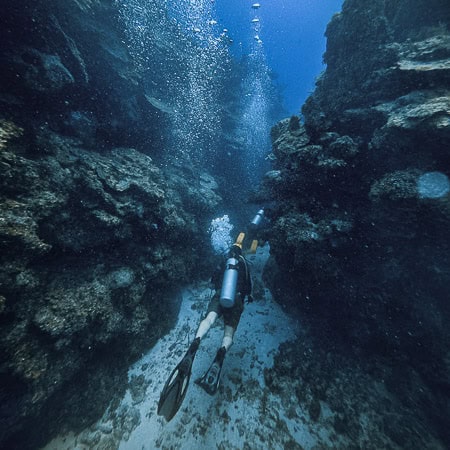
Kona Manta Rays: Snorkel or Dive? My Review of the Big Island’s Manta Experience
A few years ago I saw a video of someone doing the Kona Hawaii manta ray night snorkel. When I watched a giant manta swoop inches beneath him, I immediately put it on my bucket list, and in the years since, have heard many people describe the experience as life-changing. The Big Island is one of the only places in the world where you can reliably see manta rays at night, and the experience has become one of Hawaii’s signature adventures.
Affiliate Links: Ang Explores is a participant in the Amazon Services LLC Associates Program, an affiliate advertising program designed to provide a means for sites to earn advertising fees by advertising and linking to Amazon.com. Some links in this post may be affiliate links, through Amazon, Stay22 or Travel Payouts. If you click a link and make a purchase, I may earn a small commission — at no extra cost to you. Your support helps keep this site running — thank you!
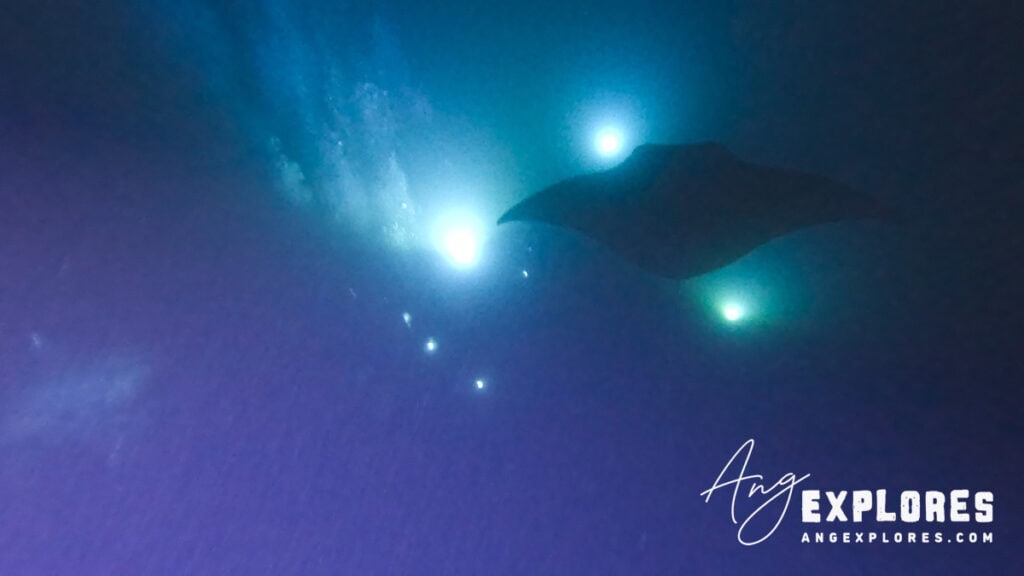
But when I started planning our trip and realized that diving was also an option, I wasn’t sure whether to snorkel or scuba dive to see them. Which would be better?
In the end, we wound up doing both (sort of). After two nights in a row at Kona’s famous manta site, including one manta-less evening, I have a recommendation.
Here’s our experience, with details about what actually happens on the tour.
Quick Info: Kona Manta Ray Night Experience
- Location: Off the coast of Kailua-Kona on the Big Island of Hawaii
- Main manta sites: Garden Eel Cove AKA Manta Heaven (near the airport, and the site we visited) and Manta Village (near the Sheraton Kona)
- Why here? Kona has a resident population of manta rays and perfect conditions for nighttime feeding
- How tours work: Powerful underwater lights attract zooplankton, which attracts manta rays
- Snorkel vs dive: Snorkelers float at the surface holding on to a modified stand up paddleboard, fitted with lights and handles. Divers descend about 30-35 feet, then kneel next to a circle of rocks on the ocean floor around the “campfire” light
- Tour length: Usually 2–3 hours (or more if doing multiple dives), with about 40 minutes in the water
- Accessibility: No shore access at Garden Eel Cove — only reachable by boat
- Season: Year-round
- Time of Day: After sunset
- Don’t forget: no flying or driving to Hilo or Volcanoes National Park for at least 12 hours after one SCUBA dive, or 18 hours after two or more dives.
What Makes Kona’s Manta Ray Night Snorkel So Famous?
Kona is one of the top places in the world to see manta rays because its coastline creates perfect feeding conditions. A resident population of mantas returns to the same light-rich feeding sites near Kona almost every (but not every!) night.
These mantas can be over ten feet across, wingtip to wingtip, and they feed by doing barrel rolls through clouds of zooplankton. Seeing a huge manta ray illuminated by dive lights was an incredible experience, and it’s no surprise that the Big Island manta ray night dive/snorkel is such a popular activity.
Our Experience: Diving and Snorkeling at Garden Eel Cove
We booked a tour with Aquatic Life Divers, and because I often deal with a little pre-dive anxiety, we chose the Twilight + Manta Dive, figuring the first dive would help me warm up a bit before jumping into the manta night dive.
Departure
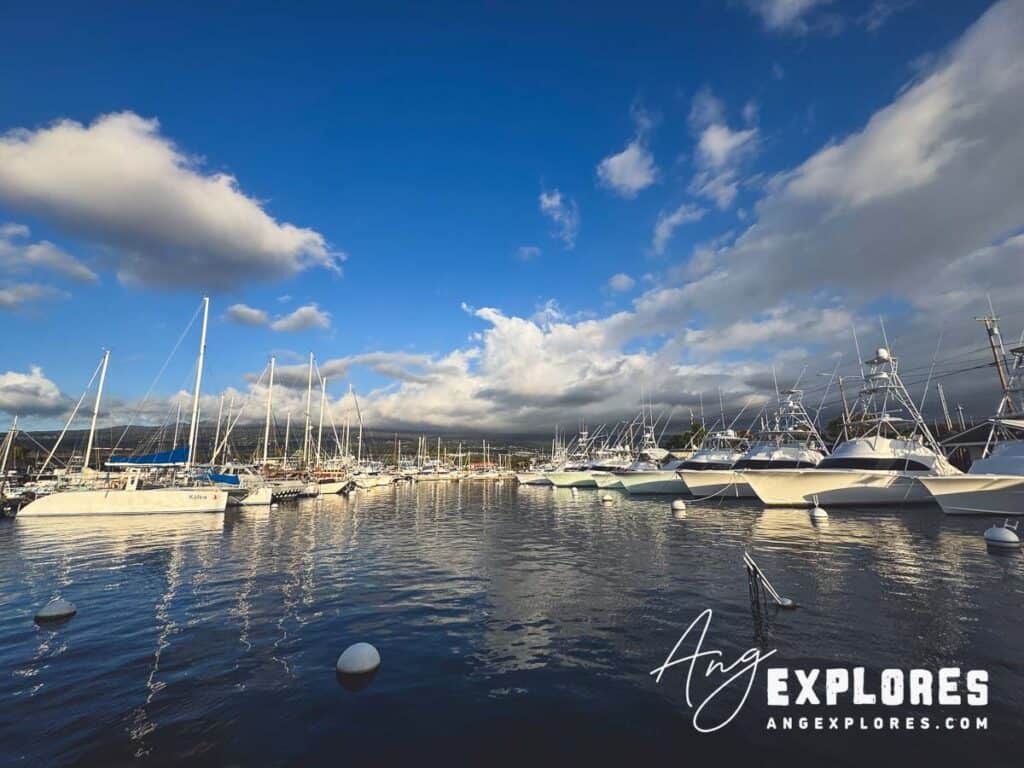
We met at Honokohau Harbor Slip #21, were fitted for wetsuits, and boarded the boat. That evening the tour was all divers, though some nights are a mix of snorkelers and divers.
A 20-ish minute ride took us to Garden Eel Cove, near the Kona airport — one of the most reliable manta feeding sites in Hawaii.
Night 1: Twilight Dive + Night Manta Dive (Scuba)
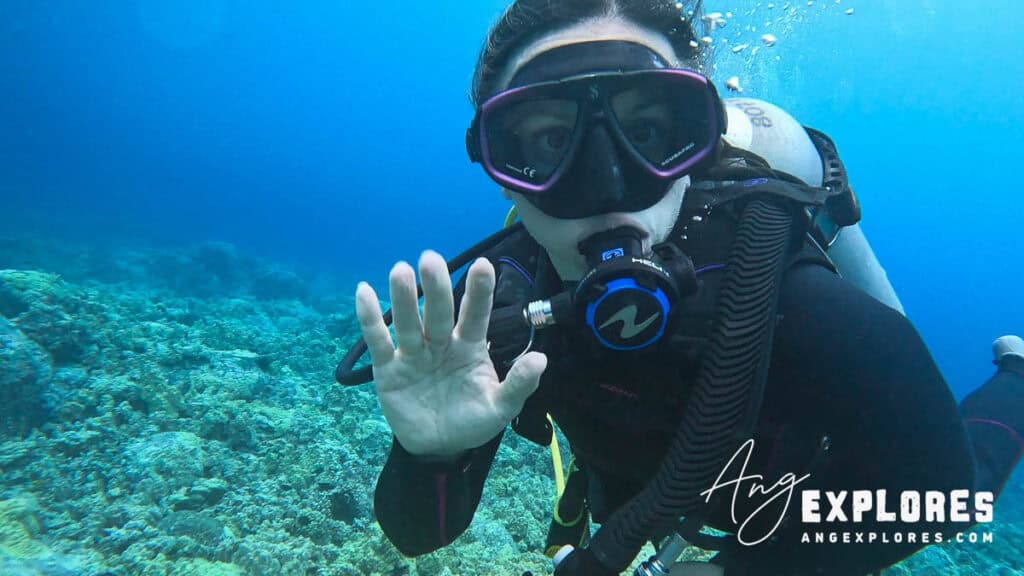
Twilight Dive
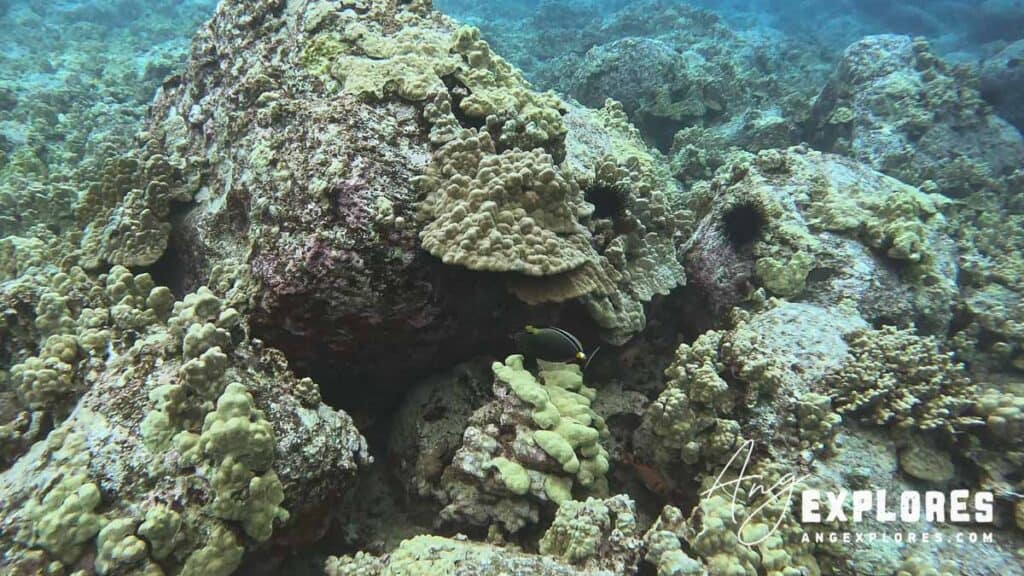
We started with a twilight dive at Garden Eel Cove (same location as the manta dive). We spotted: garden eels, goatfish, butterflyfish, a conch eating a sea urchin, an octopus, sergeant majors, porcupine fish, and more.
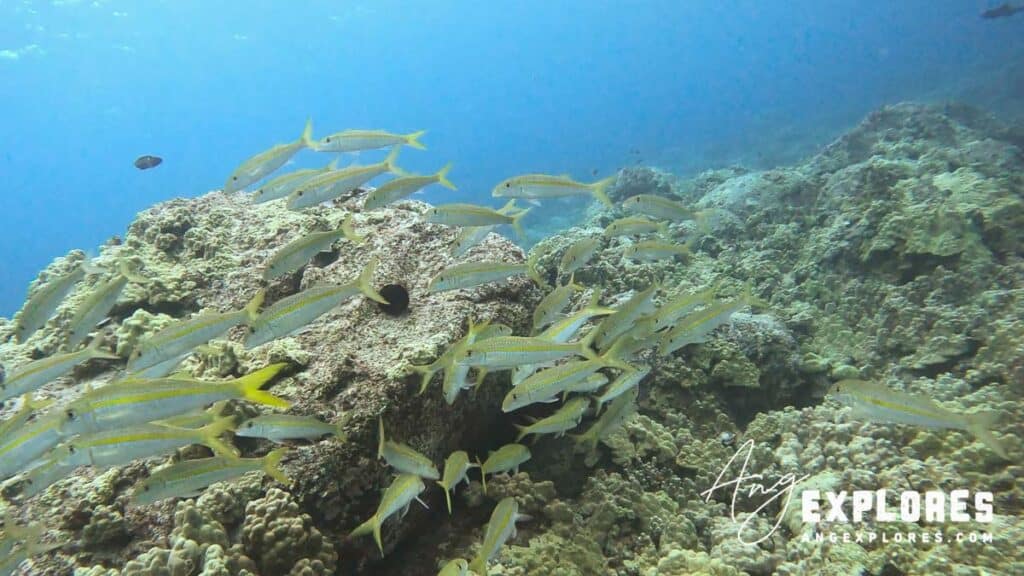
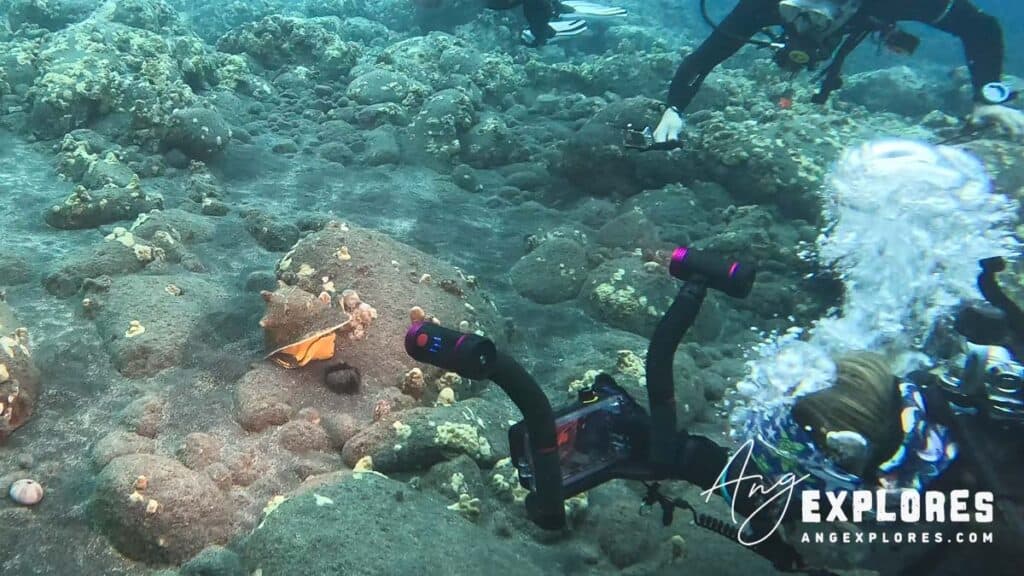
It was a great warm-up, nice to see a daylight view of where we’d be heading after the sun set, and helped ease my dive anxiety. I’m glad we added it to the standard manta night dive, but if you don’t deal with pre-dive nerves like I do, you can skip it and go straight for the main event.
Surface Interval + Manta Briefing
After the twilight dive we got back on the boat for the surface interval, peeled off our wetsuits and dried off. Our guide taught us a little bit about manta rays. I learned that they give birth to live pups, and have the biggest brain of any fish. Manta rays have unique markings and many of the guides in Kona can recognize them individually.
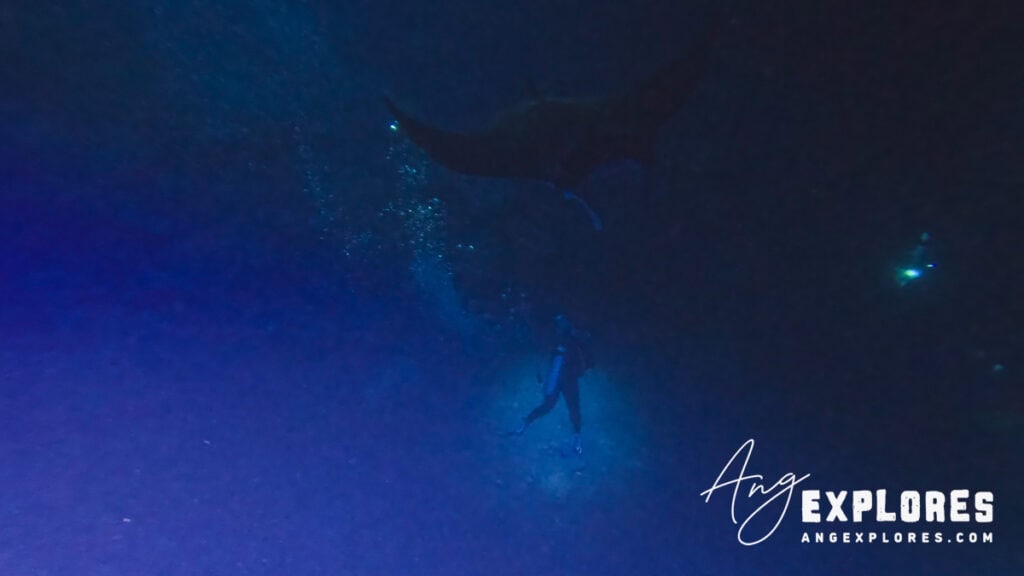
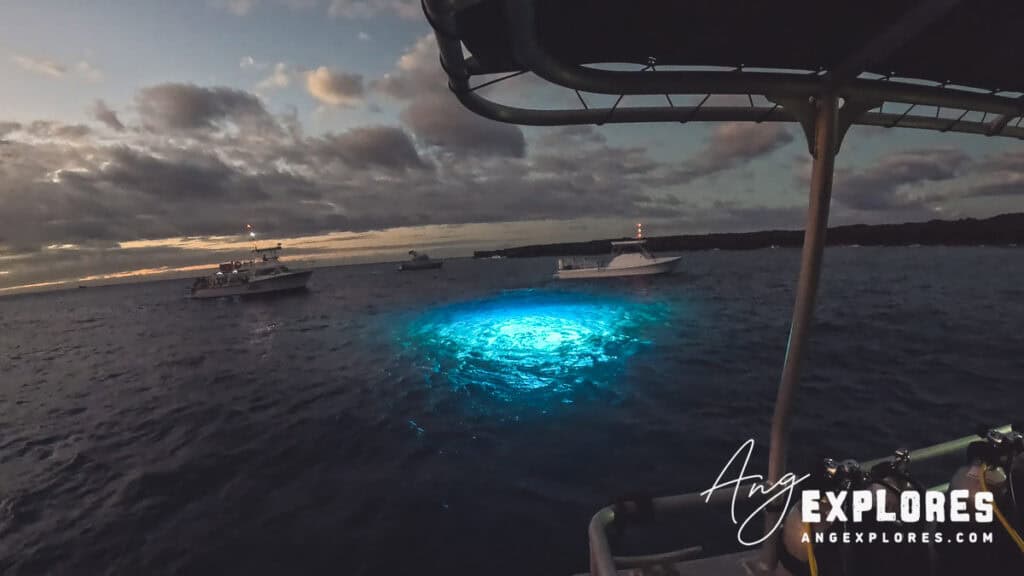
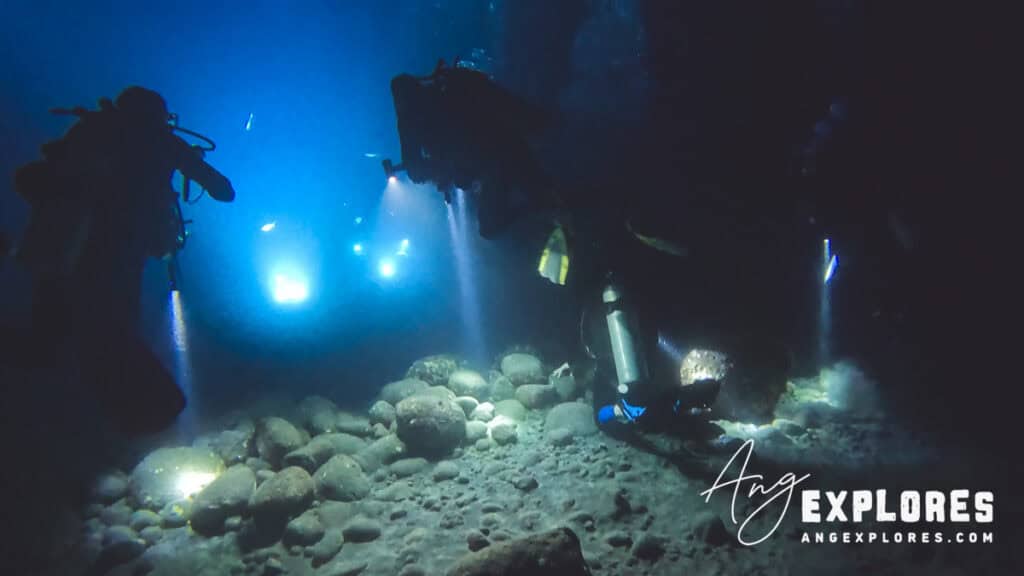
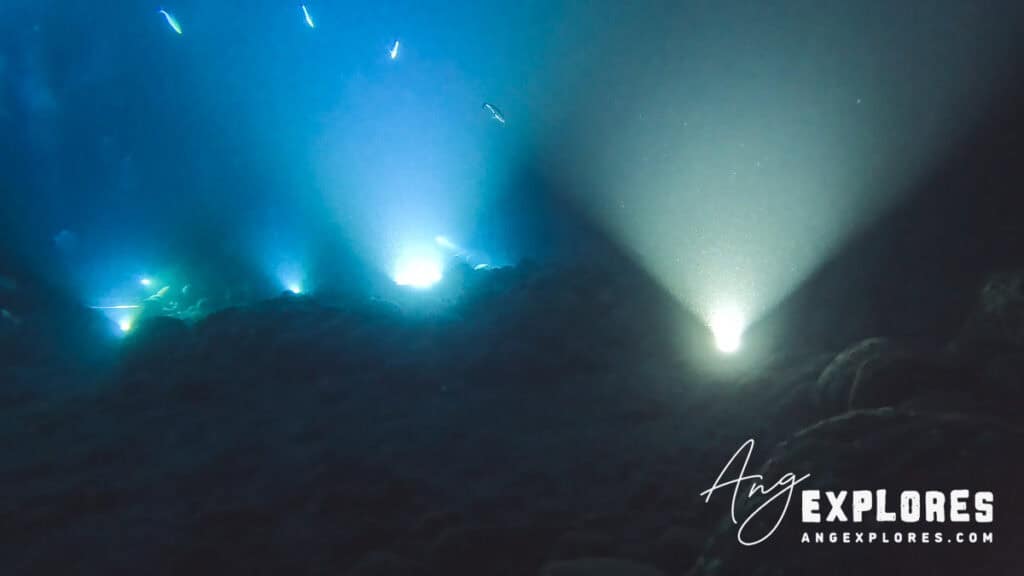
She then shared how the manta dive works: we’d descend to the bottom, then kneel around a rock circle called the campfire, where bright lights are placed to attract zooplankton, the manta’s main food source. In this photo from the surface you can see the bright light of the campfire shining from below:
Each of us would be placed at a rock to kneel behind–we could hold onto that rock to steady ourselves if the current tried to move us around. Here we are with our dive guide putting us into place around the campfire:
Descent into Darkness + a Sea Urchin Surprise
This was my first-ever night dive, and as I descended it was a bit difficult to see where I was going. As I approached the bottom, my ankle brushed up against a rock, and then a sea urchin. Its spines poked straight through my wetsuit into my ankle. Not pleasant!
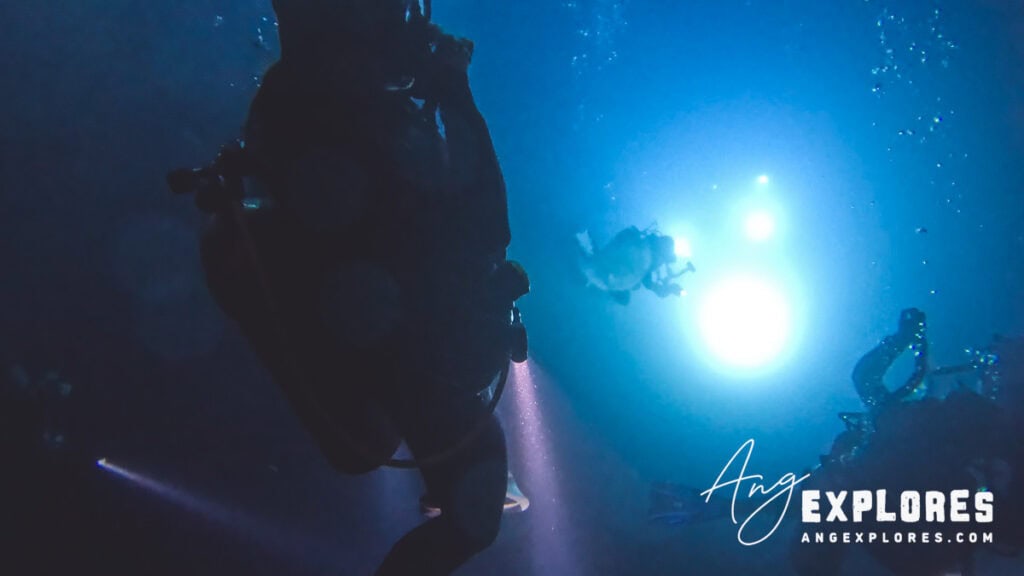
A minute later, when the guide was placing us around the campfire, she put me next to the rock with three more urchins on it. She nudged them away with her pointer rod, but over the next 20 minutes I nervously watched as they slowly crept back up the rock toward me. I did not want another urchin encounter!
Flounder
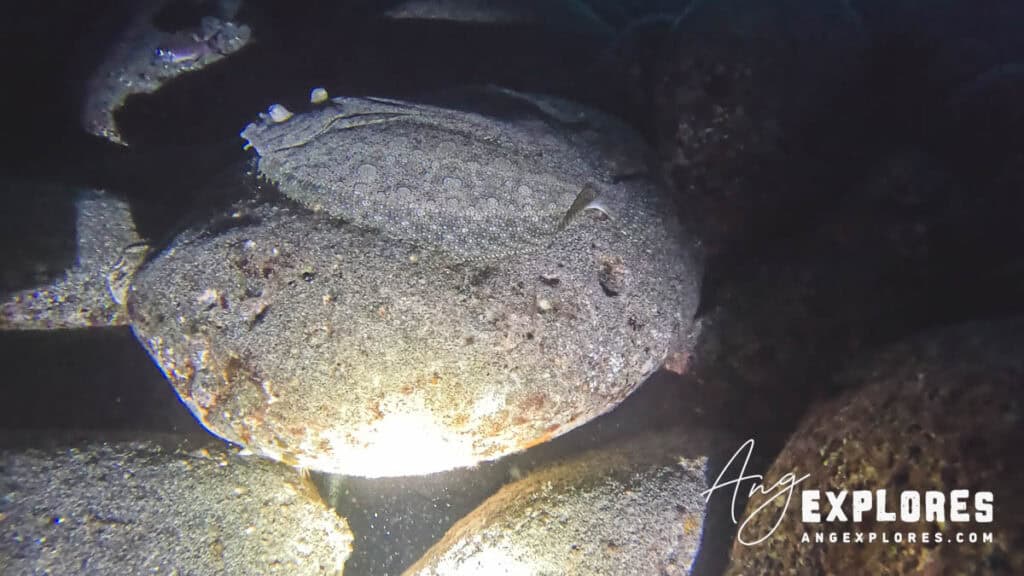
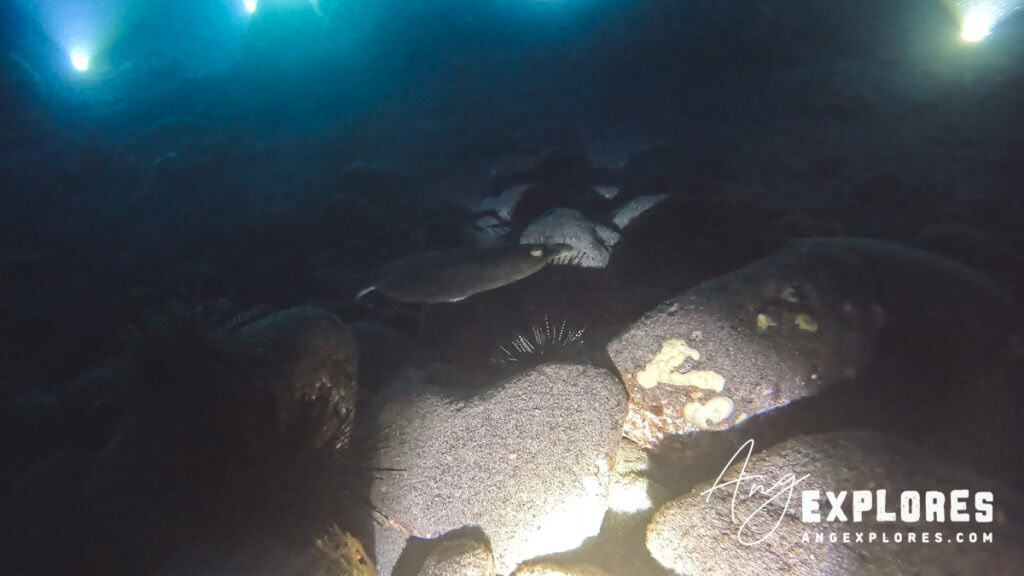
While we waited around the campfire, a crazy-eyed flounder planted itself right next to me on a rock:
And here’s a blurry image of it swimming away, with a few of my urchin friends visible on the rocks:
And . . . no mantas
We waited about twenty minutes. No mantas showed. 🙁
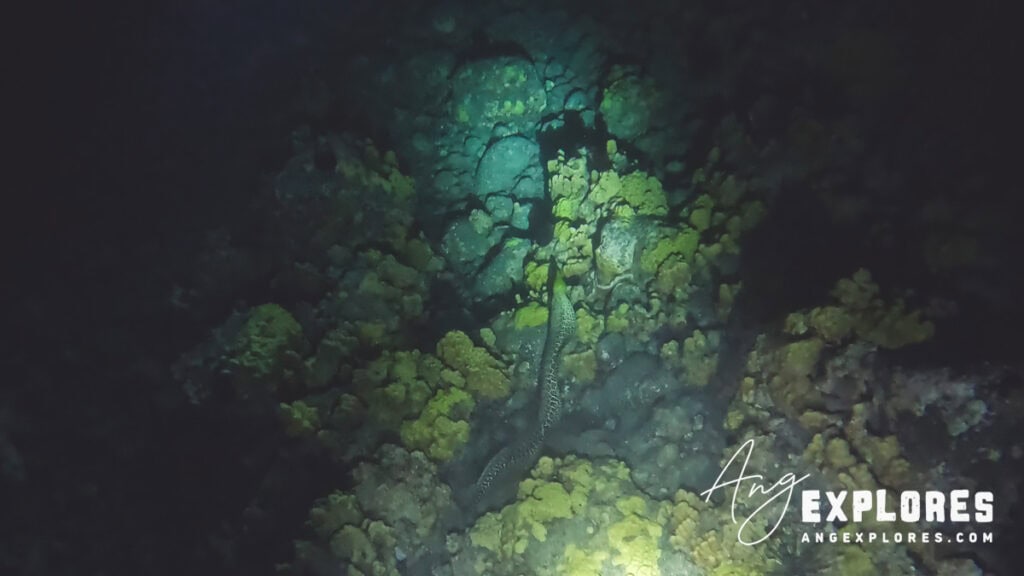
After that our guide led us around the reef again, this time as a night dive. We saw some eels and nudibranchs but no gentle giants gliding overhead.
Aquatic Life Divers told us they would keep track of our names. Anytime during the upcoming year we could call and place our name on the standby list for another manta tour.
Since we were flying home in about 36 hours (and not sure we’d be back to the Big Island in the next year), we added our names to the standby list for the very next night.
Night 2: The Manta Ray Snorkel Tour
Because of the no-flying-after-diving rule, we switched to the snorkel tour for our second attempt (our flight home was leaving the next morning).
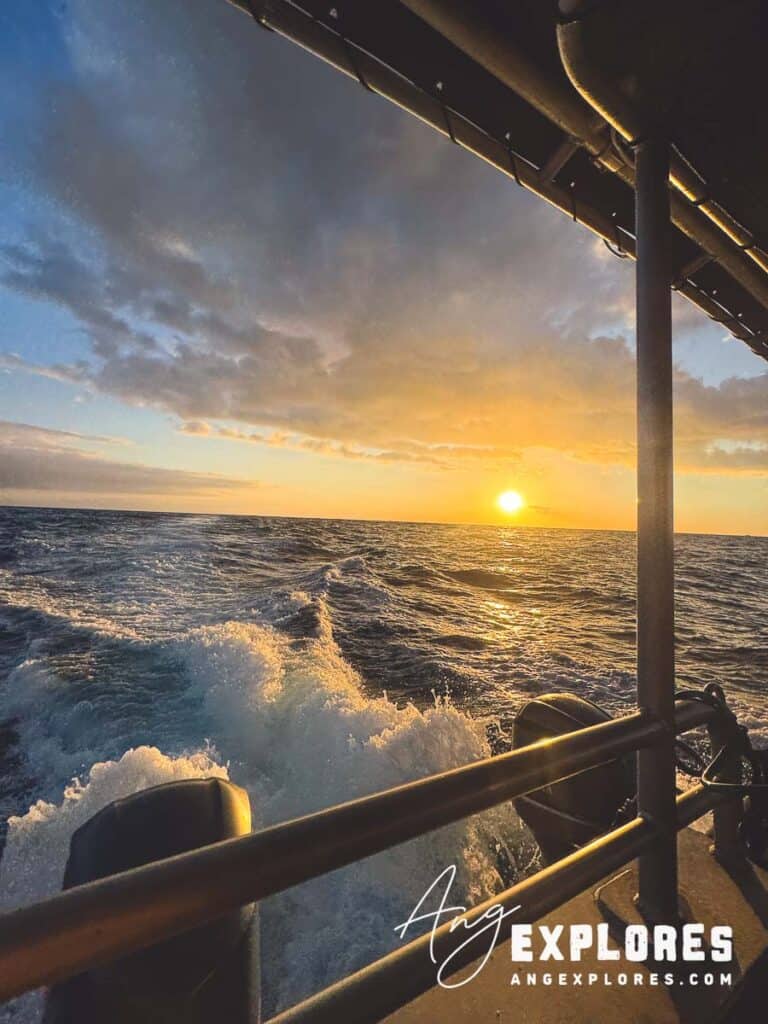
This time the boat had both divers and snorkelers, and left from the harbor a bit later since there was no twilight dive. Watching the sun set from the boat on the way to Garden Eel Cove was a highlight of the evening:
As soon as it was dark, the divers dropped to the campfire and the snorkelers grabbed onto a modified stand-up paddleboard rigged with handles and lights underneath:
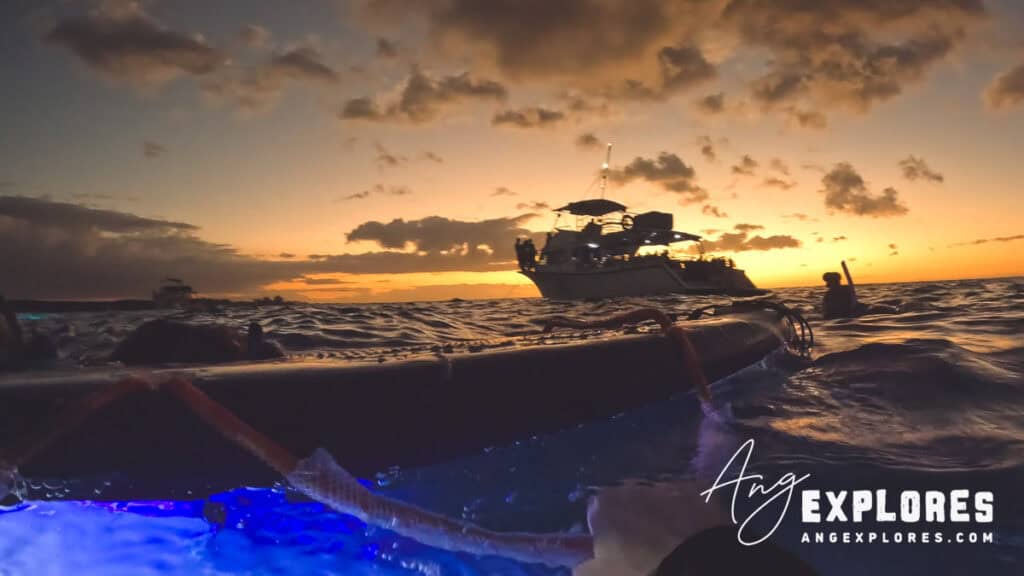
Our snorkel guide pulled us toward the main light where manta activity usually happens.
A Single, Magical Pass
After a few minutes, our guide spotted one — “I see a manta coming!” So EXCITING!
Moments later a giant manta ray swept directly underneath us, wings stretched wide. It was an incredible sight.
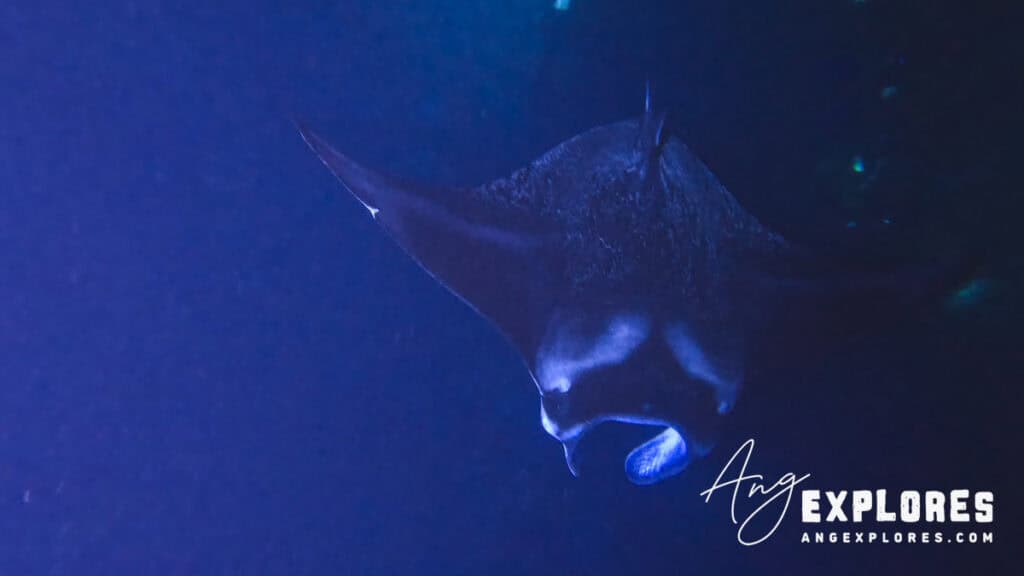
It slowly descended down towards the campfire.
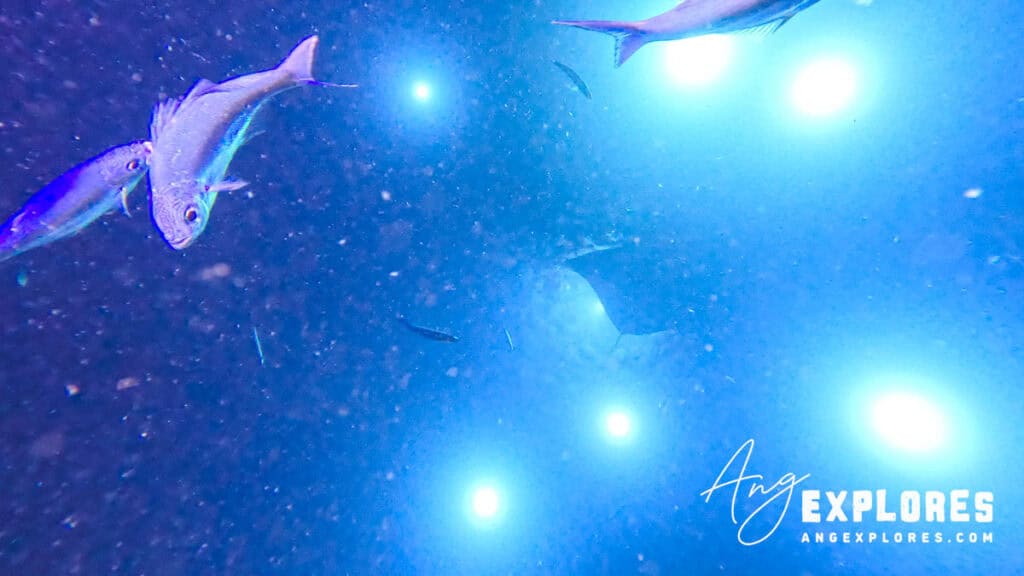
And there it stayed, swooping back and forth above the light. I was envious of the divers down below getting a close up view of the manta ray, while we watched from 30 feet above.
Our snorkel guide kept the modified SUP in place, so that zooplankton would hopefully build up and attract the manta ray for a snack. Unfortunately, no such luck.
After about 15 minutes I realized it wasn’t coming back. We had gotten our “show,” and it was amazing. But it was so quick and I couldn’t help but wish that I was one of the divers with a front row seat, not a snorkeler watching from so much further away. There were some fish interested in our plankton, but the manta stayed near the lights at the bottom:
Snorkeling vs. Scuba Diving for Manta Rays — Pros & Cons
Snorkeling — Pros
- No certification required — anyone comfortable in the water can do it.
- Usually cheaper than a scuba tour.
- Easier and less intimidating for beginners or nervous swimmers.
- Minimal gear and less setup time.
- You stay at the surface, so you don’t have to worry about wait times for flying (or visiting the other side of the island).
Snorkeling — Cons
- Your view depends on whether the mantas come shallow.
- Can potentially feel colder because you’re floating still at the surface.
Scuba Diving — Pros
- A more reliable, closer view of the mantas — they usually feed right above the divers at the “campfire.”
- Great for anyone wanting their first night dive experience.
Scuba Diving — Cons
- You need certification (and recent dive experience–typically within the last year).
- More expensive than snorkeling.
- Requires more gear, setup, and briefing time.
- Less companies offer dive tours.
- Possible sea urchin encounters at the campfire (though I would have traded places with a diver on night #2 even if it meant a couple more pokes!)
- Trip-planning is trickier — you’ll have to wait before flying or going to high elevation (Hilo side, Volcanoes National Park, Mauna Kea, etc.).
So… Snorkel or Dive for Kona’s Manta Rays?
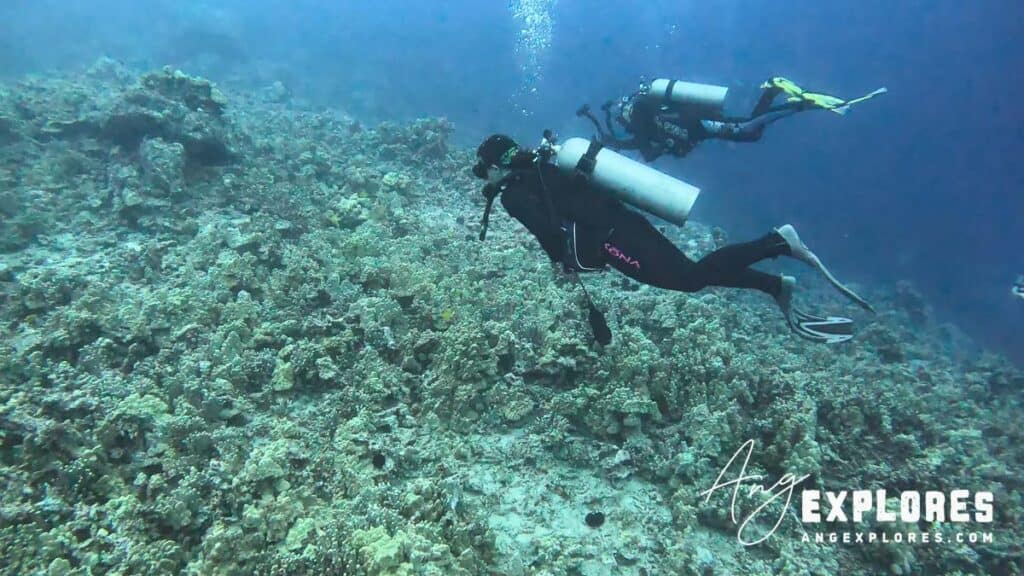
I realize that manta rays are wild animals, and every night is different. I’ve seen videos of manta rays swimming and swooping directly beneath the snorkelers. I have friends who have done the snorkel tour and reported it as a life-changing experience. But here’s my take after trying both: If you are dive certified, and have a reasonable amount of time on the Big Island, do the dive. If I ever get a chance to do it again – I’ll choose the scuba dive, though I’d love to give both snorkeling and diving another shot. Even my quick, close encounter with a manta ray was enough to make me want to do it again.
Kona Manta Experience : My TIPS
- Book the earliest night of your trip
Manta sightings are highly reliable but never guaranteed. Going early in your trip gives you the chance to rebook (some operators offer a discounted or free second try) if your first night is a manta-no-show like ours was. Here’s a link to book the one tank manta dive/manta night snorkel that we did with Aquatic Life Divers. - Take motion sickness medication if you’re prone to it
Our boat ride over was a little bumpy. Feeling seasick is never enjoyable, and not something I want to risk. - Bring a towel and a jacket or something warm to wear for after the tour
On the boat ride back to the harbor I was grateful to have a towel and a jacket to keep me warm.
Kona Manta Experience – Final Thoughts
I had high hopes for this adventure, and unfortunately it fell a little short on our two back-to-back attempts. Hearing people call the experience “life-changing” before our trip definitely set the bar high.That said, it was still enjoyable and I’m glad we did it. The boat ride at sunset, being in the water at night, and the fleeting moment I got to spend just a few feet above a giant manta ray was pretty great, and someday I hope to be able to give it another try.