Inside Devil’s Punchbowl Oregon – Visiting at Low Tide
Quick Overview
Activity : Tide-Pools / Short Hike
Location : Otter Rock, Oregon (central coast)
When : Only during low tide
Exploring Devil’s Punchbowl at low tide is a bucket‑list adventure that I didn’t want to miss on our trip to the Oregon coast this summer. An opportunity to walk and explore inside a huge natural bowl carved by ocean waves is my idea of fun.
What is Devil’s Punchbowl?
Devil’s Punchbowl is a dramatic coastal formation carved into the sandstone cliffs of Oregon’s central coast. This unique geological feature looks like a giant bowl, with several arched openings at the bottom where ocean water enters. As waves carved into the cliffs, sea caves developed and eventually their ceilings collapsed, creating the large, open “punchbowl” shape we see today.
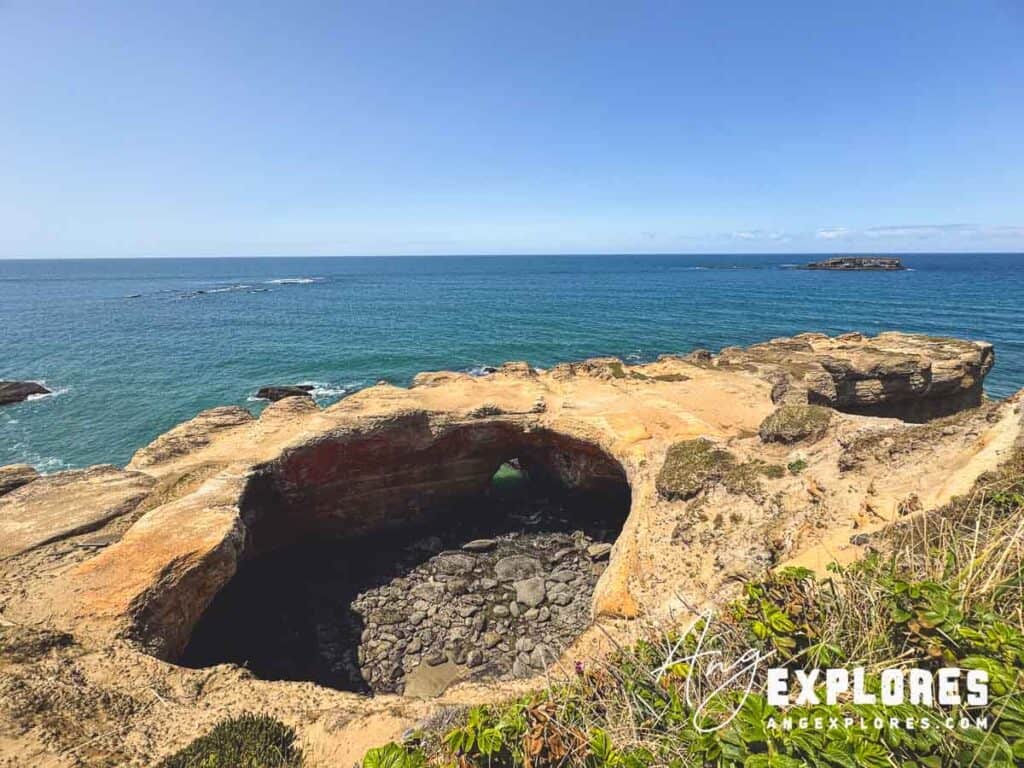
At high tide, the bowl fills with water and waves crash and churn inside—giving the site its ominous name. During low tide, the inside of the bowl becomes accessible on foot (via a short hike down from the nearby beach), allowing visitors to walk into the formation.
Where is Devil’s Punchbowl?
Devil’s Punchbowl State Natural Area is located on the central Oregon coast in Otter Rock, between Newport and Depoe Bay, just a few minutes west of Highway 101.
Devil’s Punchbowl – Getting there and Parking
Use the map below to get directions from your location to Devil’s Punchbowl.
Parking
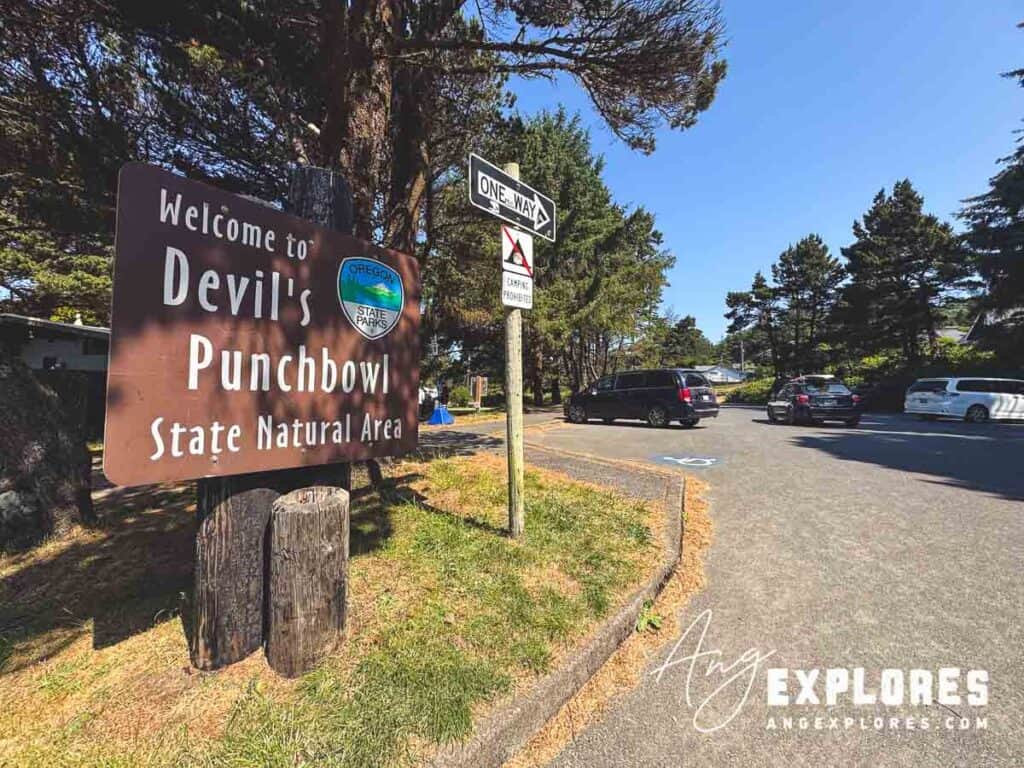
There are several small free parking lots at Devil’s Punchbowl.
- The first lot (2nd St & C Ave., marked on the map above) will be on your right as you’re driving in.
- If you turn right onto C Ave. there is another lot one block to the north. This one is the ideal lot to use if you’re planning on visiting at low tide and entering Devil’s Punchbowl as it’s closest to the short trail that leads to the beach.
- The other lot (that my phone map led us to) is at the end of 1st Street and is closest to the upper viewpoint–it’s the best choice if you want to view Devil’s Punchbowl from above, but the least ideal lot for accessing the inside of Devil’s Punchbowl because it is furthest from the beach access trail.
The lots have limited spaces, and street parking in the neighborhood areas is not permitted. When we visited in early June the smaller lot by the upper viewpoint was full, but I had no trouble finding a spot at the first lot on 2nd and C Ave.
Facilities
Restrooms are located at the corner of 1st St & C Ave. near the first parking lot.
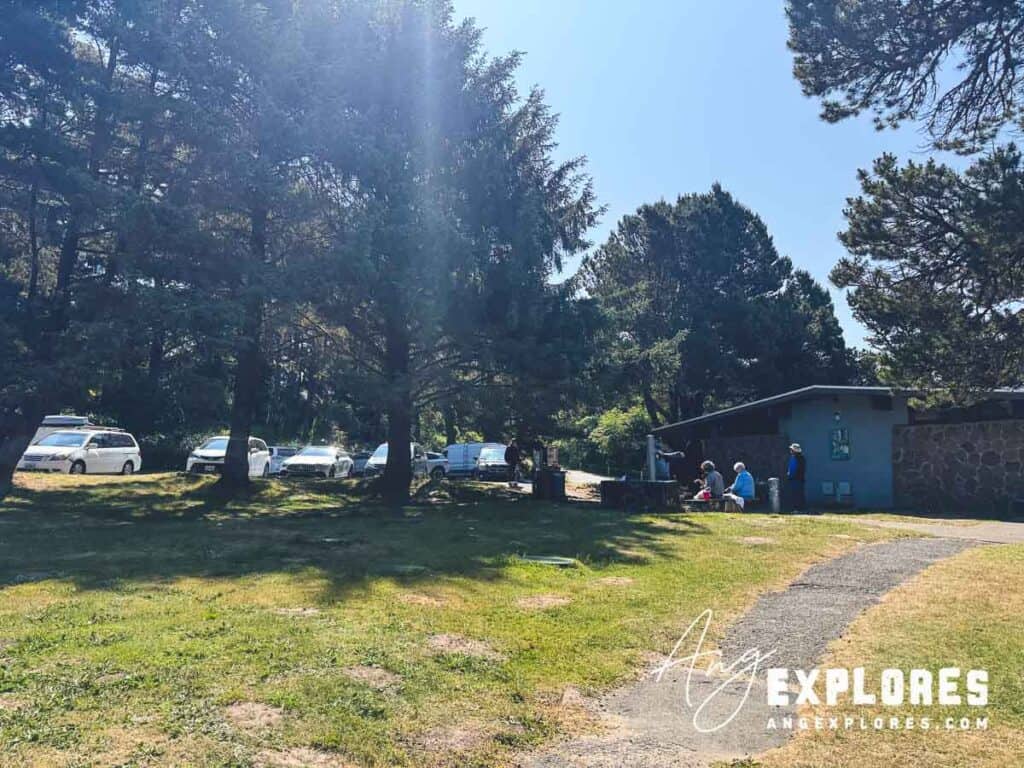
Picnic tables sit above the cliffs near the upper lot.
Reaching Devil’s Punchbowl
Upper Viewpoint (for all tides)
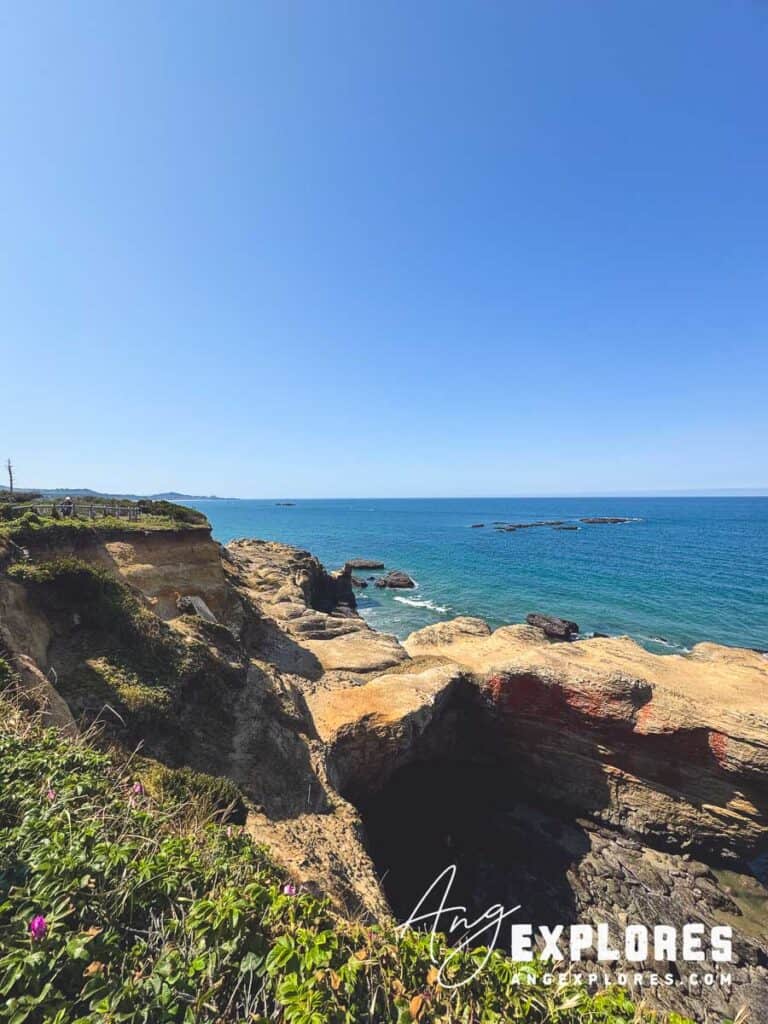
Start at the 1st St lot and walk just steps to the cliff-top fence. This vantage overlooks Devil’s Punchbowl—great for watching waves churning inside at high tide and whales during migration season.
Trail to Otter Crest Beach (entering the Punchbowl at low tide)
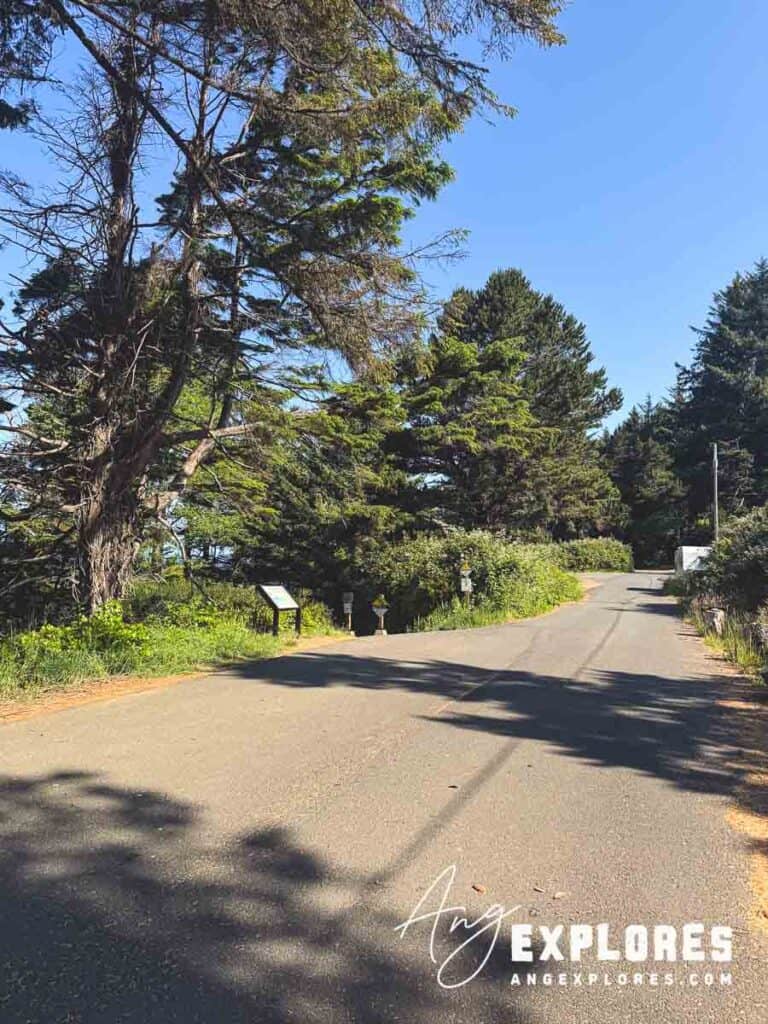
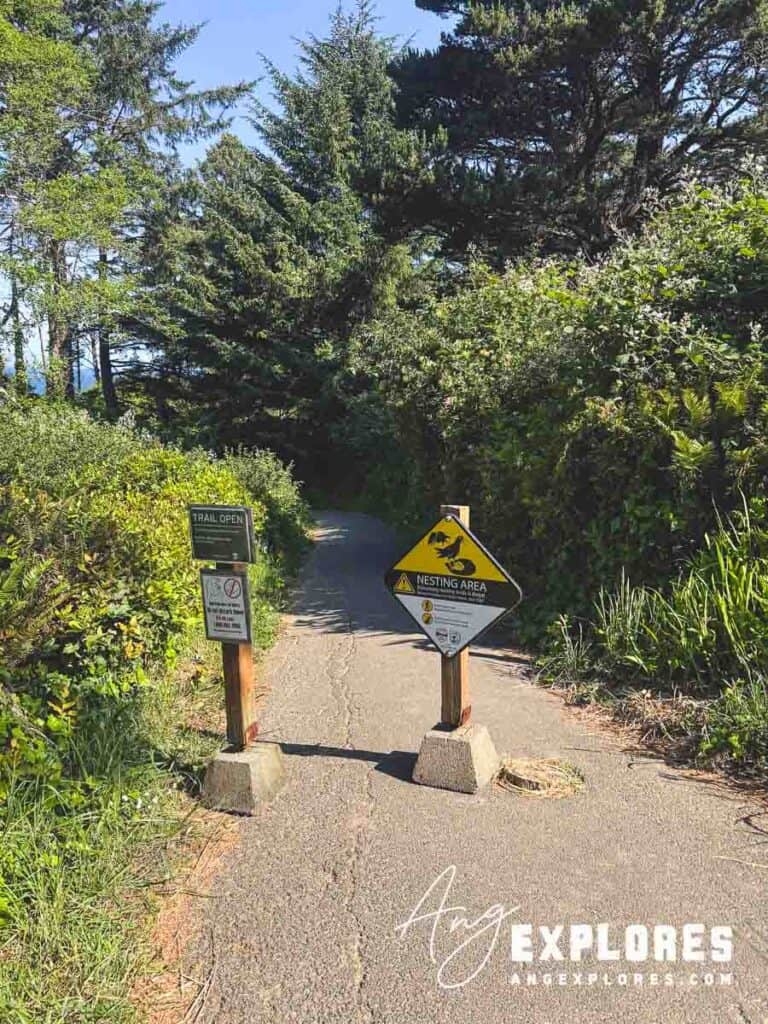
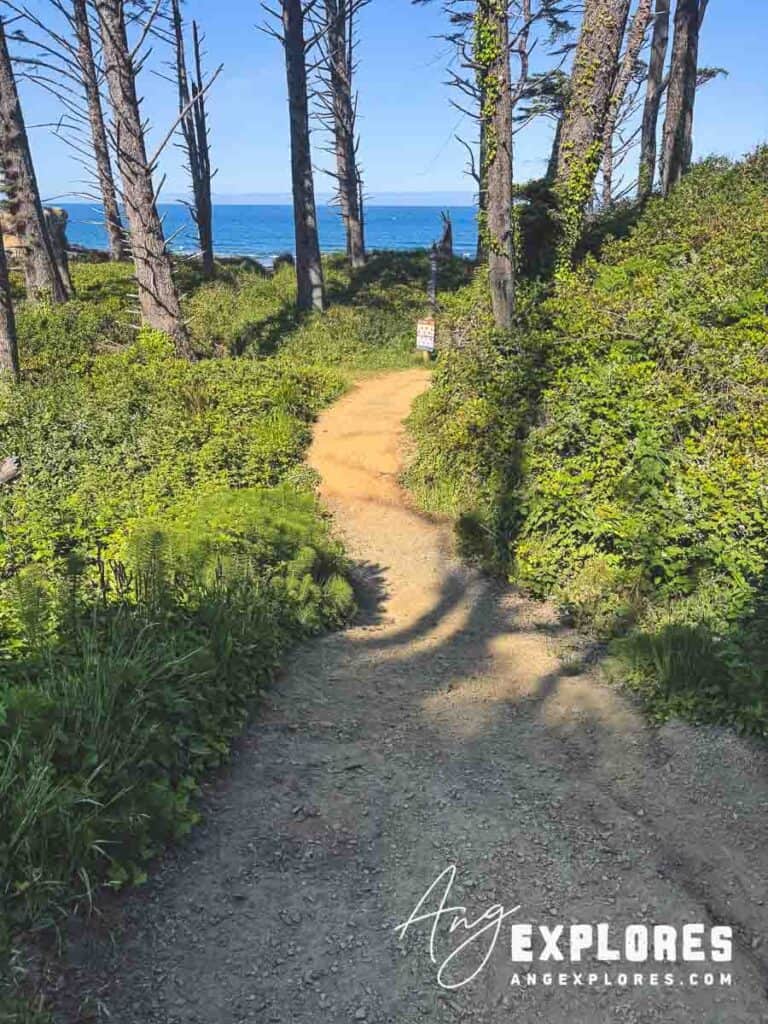
The beach access trail is on C Ave. between 3rd and 4th St., which is a fairly short walk from any of the free parking lots. If you are walking north on C Ave. (likely, if you’ve parked in any of the public lots), you’ll see a few signs on your left near the trail.
Beach Approach
The trail to the beach is short, but a bit steep and rocky in places.
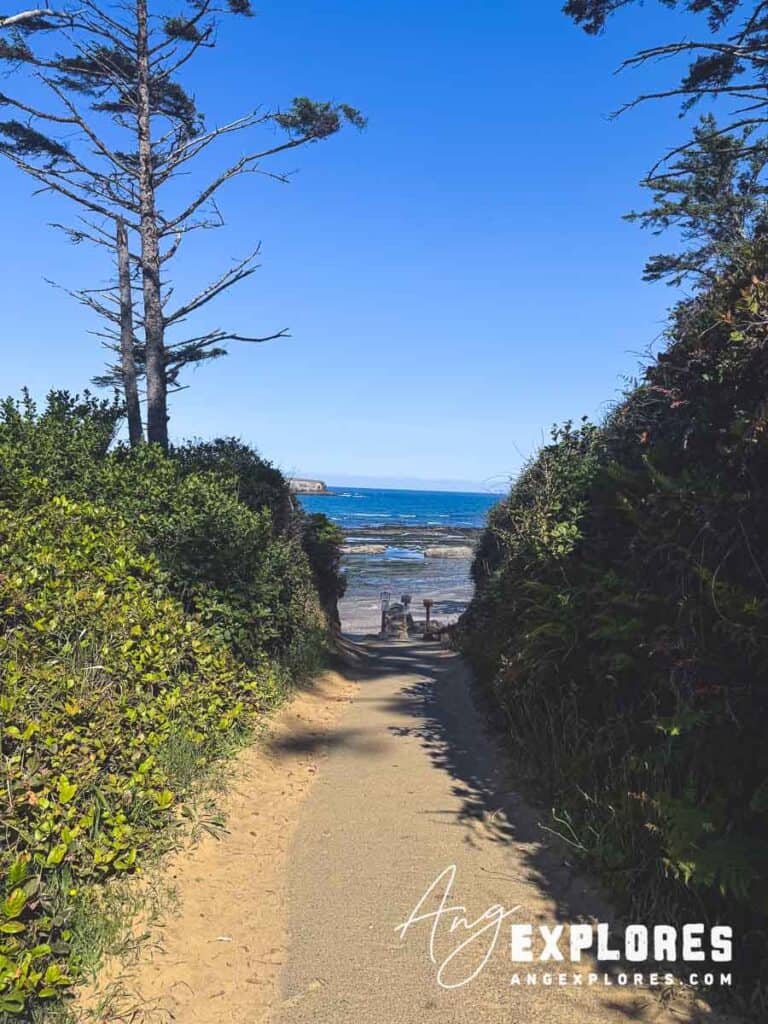
When you’re almost at the beach the pavement simply stops on a small cliff.
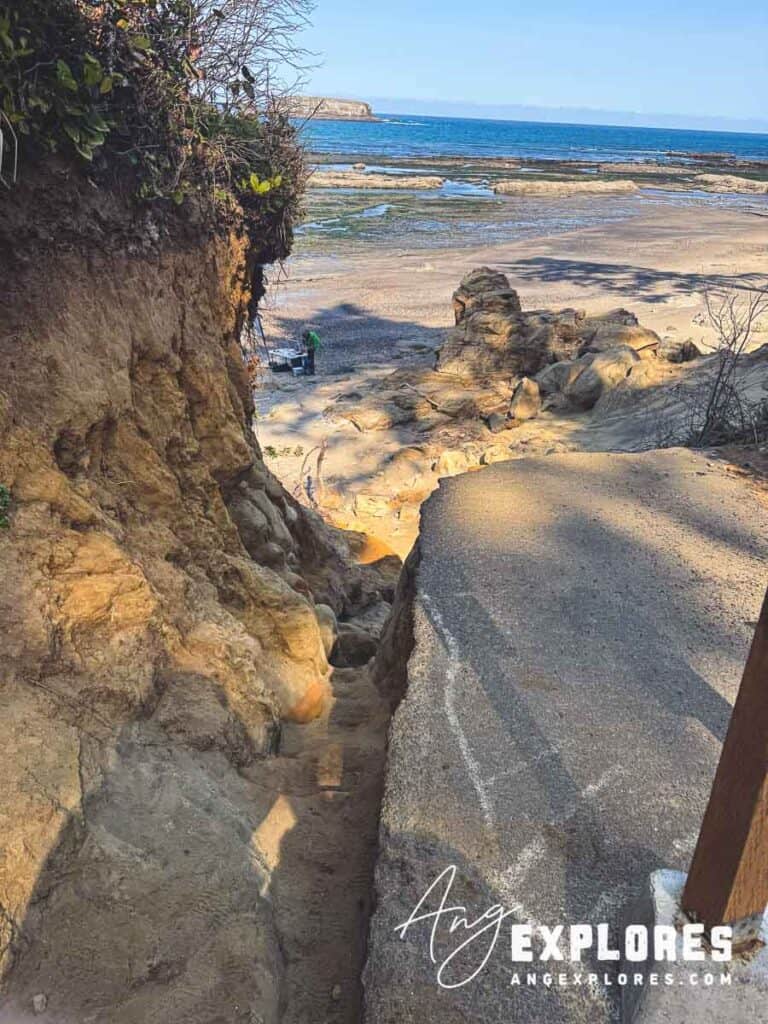
A dirt slope on the left side is your only option to descend to Otter Crest Beach.
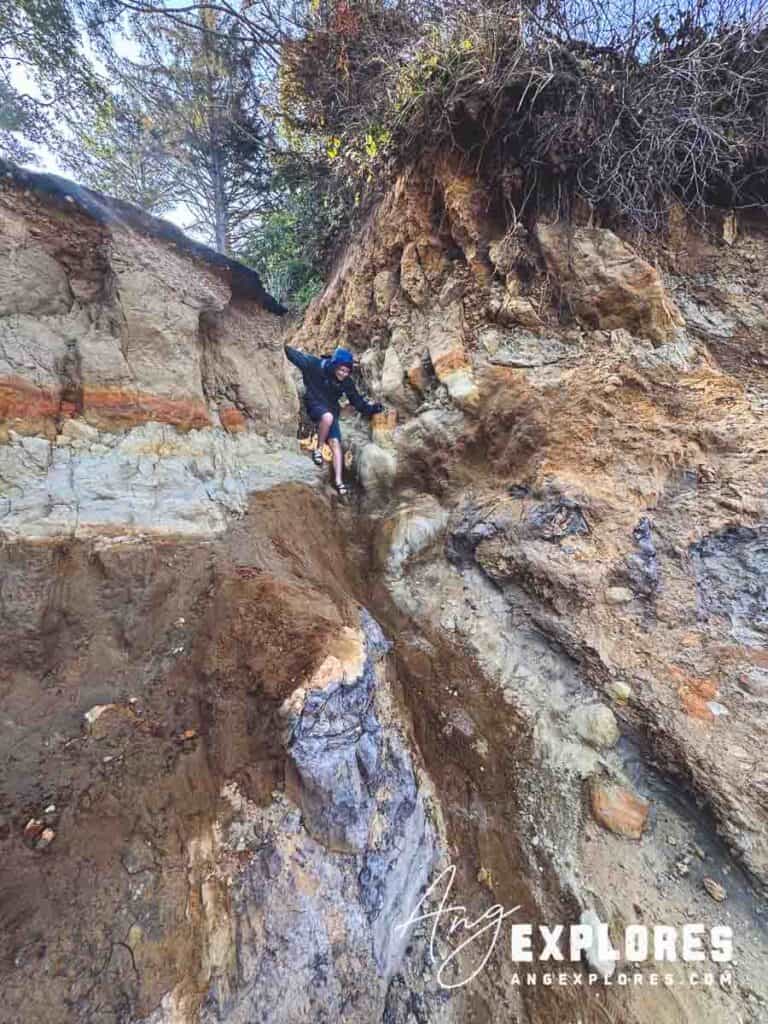
It was steep and rocky, but this wide angle shot makes it look a little more dramatic than it really was.
The day we visited there were volunteers in vests on Otter Crest Beach and outside of Devil’s Punchbowl answering questions.
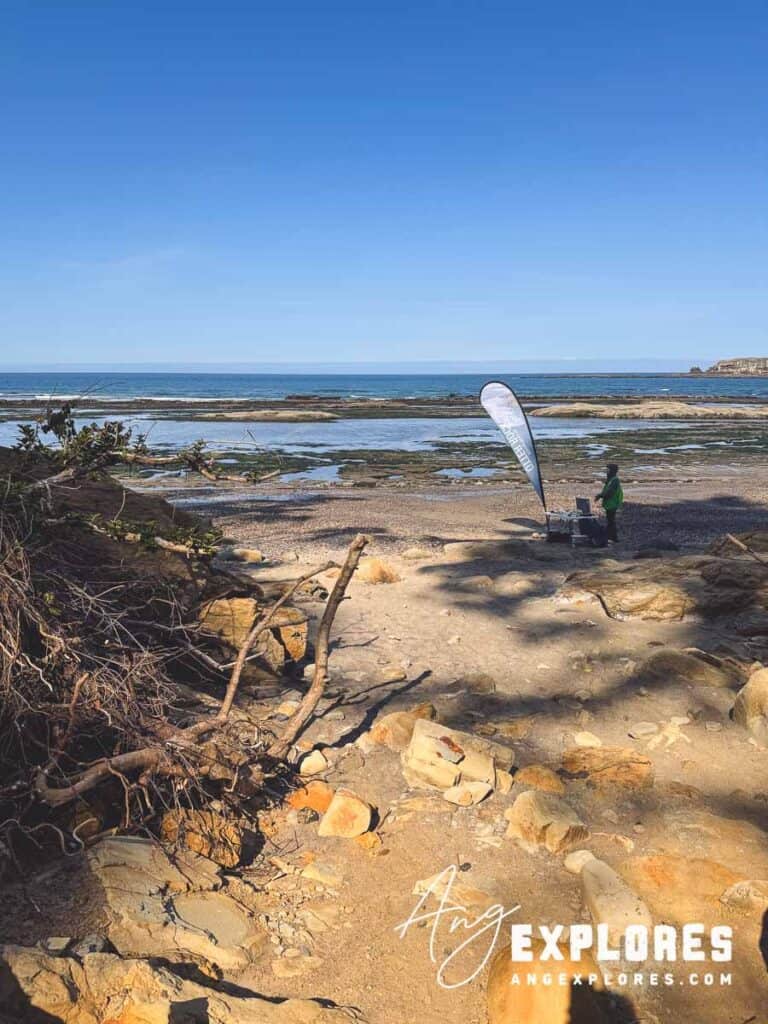
Heading to the Punchbowl
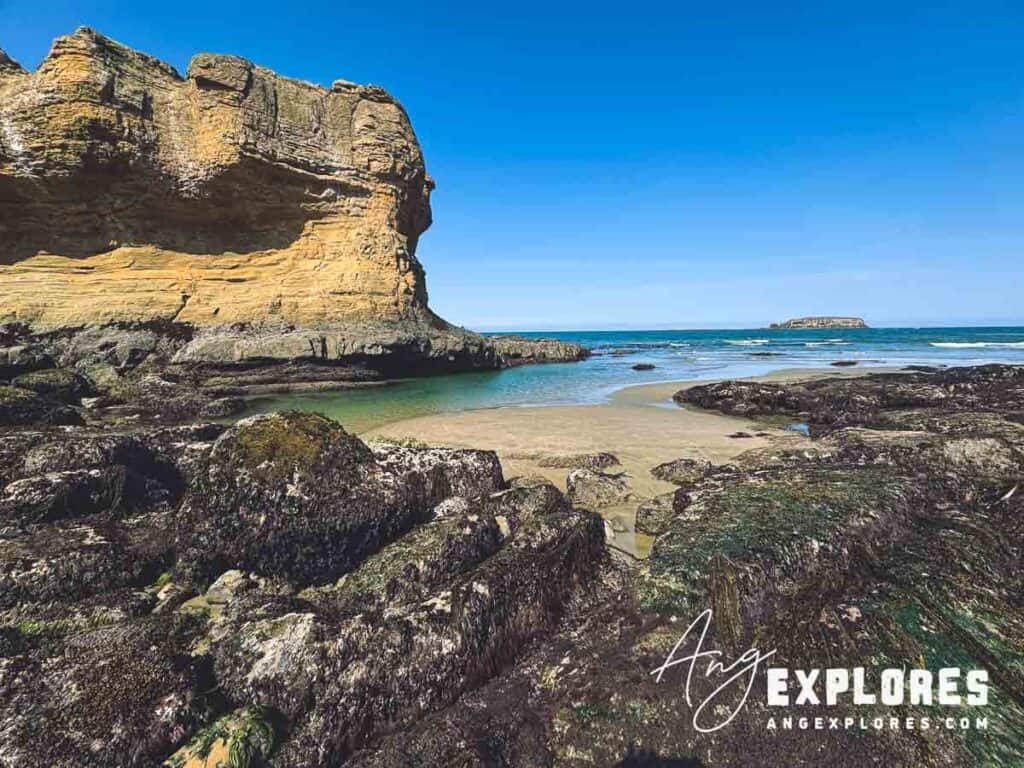
Once you’ve made it to the beach, turn south (left) to make the short trek to Devil’s Punchbowl. You’ll be traversing sandy stretches, rocky outcrops, a few boulders, and tide pools until you reach the two arches leading inside the Punchbowl.
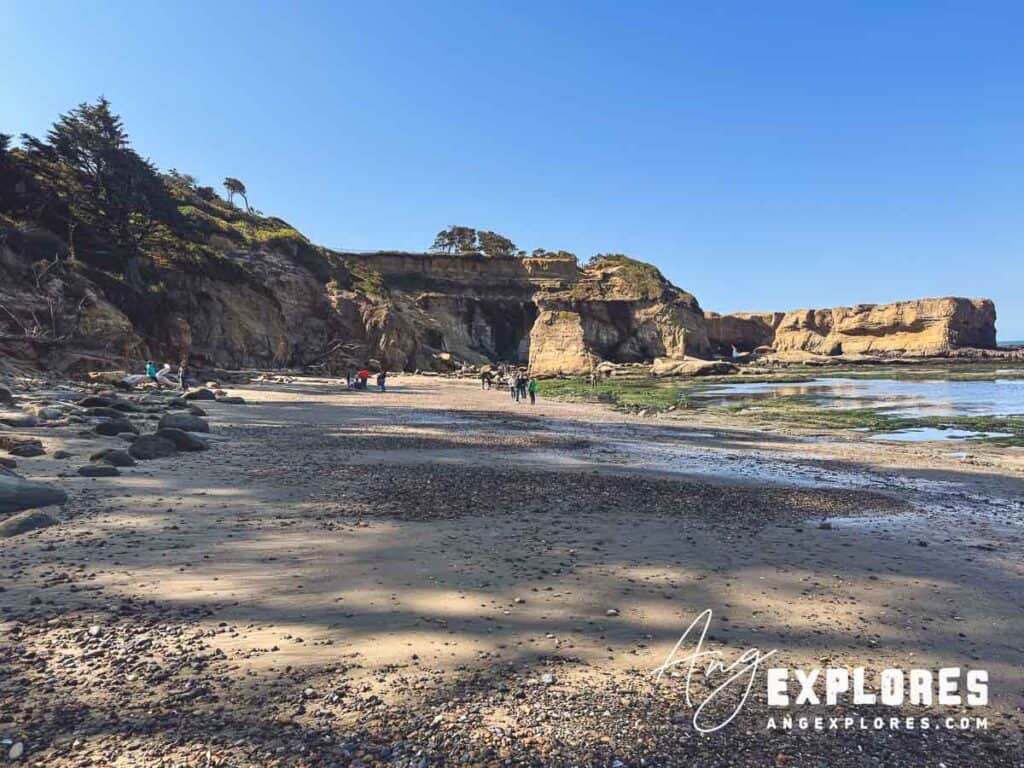
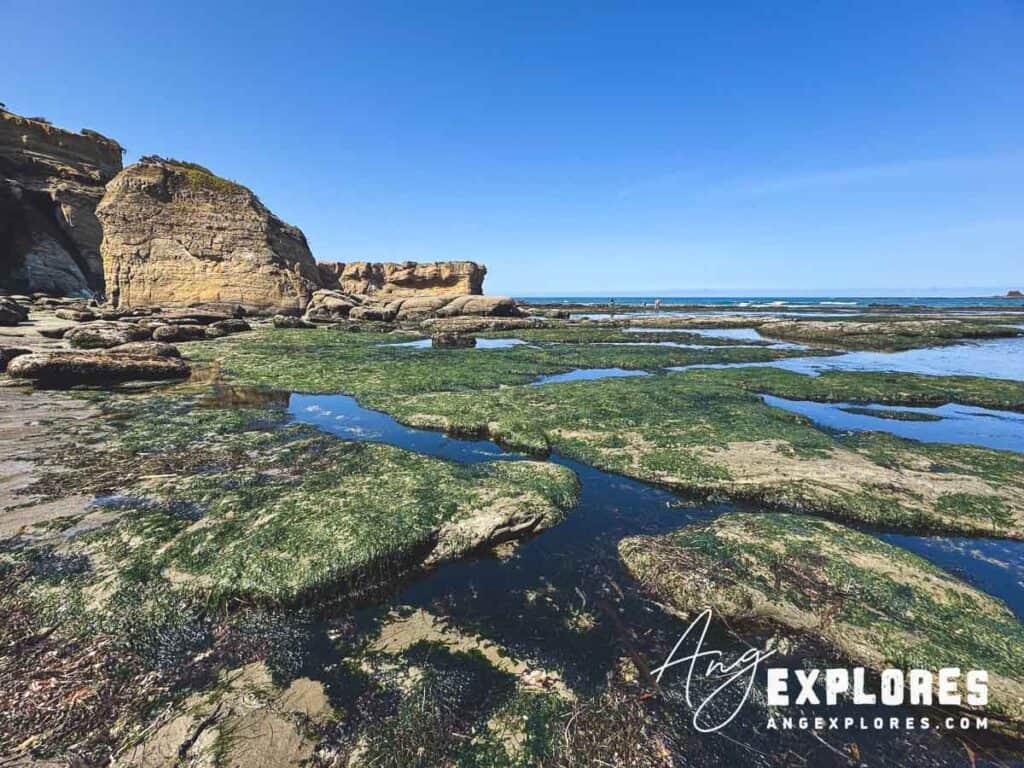
As you get closer to the rocky cliffs you’ll notice two small caves carved into the rock. These are not the entrance to Devil’s Punchbowl. Continue passed the two shallow caves, and turn left.
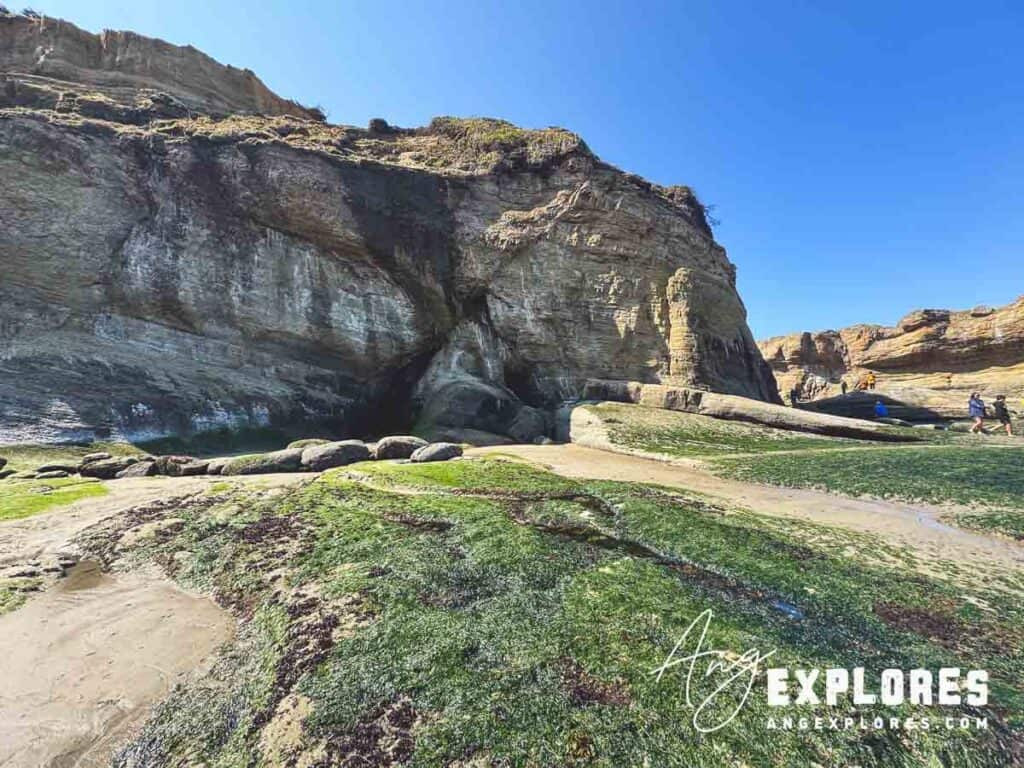
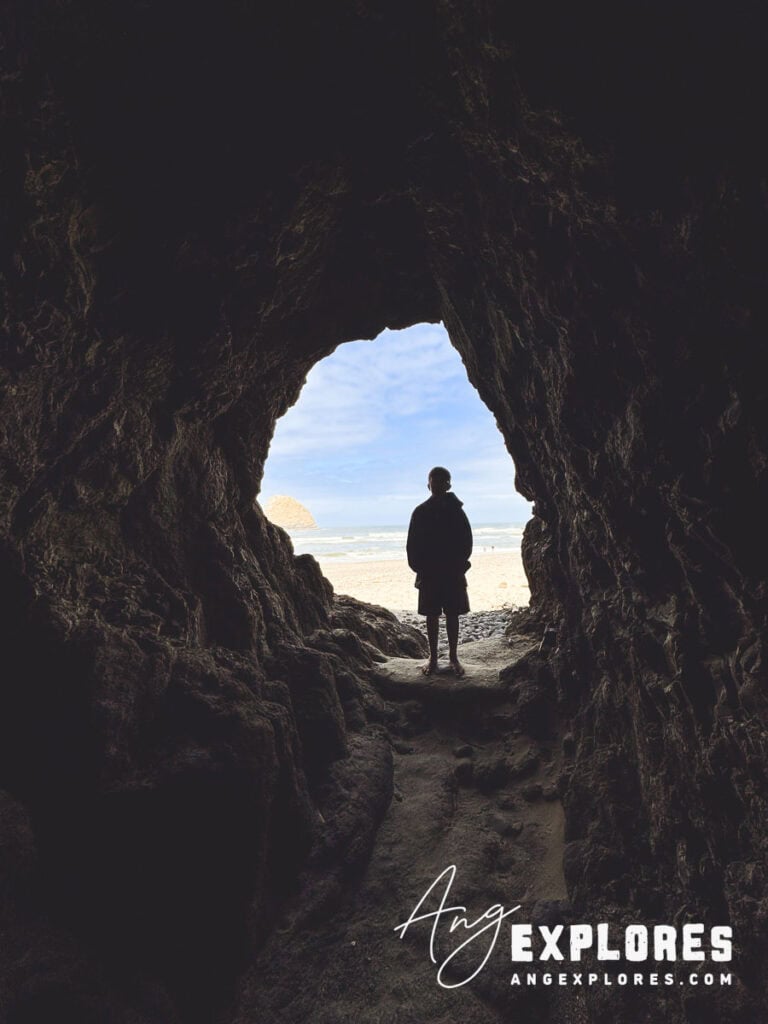
From there you’ll be able to see the two natural openings that provide entrance into Devil’s Punchbowl.
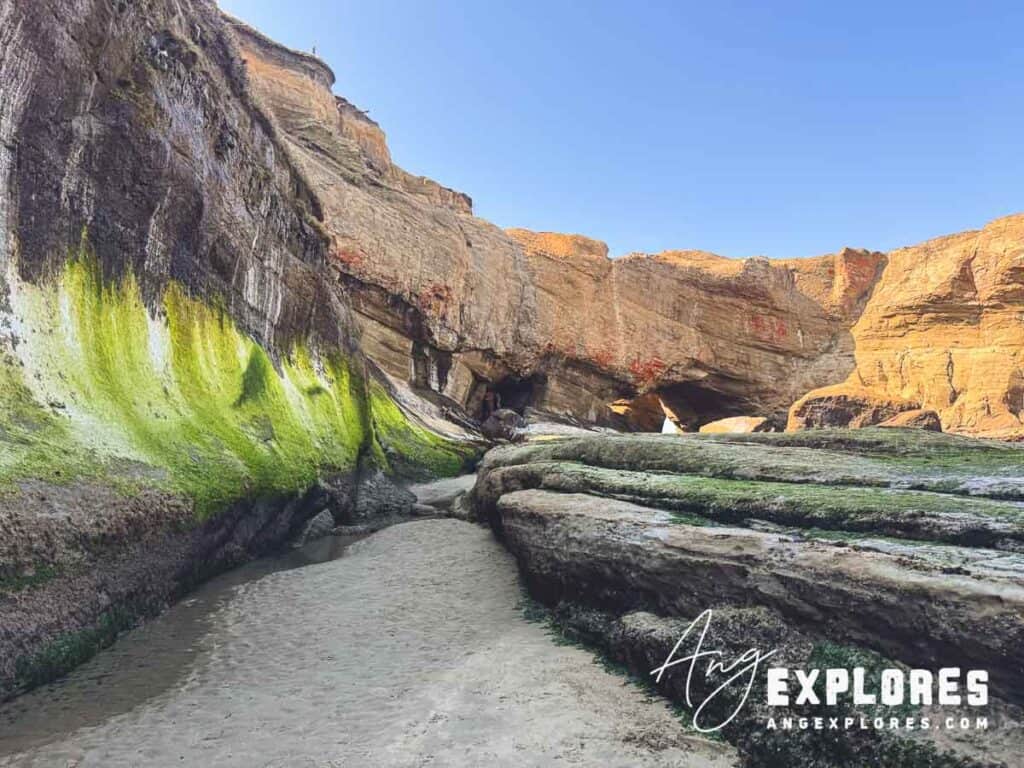
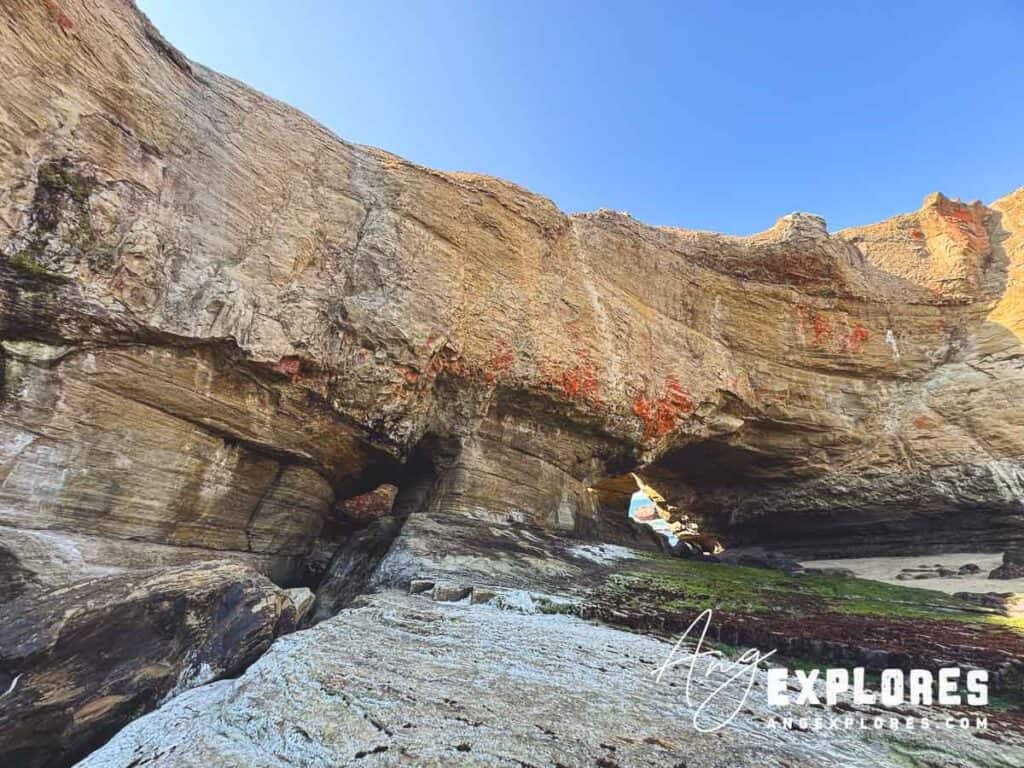
The opening on the right is the larger of the two:
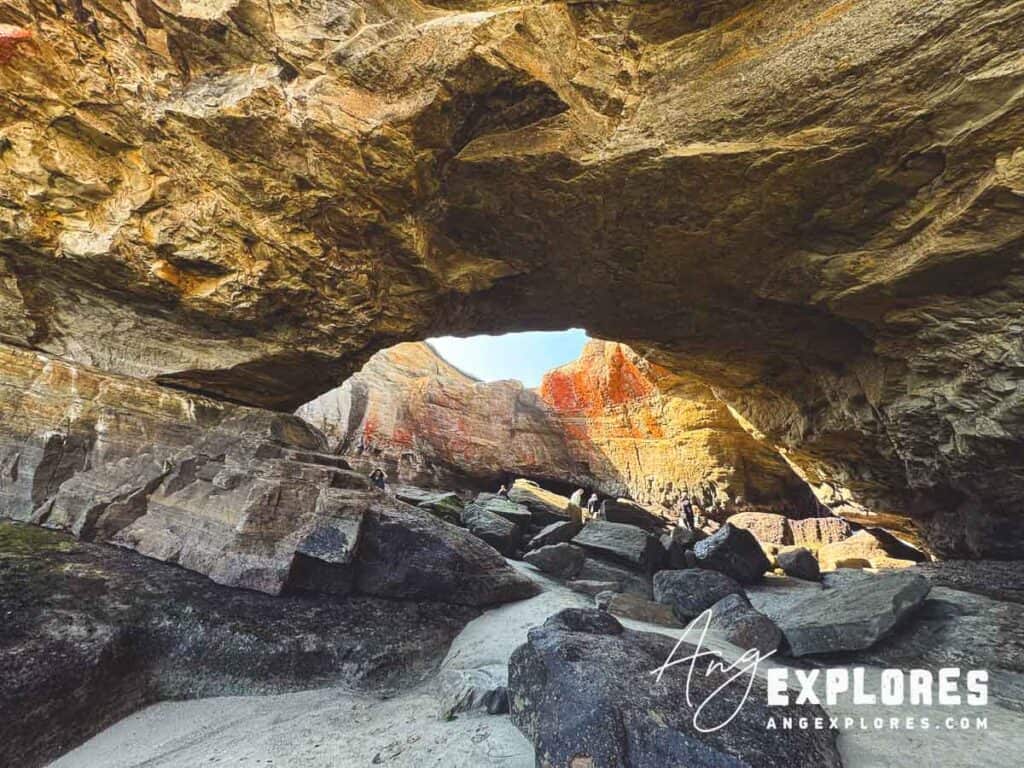
The opening on the left is a tighter squeeze, but also provides an entrance into Devil’s Punchbowl:
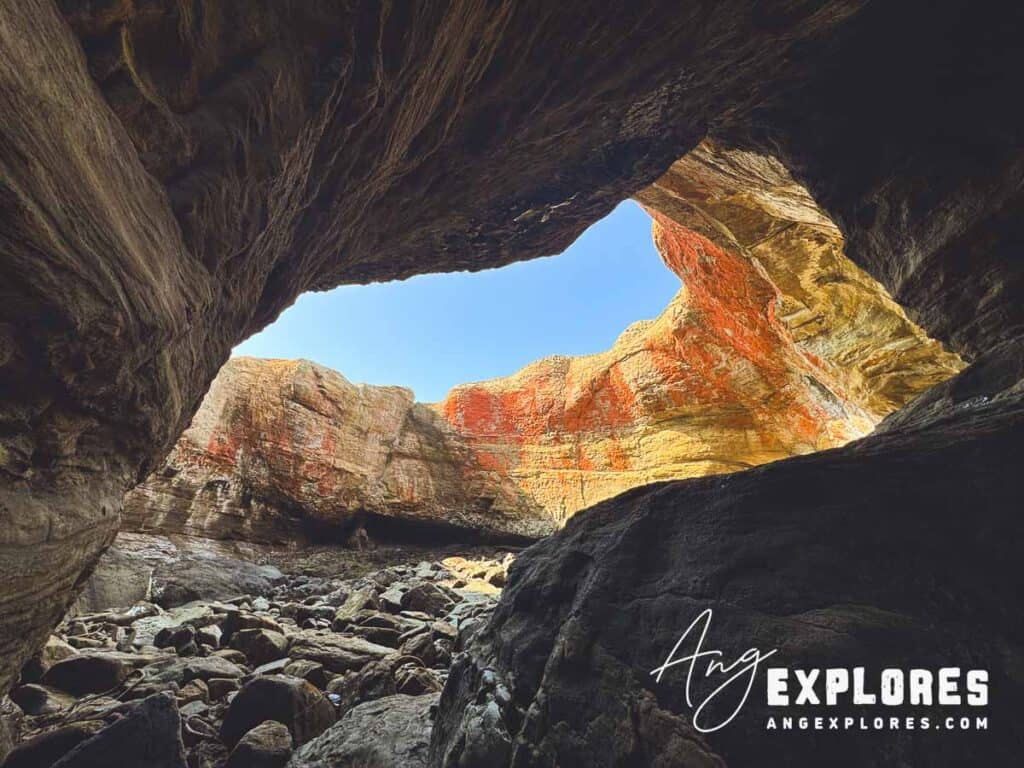
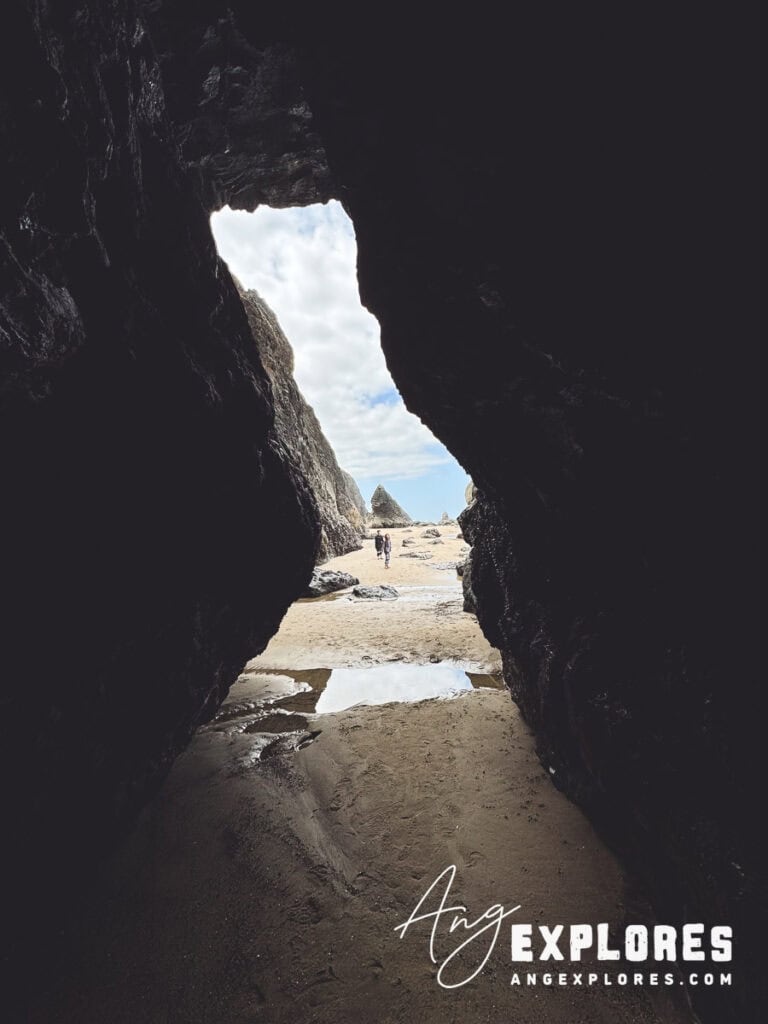
Here’s the same opening from inside the punchbowl, looking towards Otter Crest Beach:
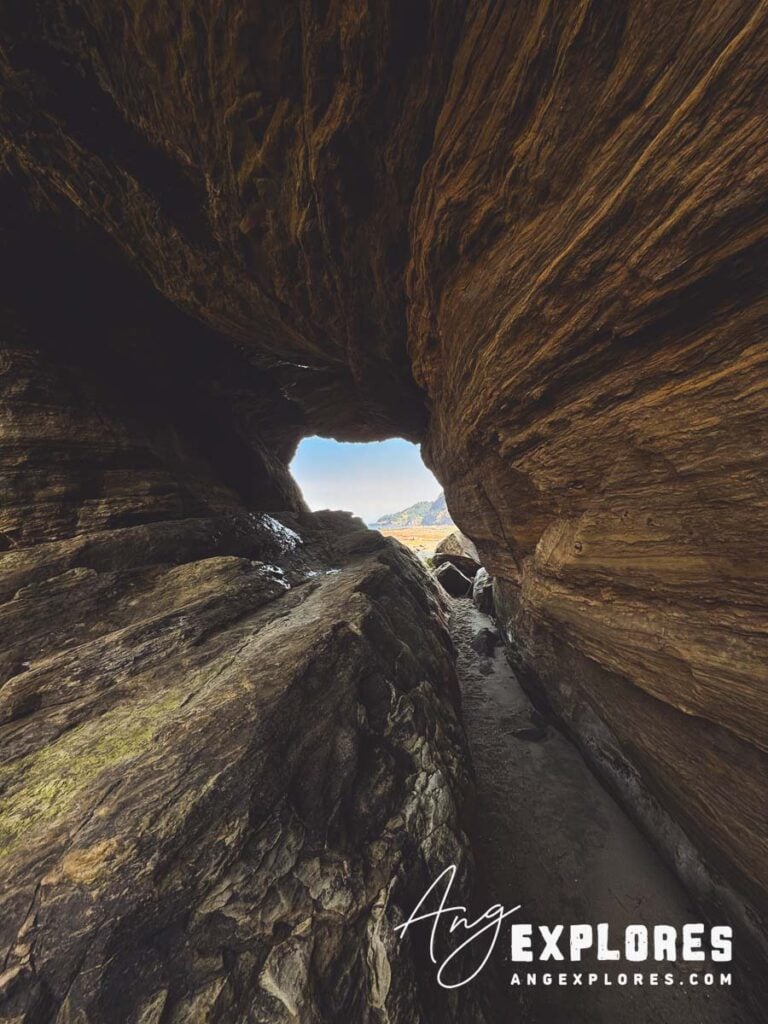
Inside Devil’s Punchbowl
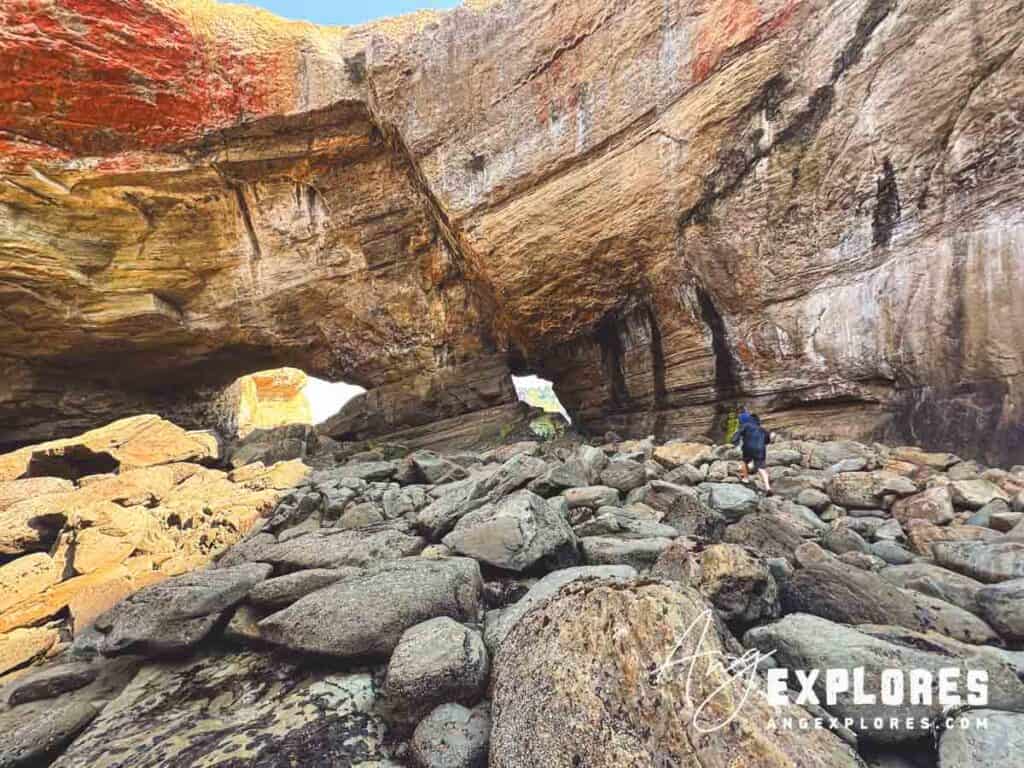
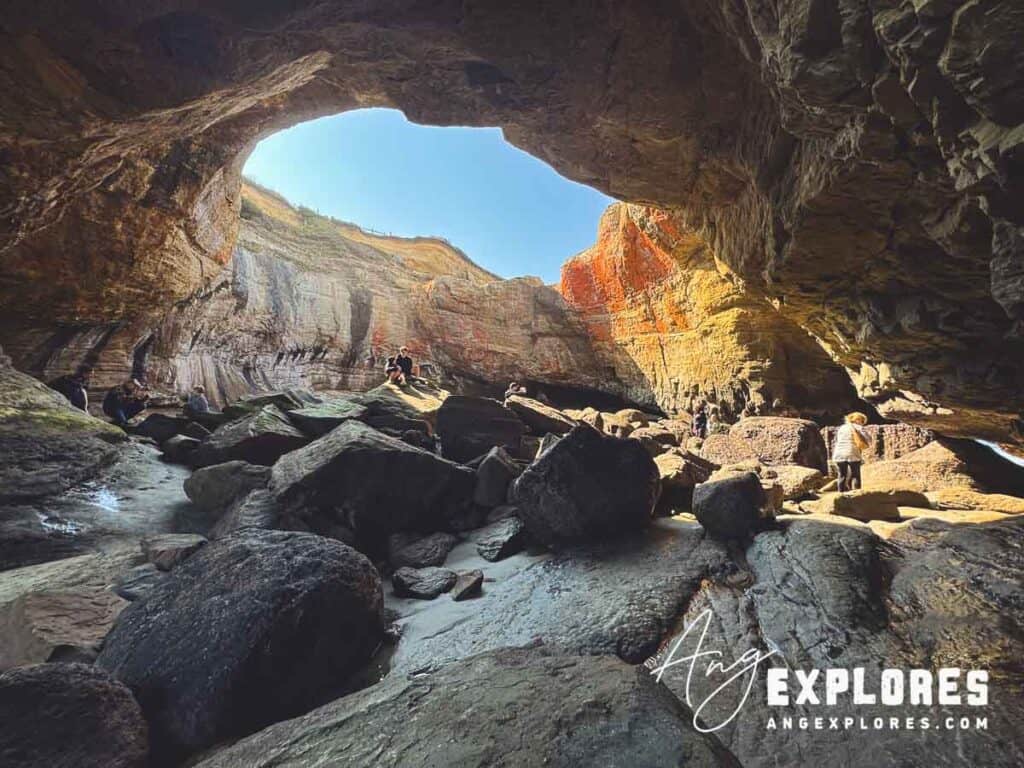
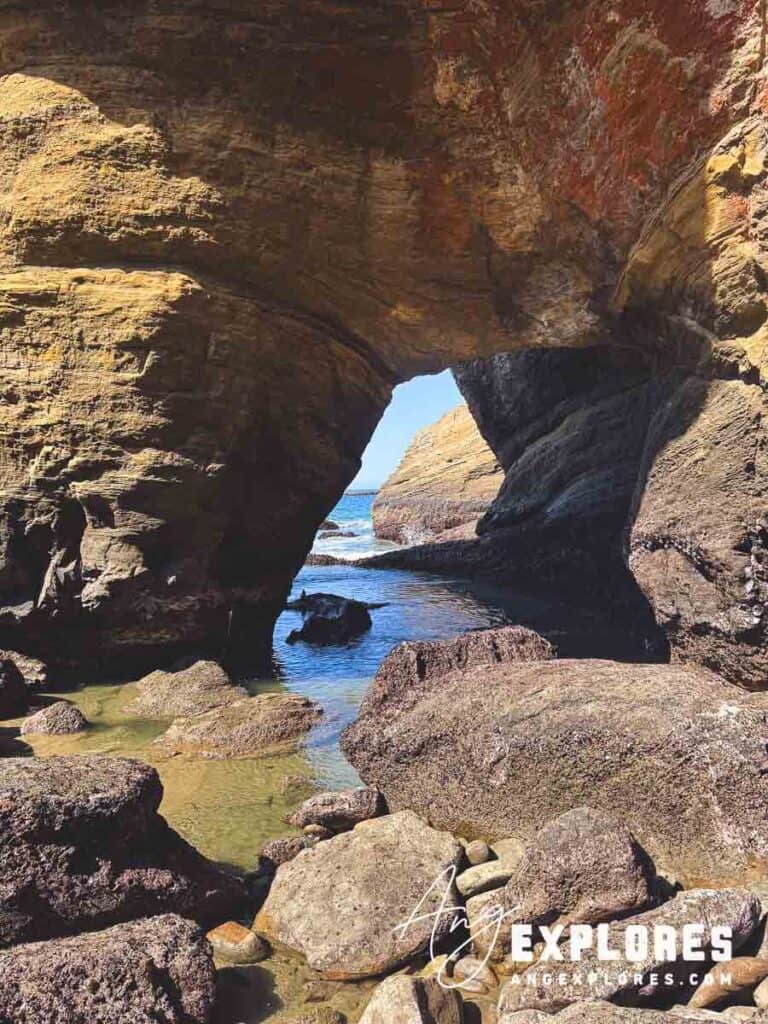
One of the volunteers told me that some of the large boulders inside the punchbowl had recently fallen from above sometime during the winter. You could identify the newly fallen rocks by their surface; compared to the rocks that had been there for awhile, the newer ones had much less sea grass growing on them.
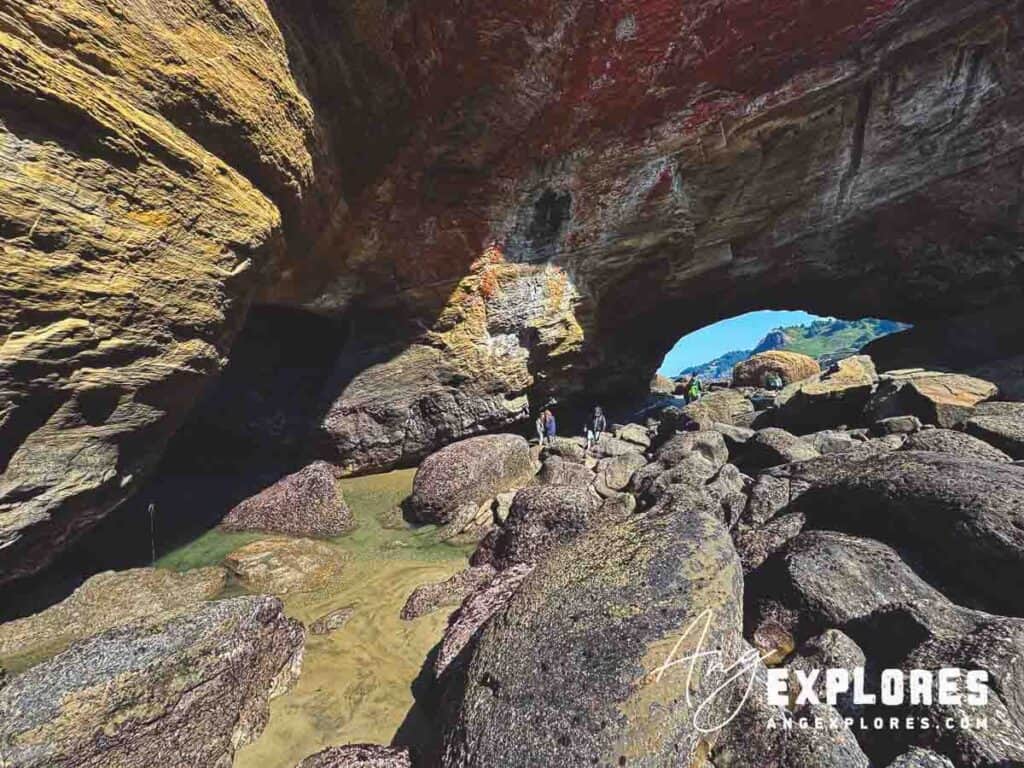
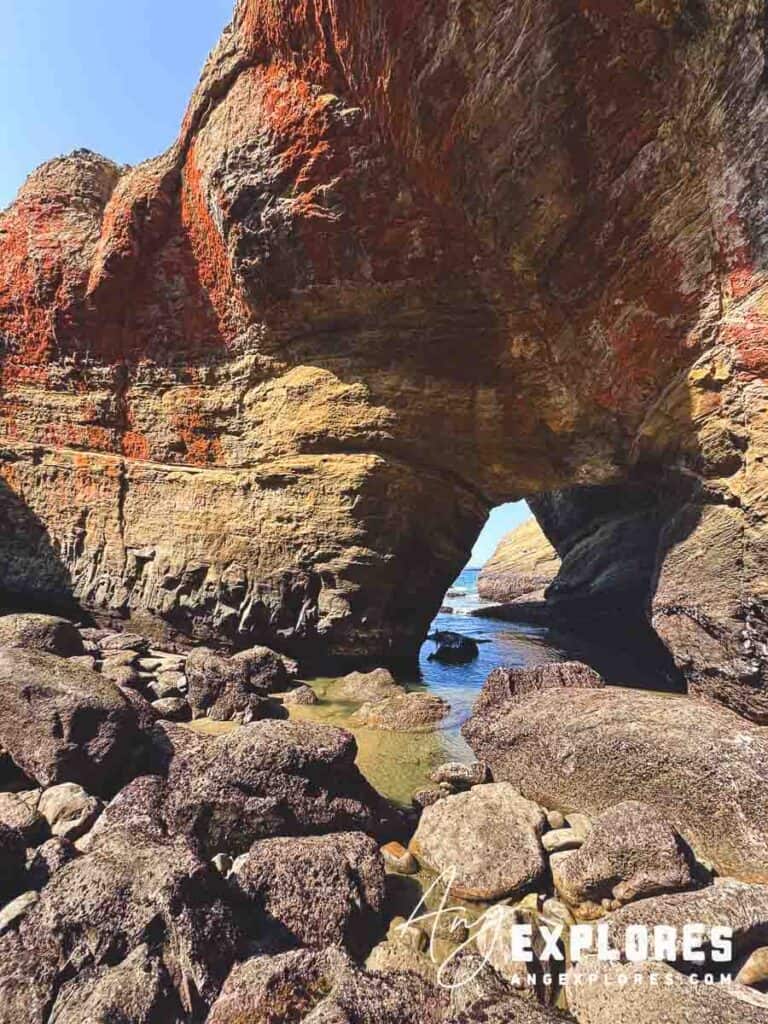
One of the most visually striking features of Devil’s Punchbowl is the red and orange streaks on its inner walls. The volunteer outside of the punchbowl told me that these colorful bands are caused by iron in the rock.
Timing & Tide Tips
If you’re hoping to explore inside Devil’s Punchbowl, timing is everything—enter only during calm, very low tides:
- Ideal tide: Check a tide chart to find when low tide will be for the day you’d like to visit. I’ve read that it is not recommended to enter if the tide is above 0. When we went the tide was -1.
- Arrive early: Plan to get there 30–60 minutes before the low tide peak, when water is receding. This will give you more time to explore.
- Weather: Calm conditions are a must—avoid exploring during storms or rough seas.
At very low tide, you’ll be able to enter through either of the two natural arches on the north side. But the bowl obviously refills as the tide rises—so give yourself enough time and always keep an eye on the surf.
Even when we went at -1 tide, there was still water on the west side of the bowl where the water enters.
Safety First
- Footwear: Wear sturdy, grippy shoes—slick rocks are the norm. Of all the tide pools we visited on this trip, the rocks here were the most slippery! Even with good shoes, walk slowly and carefully!
- Be vigilant: Be aware of sneaker waves. As I heard multiple times on the Oregon coast, never turn your back on the ocean.
- Suitable for adults/kids: My youngest (nine years old at the time) was able to participate in (and enjoyed!) exploring Devil’s Punchbowl. The biggest challenges in my opinion are getting to the beach from the rocky path, and the slippery surfaces of the rocks.
Tide-pooling at Devil’s Punchbowl and Otter Crest Beach
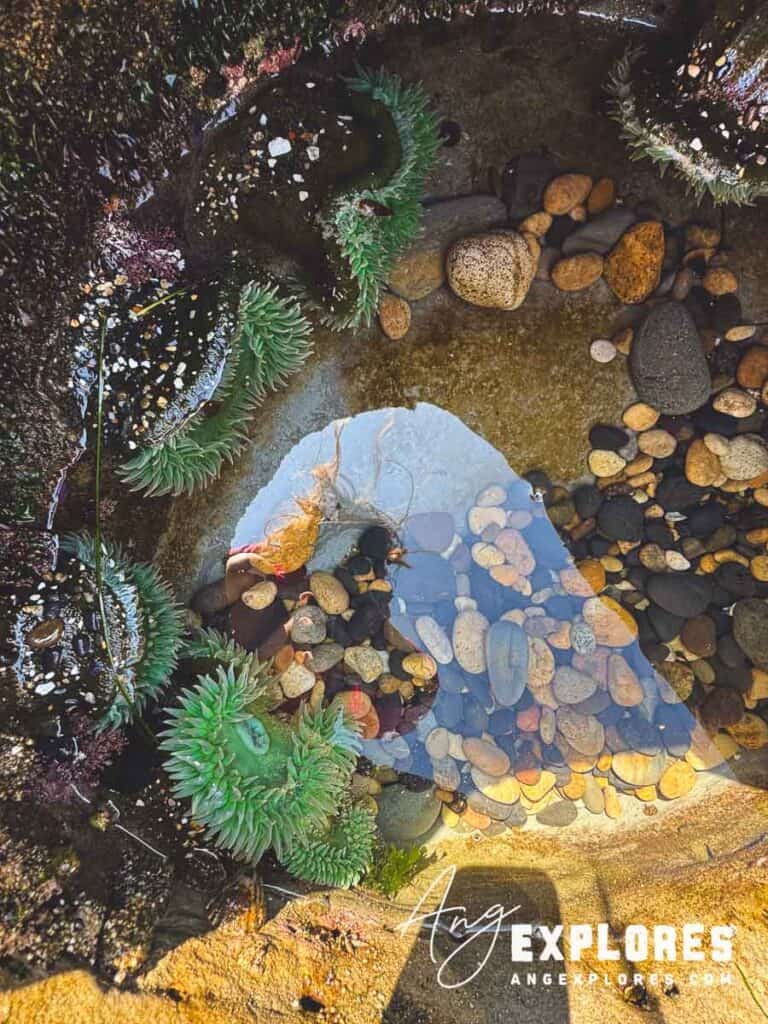
Inside Devil’s Punchbowl there were a few sea creatures in the tide pools. Its main draw, however, was not the tide-pooling experience, but being surrounded by the towering rock walls.
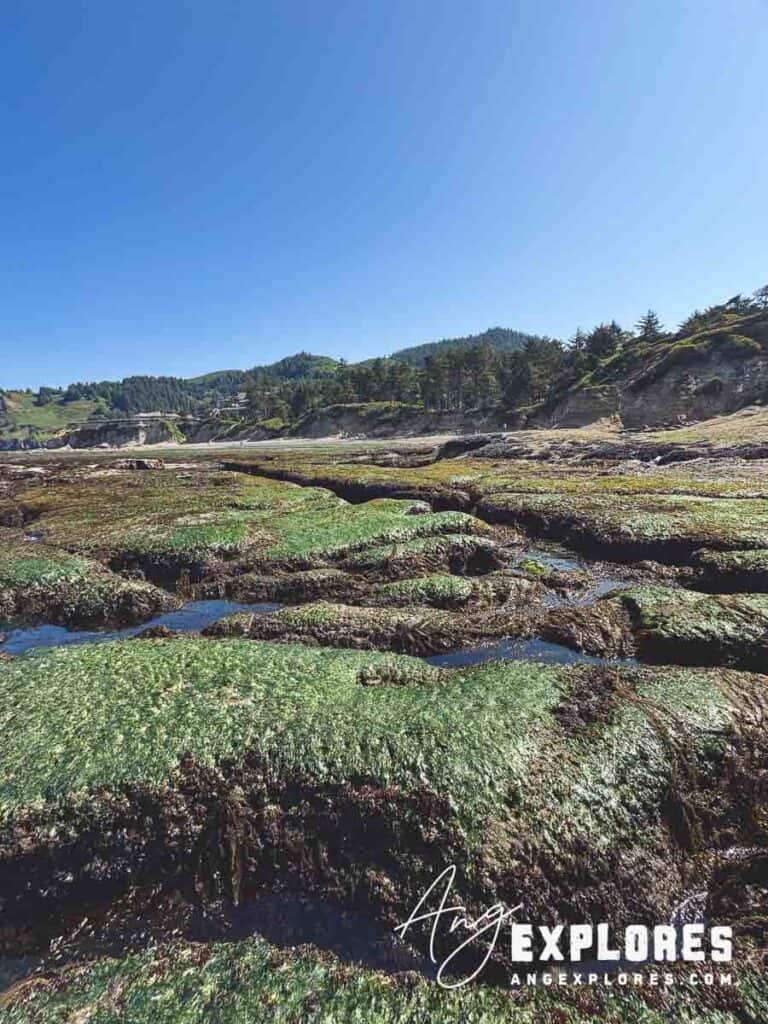
Outside of Devil’s Punchbowl on the the north side of the headland there are a handful of tide pools. I saw a few anemones and crabs. It wasn’t my favorite place to tide-pool on the Oregon coast, but that wasn’t why I visited.
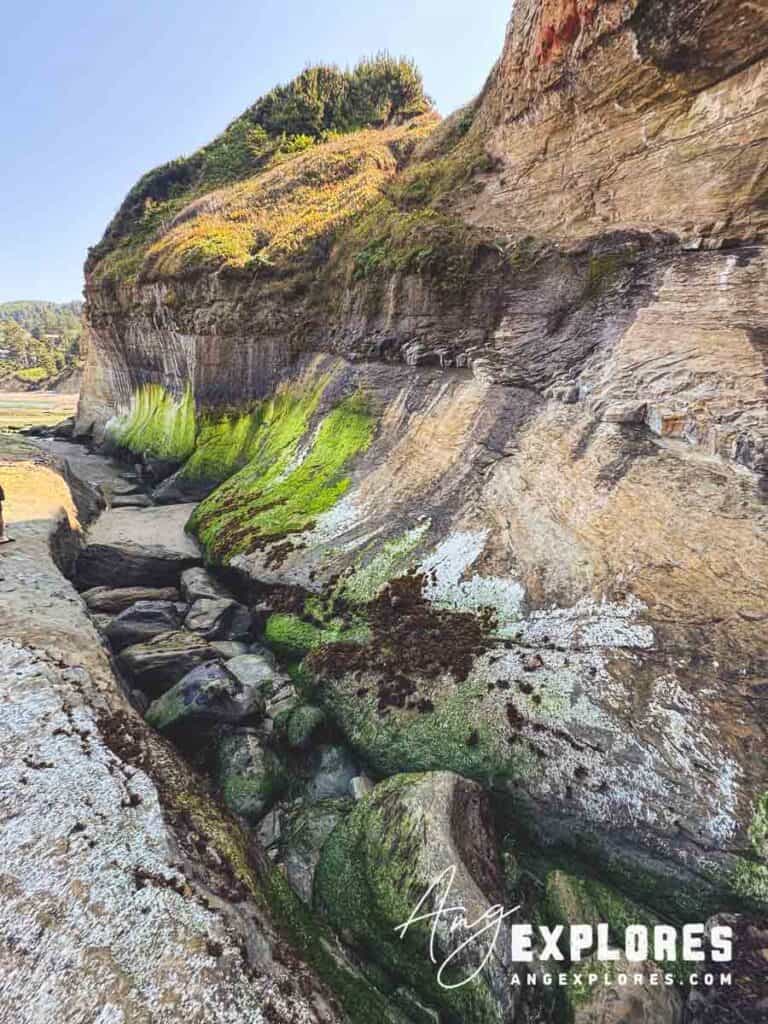
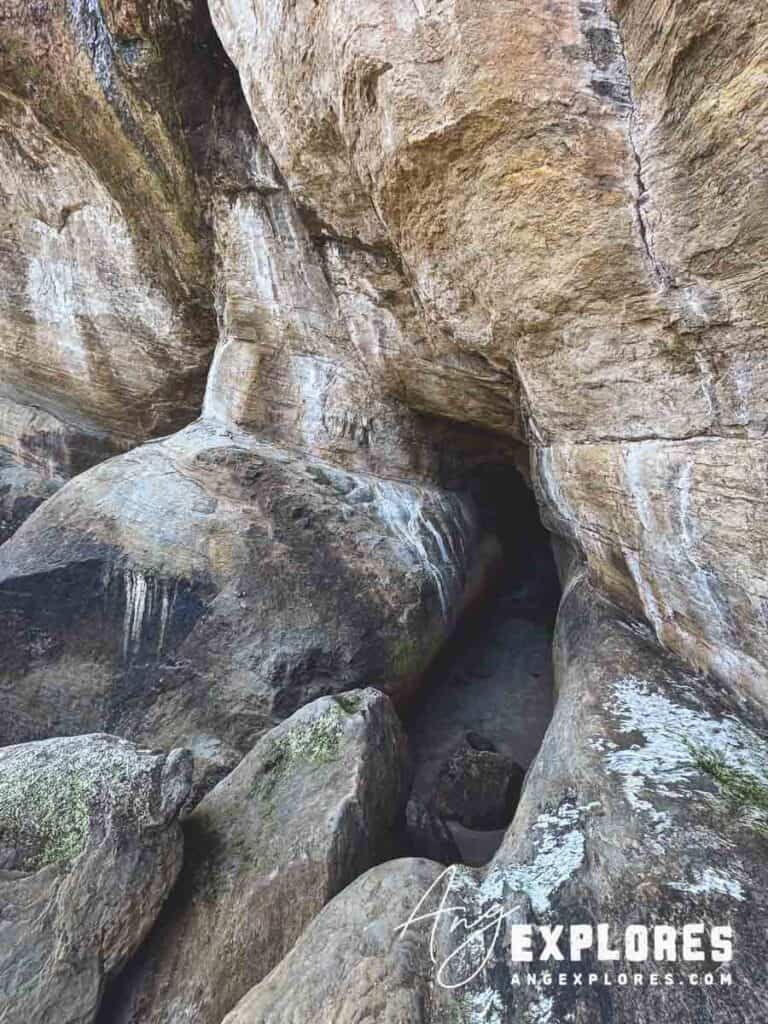
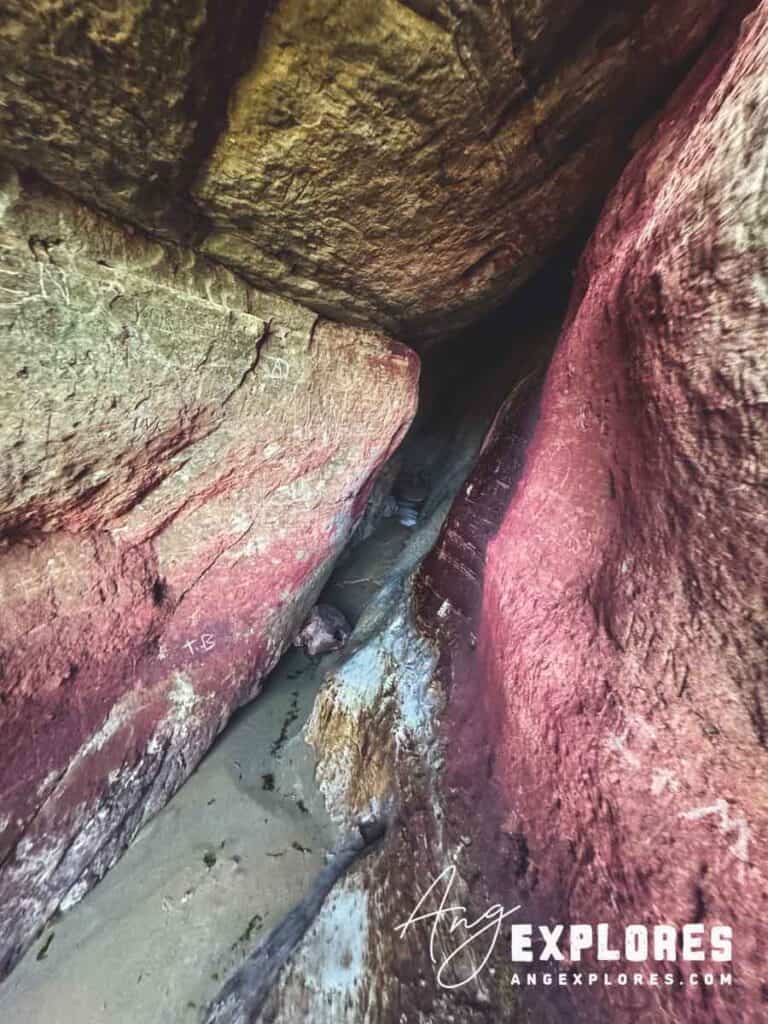
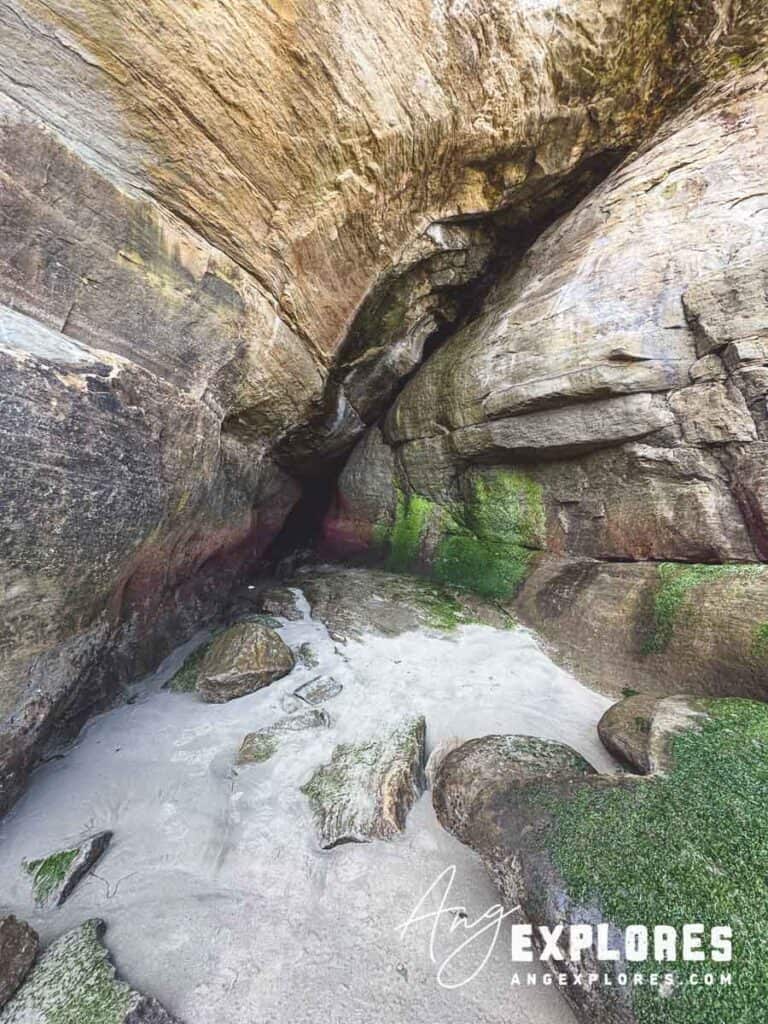
On our way back we spent a few minutes exploring the caves on Otter Crest Beach:
Visiting Devil’s Punchbowl – Sample Itinerary
Adjust times based on low tide for the day. This sample itinerary assumes low tide is at 8:15AM.
- 7:30 AM – Arrive, park at 1st St lot, enjoy Devils’ Punchbowl from the upper viewpoint
- 7:40 AM – Walk down to Otter Crest beach and head towards Devil’s Punchbowl
- 8:00 AM – Enter the Punchbowl—spend some time enjoying inside
- 8:30 AM – Explore the tide pools outside of Devil’s Punchbowl/walk Otter Crest Beach.
- 9:00 AM – Return. Head to nearby Yaquina Head Lighthouse or Newport to take a glass blowing class.
Inside Devil’s Punchbowl Oregon – Final Thoughts
Devil’s Punchbowl at low tide offers a rare, magical glimpse into the power of the ocean and coastal geology. With careful timing, sturdy footwear, and an awareness of the tides, entering the bowl is both safe and unforgettable. It’s a fairly quick stop along the Oregon coast, and one of my favorites from our central Oregon coast trip. Just plan around the tide, tread lightly, and enjoy peeking inside a secret shaped by millions of waves.
Pin for Later